x


 Acrylic On CanvasWallArtNorthern Renaissance
 Early Medieval
 203.0 x 264.0 cm
 The Louvre
Purchase a high-resolution, enhanced digital image, far superior to the online preview.
Each file is meticulously prepared by our in-house specialists using advanced tools and expert manual retouching. We ensure every image has exceptional clarity, precise color accuracy, and fine detail.
The final file is delivered via email within 72 hours, optimized for immediate use in professional, editorial, and print environments. This is the same quality trusted by top-tier design studios, publishers, and galleries.
Download a high-resolution file for personal display, printing, and creative projects. ( Buy Print Buy Hand Made Painting)
When you choose WahooArt.com, you're not just getting an image - you're receiving a professionally enhanced digital artwork, crafted with precision and backed by a satisfaction guarantee. Here's everything that comes with your order, automatically:

Your high-resolution digital image file will be emailed to you within 72 hours of ordering - ready for immediate use.

Your artwork is professionally optimized using advanced AI tools and manual editing, ensuring maximum detail, clarity, and color accuracy.

Accidentally deleted or lost your file? No worries - we'll resend it to you anytime, free of charge.

Enjoy your artwork instantly with zero customs, duties, or delivery fees - digital downloads are always tax-free.

We ensure your digital image reflects the original colors as closely as possible using professional tools and color management.

If you're not satisfied with your digital image, we'll revise it or refund 100% within 60 days - no questions asked.

Not satisfied? Get a full refund within 60 days of receiving your digital file - no questions asked.

Buy 3 images, save 10% - Buy 5, save 15% - Buy 10+, save 20%. Great for creative projects, galleries, and agencies.
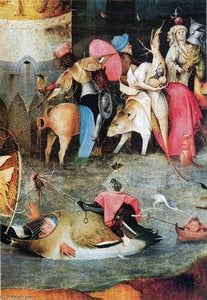
Hieronymus Bosch's "Witches," a meticulously rendered pen drawing, offers an unsettling glimpse into the artist’s uniquely dark and visionary world. Dating back to the late 15th century – though its precise creation remains shrouded in mystery – this work isn’t merely a depiction of witchcraft; it’s a complex allegory exploring themes of morality, temptation, and the anxieties of a rapidly changing Europe. Bosch, born Jheronimus van Aken around 1450 in ’s-Hertogenbosch, Netherlands, was already establishing his distinctive style—a blend of meticulous detail with fantastical subject matter—during this period, foreshadowing the surreal landscapes and unsettling figures that would define his legacy.
The drawing’s immediate impact lies in its densely packed composition. Overlapping figures, rendered with an astonishing level of precision through intricate pen strokes, create a sense of chaotic movement and claustrophobia. Bosch eschews traditional perspective, flattening the scene into a symbolic space where spatial depth is secondary to conveying emotional intensity. The technique itself—a masterful use of hatching and cross-hatching—is crucial. These linear techniques aren’t simply used for shading; they generate texture, suggesting the rough surfaces of the figures' clothing, the unsettling details of their instruments, and even the very earth beneath them. The diffused lighting, absent of strong highlights or shadows, further contributes to the dreamlike quality, pulling the viewer into a world governed by its own internal logic.
“Witches” isn’t a straightforward illustration of spellcasting; it's a carefully constructed tableau brimming with symbolic elements. The figures engaged in various activities—riding animals, playing instruments, and manipulating bizarre objects—represent facets of human desire and transgression. The presence of a central, almost altar-like structure suggests a ritualistic gathering, while the inclusion of musical instruments hints at the seductive power of pleasure and distraction. Bosch frequently employed such imagery to critique societal vices – greed, lust, and religious hypocrisy – subtly embedded within seemingly fantastical scenes.
Specific details hold particular significance. The animals—a boar, a hare, a dog—each carry symbolic weight in Bosch’s iconography. The presence of a large, grotesque bird suggests corruption and decay. Even the objects held by the figures—strange tools, musical instruments, and unsettling devices—function as visual metaphors for temptation and moral compromise. Deciphering these symbols requires an understanding of Bosch's broader artistic context, particularly his engagement with late medieval religious thought and folklore.
Bosch’s style is often described as “Renaissance surrealism,” a term that aptly captures the fusion of meticulous realism with wildly imaginative subject matter. He was a master of detail, rendering even the most grotesque features with unnerving accuracy. Yet, his scenes defy logical explanation, creating an atmosphere of unsettling beauty and profound psychological depth. The work’s emotional tone is undeniably disturbing—a palpable sense of unease and disorientation permeates the image.
Considering the materials – likely ink on paper – reveals further insights into Bosch's technique. The precision achieved through pen drawing speaks to his dedication and control, while the choice of paper suggests a deliberate selection for its texture and suitability for detailed rendering. The work’s survival is remarkable, considering the fragility of such delicate drawings; it stands as a testament to Bosch’s skill and the enduring power of his vision.
WahooArt offers meticulously crafted hand-painted reproductions of “Witches,” allowing art lovers to experience the full impact of this iconic masterpiece. Each reproduction captures the intricate detail, unsettling atmosphere, and symbolic richness of Bosch’s original drawing. Whether displayed in a private collection or incorporated into an interior design scheme, a WahooArt reproduction provides a tangible connection to one of history's most enigmatic and influential artists – a window into a world both terrifying and profoundly captivating.


1450 - 1516 , Netherlands


Stay updated with the latest art news, exclusive offers, and decoration ideas.
Tell us about your project and our art experts will provide you with 3 personalized art suggestions.
Let Us Curate 3 Options Just for You - Free!

 Preview
 Send
Send Share
Share
 Details

 Download
 Similars
 X-Ray
X-Ray Diaporama
 Read More