Acrylic On CanvasWallArtNorthern Renaissance
 1507
1507 250.0 x 350.0 cm
 British Museum
Museum-quality giclée or canvas print with fast production and flexible finish options. ( Buy Hand Made Painting Switch to Digital Image)





























Pick from our preset sizes that match the artwork's original proportions.

You may enter your own dimensions to fit a specific frame or space. If your selected size does not match the original image's proportions, we will either crop the artwork or extend the image with a mirrored or solid-fill edge. A digital mockup will be sent for your approval before production begins.
Please note that the on-screen preview does not reflect the actual cropping or extension. Only the mockup will accurately show the final composition.
While custom sizes are available, we recommend selecting a dimension from the predefined list to preserve the original proportions.
Worldwide Delivery () in 2 weeks instead of standard 4/5 weeks. (11 September)


The Entombment
Reproduction Size
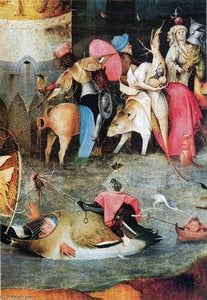
Hieronymus Bosch’s “The Entombment,” completed in 1507, stands as a haunting testament to the anxieties of Renaissance Europe and a cornerstone of Surrealist art. More than just a depiction of biblical piety, it's an unsettling meditation on mortality, faith, and the grotesque beauty inherent in confronting uncomfortable truths—a characteristic hallmark of Bosch’s singular artistic vision.
Bosch achieved his arresting visual impact through meticulous etching, a technique renowned for its precision and tonal subtlety. The plate itself was painstakingly prepared—likely utilizing acid resist—allowing for the creation of incredibly detailed lines that capture the textures of fabric, skin, and hair with astonishing accuracy. These fine lines are interwoven with hatching and cross-hatching to sculpt shading and depth, generating an atmosphere of palpable gloom.
“The Entombment” is far more than a straightforward retelling of biblical narrative; it operates on multiple symbolic levels. The crowded figures surrounding Christ—some weeping, others gesturing with solemn expressions—represent humanity grappling with grief and despair. Bosch’s penchant for incorporating fantastical elements—such as grotesque animals and unsettling human-animal hybrids—challenges viewers to confront the darker side of faith and underscores the pervasive influence of medieval folklore.
Despite its Renaissance origins, “The Entombment” anticipates the stylistic innovations of Surrealism—a movement spearheaded by André Breton in the 1920s—particularly its fascination with dreamlike imagery and irrational juxtapositions. Bosch’s uncompromising exploration of psychological complexity and his willingness to depict disturbing realities cemented his place as a visionary artist whose influence continues to inspire artists today.


1450 - 1516 , Netherlands

Embark on a scholarly journey through the sacred beauty of High Medieval art. Discover the profound symbolism, luminous iconography, and spiritual depth of Gothic masterpieces in this expert guide for classical art enthusiasts.

Embark on a visual journey through Early Medieval art. Explore the profound beauty of illuminated manuscripts, sacred symbols, and golden light through an expert historical lens, celebrating the enduring legacy of medieval craftsmanship and divine artistry.

Explore the dramatic evolution of Northern Mannerism. Discover how masters like Bosch and Grünewald transitioned from Renaissance harmony to profound, elegant distortion through an expert analysis of symbolism, emotional intensity, and artistic innovation.

Embark on a scholarly journey through the spiritual grandeur of Late Medieval art. Discover the intricate symbolism, technical mastery, and profound religious narratives that define the Gothic era in this expert-led guide for art enthusiasts and collectors.

 Preview
 Send
Send Share
Share
 Details

 Download
 Similars
 X-Ray
X-Ray Diaporama
 Stats
Stats Read More







 Glass option is only available in size under 110 CM