
x


Hand-painted oil on canvas in your size and frame, made to order by our artists. ( Buy Print Buy Image)
Pick from our preset sizes that match the artwork's original proportions.

You may enter your own dimensions to fit a specific frame or space. If your selected size does not match the original image's proportions, we will either crop the artwork or extend the painting with additional hand-painted elements. A digital mockup will be sent for your approval before production begins.
Please note that the on-screen preview does not reflect the actual cropping or extension. Only the mockup will accurately show the final composition.
While custom sizes are available, we recommend selecting a dimension from the predefined list to preserve the original proportions.
Worldwide Delivery () in 3/4 weeks instead of standard 5 weeks. (28 August). No compromise on quality.


Doll
Reproduction Size

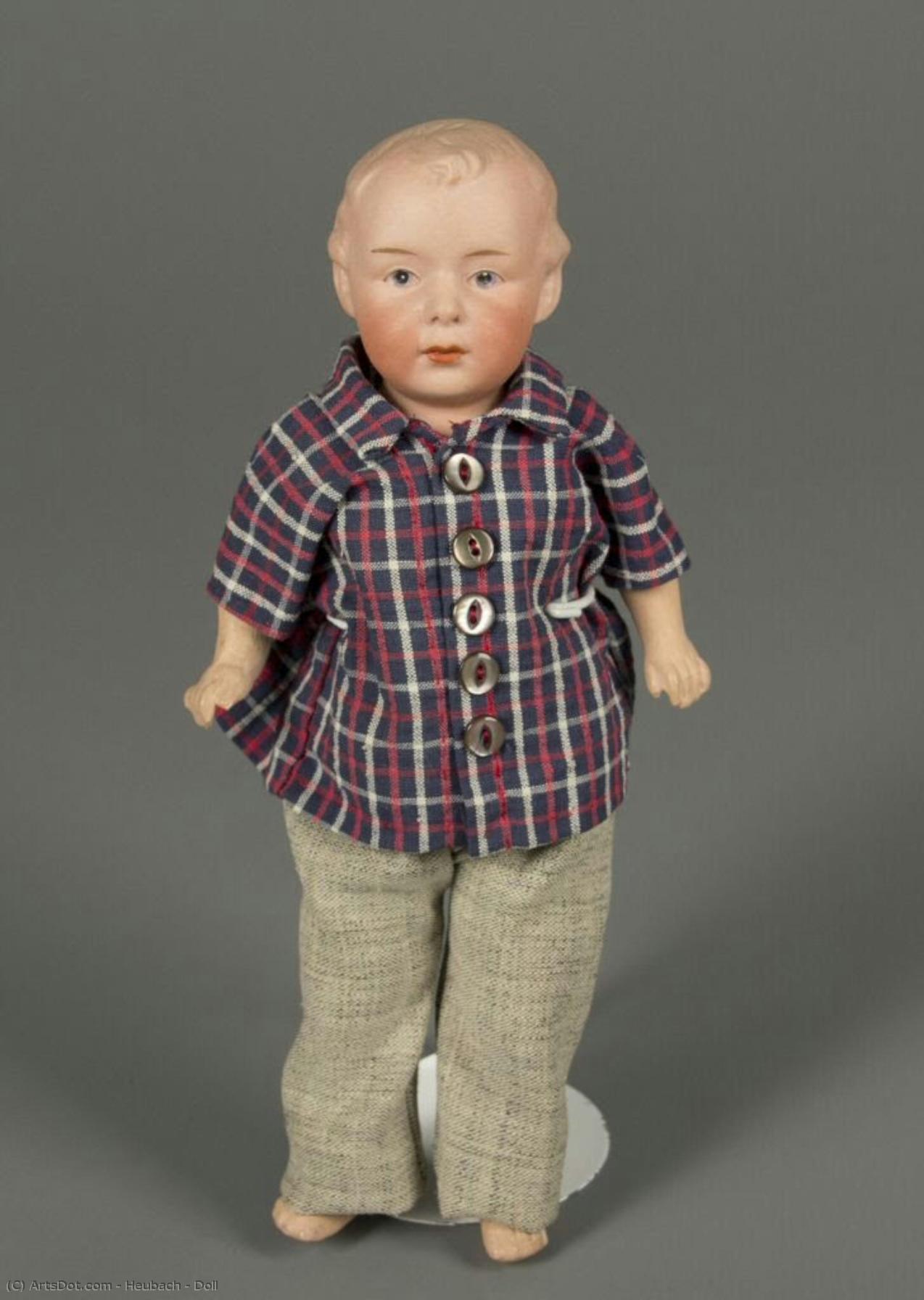
In the mist-shrouded heart of Thuringia, where the dense German forests cradle a long history of ceramic mastery, a profound legacy of delicate artistry was forged. The name Gebrüder Heubach evokes far more than the mere mechanics of manufacturing; it conjures an era when porcelain was transformed from utilitarian stoneware into vessels of deep emotion and lifelike beauty. Established in the mid-nineteenth century by brothers Georg Christoph and Philipp Jakob Heubach, the firm began its journey far from the glamorous galleries of fine art. Initially focused on the modest production of tableware and delicate figurines in Köppelsdorf, the brothers possessed a visionary understanding of the transformative potential inherent in clay and fire. They recognized that porcelain could transcend its functional origins to become a medium for capturing the ephemeral nuances of human expression.
As the nineteenth century progressed, the Heubach brothers embarked on an ambitious journey to elevate porcelain artistry beyond mere decoration. By embracing the revolutionary technique of bisque firing, they achieved a level of translucency and detail previously unseen in the industry. This innovation allowed for a soft, matte finish that mimively captured the delicate texture of human skin, providing a canvas upon which the subtle nuances of a child's expression could be rendered with startling realism. Their workshop became a crucible of creativity, fueled by close collaborations with skilled sculptors from the prestigious Sonneberg Art School. These partnerships ensured that every mold produced was not merely a toy, but a miniature masterpiece of anatomical precision and soulful artistry.
The evolution of the Heubach firm was marked by an unyielding entrepreneurial spirit that sought to push the boundaries of what porcelain could achieve. While their roots lay in ceramics, it was from 1885 onwards that their focus shifted decisively toward the production of exquisite bisque dolls, a move that would propel them to international prominence. This period saw the company rise as a vital hub within the vibrant ecosystem of the Sonneberg toy-making industry. Their commitment to quality and artistic integrity was indelibly etched into history through the introduction of a distinctive horseshoe mark. This symbol, representing both prosperity and meticulous craftsmanship, served as a hallmark of excellence that collectors could trust, signaling a standard of production that refused to compromise on detail.
The brilliance of Heubach's work lay in their ability to blend the precision of ceramic engineering with the evocative power of sculpture. Their dolls were not mere playthings; they were character studies in porcelain. Through their pioneering approach, they attracted partnerships with other prominent makers such as Cuno & Otto Dressel and Adolf Wislizenus, creating a diverse collection that reflected various stylistic influences from across Europe. This interconnectedness of artisans allowed the Heubach name to become synonymous with a specific type of German excellence—a blend of technical mastery and an almost hauntingly beautiful realism that captured the innocence and vulnerability of childhood.
The historical significance of Gebrüder Heubach extends far beyond the lifespan of their original workshops. They represent a pivotal moment in the history of decorative arts, where the line between industrial production and fine sculpture became beautifully blurred. Their ability to utilize new technologies to enhance artistic expression remains a testament to their enduring impact on the world of collectibles. Today, the legacy of the Heubach brothers lives on through the cherished porcelain pieces that continue to captivate collectors worldwide, serving as windows into a bygone era of craftsmanship.
The enduring allure of their work can be summarized by several key elements of their historical contribution:

Germany


Stay updated with the latest art news, exclusive offers, and decoration ideas.
Tell us about your project and our art experts will provide you with 3 personalized art suggestions.
Let Us Curate 3 Options Just for You - Free!

 Preview
 Send
Send Share
Share
 Details

 Download
 Similars
 X-Ray
X-Ray Diaporama
 Read More




































 Glass option is only available in size under 110 CM


