
 WoodcutAcademic Portraiture
 189219th Century
 18.0 x 14.0 cm
The artwork displayed on this page is protected by copyright law, which means we cannot legally create or sell an identical reproduction. This protection is enforced under international agreements such as the Berne Convention and by national laws, including those outlined by the U.S. Copyright Law - Title 17.
As a respectful and legal alternative, we offer custom, hand-painted artworks inspired by the original. Our skilled and professional artists carefully study the original's style, mood, and artistic essence to create a new, unique piece that evokes the same feeling - while remaining an original creation in its own right.
This method fully complies with copyright regulations because it does not involve copying or duplicating the protected artwork. Instead, it is a creative reinterpretation - a new painting that is influenced by the original but not identical to it.
Hand-painted oil on canvas in your size and frame, made to order by our artists. ( Switch to Print Switch to Digital Image)
Pick from our preset sizes that match the artwork's original proportions.

Type the width and the height you need, to fit your frame or your wall. This is hand-painted, so for a size with a different shape the artist can paint a bit more around the picture, or cut a bit — you choose. We send you a digital mockup to approve before the painting starts. The picture shown on this page does not show the real result — only the mockup does.
Worldwide Delivery () in 3/4 weeks instead of standard 5 weeks. (21 October). No compromise on quality.
Alice
Reproduction Size
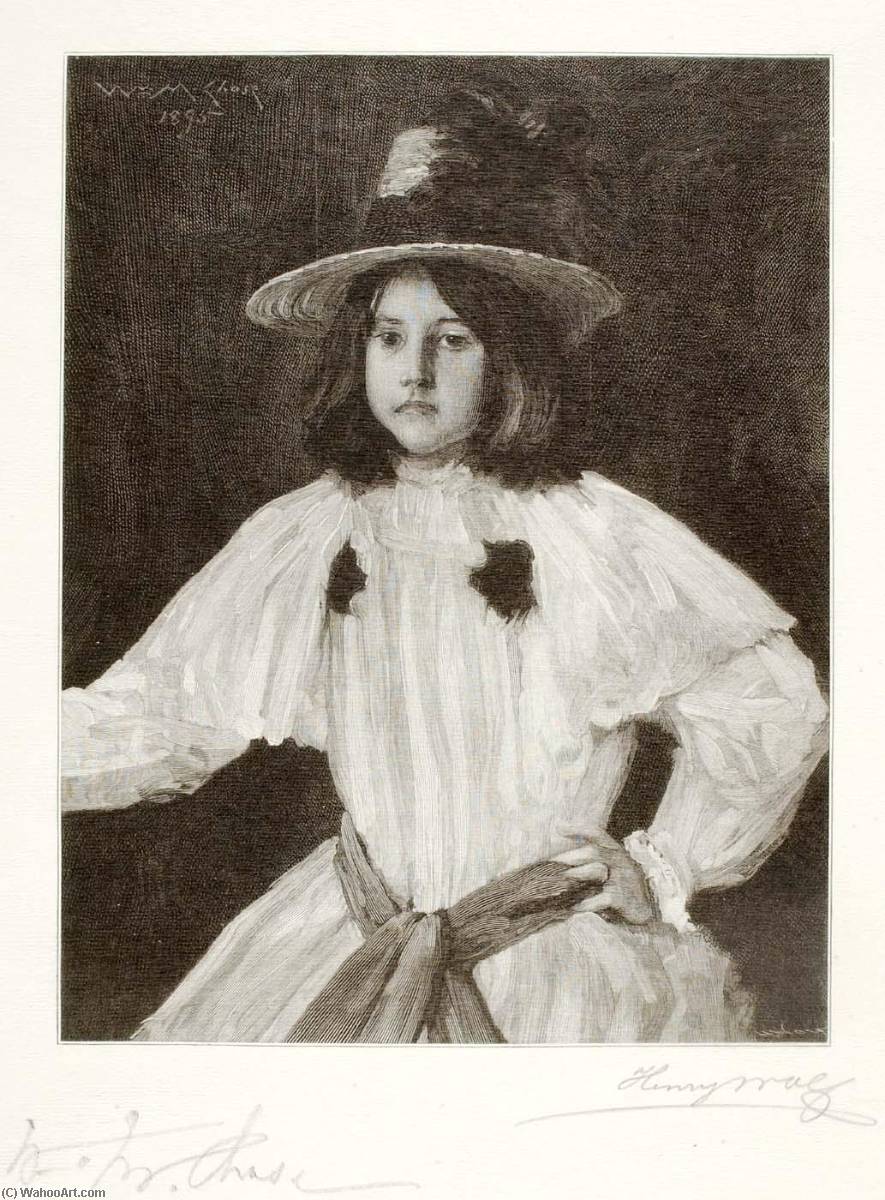
“Alice,” created by Henry Wolf in 1892, is a captivating wood engraving that transports viewers to the elegance of the Victorian era. This piece, currently residing at the Smithsonian American Art Museum, exemplifies Wolf’s skill and attention to detail, offering a glimpse into a bygone time through a beautifully rendered portrait.
Henry Wolf (1852-1916) was a French-born wood engraver who significantly contributed to American art. Born in Eckwersheim, France, he studied under Jacques Levy and exhibited his work in Paris before immigrating to New York City in 1871. He became renowned for his ability to reproduce works by prominent artists through the intricate medium of wood engraving. Wolf’s legacy extends beyond this single piece; he was a master craftsman who helped popularize art reproduction during an era when access to original artworks was limited.
The artwork depicts a young girl, presumably named Alice, wearing a hat and gazing directly at the viewer with a serious expression. The engraving showcases Wolf’s mastery of woodcutting techniques. He meticulously carved lines into blocks of wood, which were then inked and pressed onto paper to create the image. This process required immense precision and skill, as each line contributed to the overall tonal range and texture of the portrait. The grayscale palette enhances the sense of timelessness and adds a touch of solemnity to the subject’s demeanor. The level of detail in the girl's clothing and facial features is remarkable, demonstrating Wolf’s dedication to realism.
“Alice” reflects the artistic trends prevalent during the late 19th century, a period characterized by academic portraiture and a focus on realistic representation. Wood engraving was a popular medium for reproducing illustrations in magazines and books, making art more accessible to a wider audience. The subject’s attire suggests a middle-class Victorian upbringing, while her direct gaze conveys a sense of quiet dignity and perhaps introspection. While overt symbolism is minimal, the portrait evokes feelings of nostalgia and reverence for traditional values.
For those appreciating Wolf's style and skill, exploring works by other artists from this period can provide further context and enjoyment:
“Alice” by Henry Wolf is more than just a portrait; it's a testament to the artistry of wood engraving and a window into Victorian society. Its enduring appeal lies in its exquisite detail, historical significance, and ability to evoke a sense of quiet contemplation.
"Alice" carries a reflective emotional tone within the Academic Portraiture movement.
"Alice" dates from 1892. The date places the work within Henry Wolf's career and its era.
The portrait format of "Alice" by Henry Wolf is recommended for a living room. Format and space together guide the placement of a reproduction.


1925 - 2005 , Austria

Explore the profound mastery of engraving and intaglio printmaking. Delve into the rich history, technical precision of the burin, and the enduring legacy of fine art techniques that shaped the world's most iconic masterpieces.

 Preview
 Send
Send Share
Share
 Details
 Guide
Guide

 Download
 Similars
 X-Ray
X-Ray Diaporama
 Stats
Stats Read More






































 Glass option is only available in size under 110 CM


