

Museum-quality giclée or canvas print with fast production and flexible finish options. ( Buy Hand Made Painting Switch to Digital Image)





























Pick from our preset sizes that match the artwork's original proportions.

Type the width and the height you need, to fit your frame or your wall. A print can only be cut, never made bigger than the picture, so a size with a different shape loses a part of the image. We send you a digital mockup to approve before we print anything. The picture shown on this page does not show the real cut — only the mockup does.
Worldwide Delivery () in 2 weeks instead of standard 4/5 weeks. (9 November)
The pink tablecloth
Reproduction Size
A digital image of "The pink tablecloth" by Henri Matisse can be purchased on its Digital Image page: a high-resolution digital image download.
"The pink tablecloth" by Henri Matisse is recommended for a dining room. This suggestion is based on the work's subject, colors and mood.
The overall mood of "The pink tablecloth" by Henri Matisse is elegant. The mood describes the general atmosphere of the work.

Henri Matisse arrived on December 31, 1869, in a weaver's cottage on rue du Chêne Arnaud. This small house in Le Cateau-Cambrésis, France, was the starting point for a life that would eventually move far from the quietude of the Nord department. He was the oldest son of a wealthy grain merchant, born into a family that dealt in the steady, practical trade of the land. His early years were spent in Bohain-en-Vermandois, Picardie, France, a place where the rhythms of life were dictated by the seasons and the needs of the family business.
The environment of his upbringing was far from the studio. Growing up in the Picardie region, he was surrounded by the practicalities of a merchant's household. There was no early indication of the brush or the pigment in those first years. Instead, his existence was shaped by the expectations of his family and the steady, unhurried life of a grain merchant's son in a northern French town.
After finishing secondary school, Matisse moved to Paris to study law. He spent time there in 1887, focusing on the rigid structures of legal theory. This period was marked by the quiet, disciplined work required of a student in the city. He did not immediately find his way to a studio, but instead followed a path of professional training that seemed far removed from the canvas.
His life eventually led him back to Le Cateau-Cambrésis. There, he worked as a court administrator, handling the administrative weight of the local legal system. He also spent time as a legal clerk for a notary, a role that demanded precision and a steady hand. These years were spent among documents and official duties, far from the colors he would later embrace. He was a man of the law before he became a man of the brush.
The transition from the study of law to the studio required a formal grounding in the classical traditions of Paris. He enrolled at the Académie Julian to begin this process. Later, he moved to the École Nationale des Beaux-Arts. During these years, he sat in the classrooms of William-Adolphe Bouguereau and Gustave Moreau. These teachers provided the technical foundation that would support his later departures from tradition. He spent his time absorbing the methods of these instructors, learning the discipline of draughtsmanship and the structure of form.
His eye was drawn to the quietude of earlier masters. He looked closely at the works of Jean-Baptiste-Siméon Chardin, Nicolas Poussin, and Antoine Watteau. These artists offered a different way of seeing, one that focused on the arrangement of objects and the weight of a composition. He studied the way they handled light and the subtle textures of their subjects. This period was less about the sudden explosion of color and more about understanding the underlying logic of a well-constructed image. He was building a vocabulary of line and shape through these observations.
The shift toward the brush began with a period of stillness. In 1889, an attack of appendicitis forced a long recovery, and it was during this confinement that the act of painting first took hold. What started with a simple set of art supplies from his mother turned into a way of seeing that replaced his earlier interest in law. He moved from the quiet of convalescence into a search for a new visual language, one that would eventually move far beyond the traditional methods he had studied in Paris.
A change in his palette arrived in 1896 during a visit to Belle Île. There, he met the Australian painter John Russell, who introduced him to the light of Impressionism and the expressive, heavy application of color found in the work of Vincent van Gogh. These encounters stripped away the need for muted, earth-toned realism. He began to use color as a direct tool for expression, favoring hues that responded to feeling rather than the literal appearance of a subject. By around 1905, this approach had coalesced into the Fauvist movement. He and a small group of others used intense, non-naturalistic colors that shocked those accustomed to more restrained, academic styles.
His hands moved between many different forms. He worked as a draughtsman, a printmaker, and a sculptor, often shaping clay that would later be cast in bronze. In his earlier years, he experimented with the Divisionist technique, a method he adopted after reading an essay by Paul Signac. This approach allowed him to build up color through distinct, separate applications rather than smooth blending.
As his practice changed, so did his tools. When working with etchings, he utilized the chine-collé technique to layer materials. Later, his method of creating cut-paper collages involved the pochoir stencil process to achieve specific effects. These choices show a constant shift in how he handled the surface of his work, moving from the precision of printmaking to the physical act of cutting and arranging shapes.
In 1941, a diagnosis of abdominal cancer changed the physical demands of his work. Following two major operations in 1941 and 1942, the ability to stand and paint at an easel became difficult. He found a new way to work by using scissors and colored paper. This method, known as cut-paper collage, allowed him to manipulate shapes and colors while seated. He would paint large sheets of paper and then cut them into organic forms, such as leaves or figures, to create new compositions.
These works often revisited the themes and motifs from his earlier paintings, but they were presented with a different kind of structural clarity. In 1947, he published a book titled Jazz, which featured these colorful cut-paper collages. The process was a way to continue his exploration of form and color even when his physical strength was limited. He focused on the relationship between the shapes and the space around them, finding a way to express movement through the simple act of cutting and arranging.
Walking through the halls of the Hermitage Museum in Saint Petersburg, one can find his work held within the collection. This includes the large-scale 1909 work, The Dance, which was commissioned by a Russian collector. The presence of his paintings in the Musée d’Orsay in Paris allows for a close look at the way he handled color and form during his early years in the city.
In New York City, the Museum of Modern Art holds several of his pieces. These works offer a way to see how his style shifted over the decades. Similarly, the National Gallery in London contains his paintings, providing a different perspective on his development. His presence in these institutions allows for a quiet observation of how he used pigment to define space.

1869 - 1954 , France
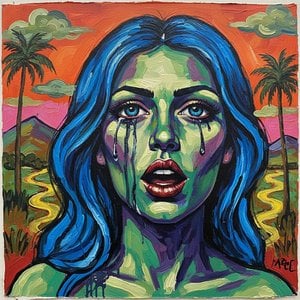
Embark on a journey through the vibrant world of Fauvism. Discover how masters like Henri Matisse revolutionized art through bold colors and raw emotion in this expert-led guide to one of modern art's most powerful movements.

Explore the vibrant world of Fauvism with our expert guide. Discover how Matisse and Derain revolutionized art through bold colors and expressive strokes. Perfect for classic art enthusiasts seeking to deepen their passion for modern masterpieces.
 Preview
 Send
Send Share
Share
 Details
 Guide
Guide

 Download
 Similars
 X-Ray
X-Ray Diaporama
 Q&A
Q&A
 Stats
Stats
 Read More









 Glass option is only available in size under 110 CM


