

Museum-quality giclée or canvas print with fast production and flexible finish options. ( Buy Hand Made Painting Switch to Digital Image)





























Pick from our preset sizes that match the artwork's original proportions.

You may enter your own dimensions to fit a specific frame or space. If your selected size does not match the original image's proportions, we will either crop the artwork or extend the image with a mirrored or solid-fill edge. A digital mockup will be sent for your approval before production begins.
Please note that the on-screen preview does not reflect the actual cropping or extension. Only the mockup will accurately show the final composition.
While custom sizes are available, we recommend selecting a dimension from the predefined list to preserve the original proportions.
Worldwide Delivery () in 2 weeks instead of standard 4/5 weeks. (25 September)


Still Life
Reproduction Size
Henri Matisse’s “Still Life with Blue Jug” (1905), housed at The San Francisco Museum of Modern Art, stands as a cornerstone of Fauvist art—a movement that irrevocably altered the course of painting in the early 20th century. More than just an arrangement of fruit and earthenware; it embodies Matisse’s revolutionary approach to representation, prioritizing expressive color over meticulous detail.
The deliberate use of color is paramount to understanding “Still Life.” Matisse employed a palette dominated by intense blues, reds, and yellows – colors chosen not for their optical accuracy but for their ability to convey mood and emotion. The vibrant hues pulsate with energy, creating an immersive experience for the viewer.
Beyond its aesthetic qualities, the painting speaks to broader themes of beauty and contemplation. Matisse’s masterful simplification invites viewers to focus on the fundamental elements of form and color—a deliberate rejection of representational illusion. It's a testament to his belief that art should stimulate the senses and evoke feelings rather than merely mirroring reality.
“Still Life” continues to resonate today as a symbol of artistic liberation and a celebration of color's transformative power. Its enduring appeal lies in its ability to transport us back to a pivotal moment in art history—a time when artists dared to break free from tradition and forge their own path toward expressive innovation.


1869 - 1954 , France
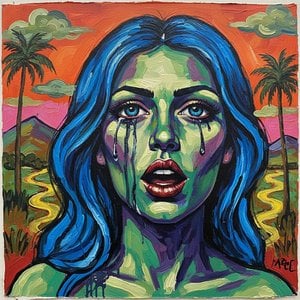
Embark on a journey through the vibrant world of Fauvism. Discover how masters like Henri Matisse revolutionized art through bold colors and raw emotion in this expert-led guide to one of modern art's most powerful movements.

Explore the profound beauty of fruit arrangement masterpieces. From Dutch Golden Age opulence to Baroque chiaroscuro, discover the art history, symbolism, and timeless elegance of classical still life paintings for the discerning collector.

 Preview
 Send
Send Share
Share
 Details
 Guide
Guide

 Download
 Similars
 X-Ray
X-Ray Diaporama
 Stats
Stats
 Read More







 Glass option is only available in size under 110 CM


