

Museum-quality giclée or canvas print with fast production and flexible finish options. ( Buy Hand Made Painting Switch to Digital Image)





























Pick from our preset sizes that match the artwork's original proportions.

You may enter your own dimensions to fit a specific frame or space. If your selected size does not match the original image's proportions, we will either crop the artwork or extend the image with a mirrored or solid-fill edge. A digital mockup will be sent for your approval before production begins.
Please note that the on-screen preview does not reflect the actual cropping or extension. Only the mockup will accurately show the final composition.
While custom sizes are available, we recommend selecting a dimension from the predefined list to preserve the original proportions.
Worldwide Delivery () in 2 weeks instead of standard 4/5 weeks. (24 September)


reclinnning nude back
Reproduction Size
Henri Matisse’s “Reclinnning Nude Back,” a captivating exploration of form and color, embodies the very essence of Fauvist aesthetics. Painted around 1910-1912, during his pivotal shift towards radical experimentation, this work offers a glimpse into a world where the objective representation of reality is deliberately abandoned in favor of subjective sensation. The painting depicts a woman reclining on her side, a pose frequently employed by Matisse to investigate the expressive potential of color and line. Unlike traditional depictions of the nude that prioritized anatomical accuracy, here, the figure exists primarily as a vibrant arrangement of hues – a testament to Matisse’s desire to capture not what he *saw*, but what he *felt*.
While seemingly straightforward in its depiction, “Reclinnning Nude Back” is rich with symbolic undertones. The reclining pose itself has a long history in Western art, often associated with themes of leisure, vulnerability, and contemplation. Here, however, it’s imbued with Matisse's personal exploration of the female form – a recurring motif throughout his oeuvre. The woman’s relaxed posture suggests a state of blissful repose, inviting the viewer to share in her tranquility. The inclusion of surrounding objects—the chairs, table, vase—adds to the sense of intimacy and domesticity, further emphasizing the painting's focus on human experience.
Matisse’s work emerged during a period of profound artistic change in early 20th-century France. Fauvism, meaning "wild beasts," was a short-lived but hugely influential movement that challenged the established conventions of Impressionism and Post-Impressionism. Artists like Matisse, André Derain, and Maurice de Vlaminck sought to liberate color from its descriptive function, using it instead as an expressive tool. “Reclinnning Nude Back” stands as a prime example of this revolutionary approach, foreshadowing the development of Abstract Expressionism in later decades. It represents a pivotal moment in art history – a bold assertion of artistic freedom and a testament to the power of color to evoke emotion and transform perception.


1869 - 1954 , France

Experience art's raw power! Explore 10 iconic paintings – Van Gogh, Kahlo & more – that define 'bold'. Discover the stories behind these expressive masterpieces and find museum-quality reproductions for your home at WahooArt.com.
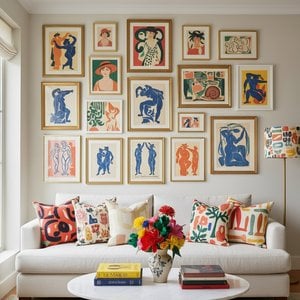
Journey through Henri Matisse's 25 most iconic paintings! Explore Fauvism, vibrant colors & the stories behind masterpieces like 'The Dance'. Find museum-quality art reproductions and curated decor ideas to elevate your space. Discover all masterpieces on WahooArt.com.

Explore Roy Lichtenstein's 25 most iconic Pop Art masterpieces! Discover the stories behind 'Drowning Girl', 'Look Mickey' & more. Find museum-quality reproductions and elevate your home decor with WahooArt. Explore the full collection online.
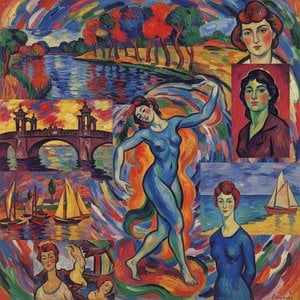
Explore 10 Fauvist masterpieces by Matisse, Derain & Vlaminck that ignited Modern Art! Discover bold colors, expressionist landscapes & the history of this revolutionary movement. Find museum-quality prints at WahooArt.com.
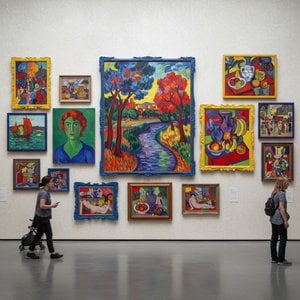
Explore the revolutionary world of Fauvism! Discover 10 masterpieces by Matisse, Derain & Vlaminck that defined this bold art movement. Find museum-quality reproductions and vibrant canvas prints to elevate your home decor at .

 Preview
 Send
Send Share
Share
 Details
 Guide
Guide

 Download
 Similars
 X-Ray
X-Ray Diaporama
 Stats
Stats

 Read More







 Glass option is only available in size under 110 CM


