
Preview AR preview Buy Hand Made Painting Switch to Digital Image Send
Details Guide Add to favorites Download Similars X-Ray Diaporama Stats

Path through a Normandy Village

Experience tranquility with Henri-Joseph Harpignies' 'Path through a Normandy Village.' This Impressionist landscape captures rural life & atmospheric beauty.

Explore Henri-Joseph Harpignies' serene landscapes & idyllic countryside scenes. A master of the Barbizon School, his 19th-century art evokes tranquility & nature's beauty.

Giclée / Art Print

Museum-quality giclée or canvas print with fast production and flexible finish options. ( Buy Hand Made Painting Switch to Digital Image)

Standard
custom
CM
INCH

Pick from our preset sizes that match the artwork's original proportions.

width
height

You may enter your own dimensions to fit a specific frame or space. If your selected size does not match the original image's proportions, we will either crop the artwork or extend the image with a mirrored or solid-fill edge. A digital mockup will be sent for your approval before production begins.
Please note that the on-screen preview does not reflect the actual cropping or extension. Only the mockup will accurately show the final composition.
While custom sizes are available, we recommend selecting a dimension from the predefined list to preserve the original proportions.

Worldwide Delivery () in 2 weeks instead of standard 4/5 weeks. (23 September)

why_choose_icon
Free Worldwide Express Shipping
why_choose_icon
High-Quality Linen Canvas
why_choose_icon
Full Shipping Insurance
why_choose_icon
Customs Tax Refund Guarantee
why_choose_icon
True Color Matching Guarantee
why_choose_icon
100-Day Return Policy (Defects Only)
why_choose_icon
100% Money-Back Guarantee
why_choose_icon
Bulk Discount Offer

Total Price

$ 69

reproduction

Path through a Normandy Village

Giclée / Art Print

Reproduction Size

-

Total Price

$ 69

Quick Facts

  • Subject or theme: Rural landscape, tranquility
  • Notable elements or techniques:
    • Loose brushstrokes
    • Atmospheric hues
  • Movement: Impressionism
  • Artist: Henri-Joseph Harpignies
  • Title: Path through a Normandy Village
  • Medium: Oil on canvas

Art Quiz

There is only one correct answer for each question.

Question 1:
What artistic movement is ‘Path through a Normandy Village’ most closely associated with?
Question 2:
Which of the following best describes the overall mood or atmosphere conveyed by the painting's color palette?
Question 3:
Henri-Joseph Harpignies initially faced pressure to pursue a different career path before dedicating himself to art. What was that initial expectation?
Question 4:
What is a key characteristic of the brushwork in ‘Path through a Normandy Village’?

A Glimpse of Rural Tranquility: Henri-Joseph Harpignies' "Path through a Normandy Village"

This captivating landscape painting, “Path through a Normandy Village,” created in 1877 by French artist Henri-Joseph Harpignies, offers a serene glimpse into rural life. The artwork transports viewers to the heart of Normandy, France, depicting a picturesque village nestled amongst rolling hills under a cloudy sky. It’s a quintessential example of Impressionism, capturing not just what is seen but also the feeling and atmosphere of a fleeting moment in time. Harpignies masterfully uses loose brushstrokes and subtle color variations to evoke a sense of tranquility and connection with nature – qualities that continue to resonate with audiences today.

Impressionistic Technique and Artistic Style

The painting is characterized by the hallmarks of Impressionism. Rather than striving for photographic realism, Harpignies prioritizes capturing the sensory experience of being present in this Norman landscape. Noticeable brushstrokes are layered upon one another, creating a textured surface that reflects the dappled light filtering through the clouds. The palette is dominated by muted greens, browns, and blues – colors chosen to convey the hazy, overcast conditions of the day. Horizontal lines define the hills and path, providing a sense of stability and grounding, while vertical strokes emphasize the structure of the prominent stone building in the foreground. This interplay of horizontal and vertical elements creates visual harmony within the composition. The technique involves applying paint in short, broken brushstrokes, often mixed directly on the canvas, allowing colors to blend optically – a signature characteristic of Impressionist painting.

Historical Context & Harpignies' Artistic Journey

Henri-Joseph Harpignies (1819-1916) was a pivotal figure in French landscape painting, deeply influenced by the Barbizon School and later Italian landscapes. Initially destined for a business career, his passion for art led him to formal training under Jean Achard in Paris. A transformative journey to Italy in 1848 profoundly shaped his artistic vision, imbuing his work with a sense of light and atmosphere. Harpignies’ style evolved over time, but he consistently maintained a commitment to capturing the beauty of the natural world. "Path through a Normandy Village" reflects this dedication, showcasing his ability to translate observed reality into evocative and emotionally resonant imagery. His later works often displayed a more polished finish than earlier pieces, yet retained the core principles of observation and atmospheric rendering that defined his career.

Symbolism & Emotional Impact

Beyond its aesthetic appeal, "Path through a Normandy Village" carries symbolic weight. The solitary figure walking along the path represents humanity’s connection to nature and the simple rhythms of rural life. The winding path itself can be interpreted as a metaphor for life's journey – a passage through time and experience. The overcast sky, while suggesting a slightly melancholic mood, also creates a sense of peaceful introspection. Overall, the painting evokes feelings of tranquility, solitude, and a deep appreciation for the beauty of the natural world. It’s an invitation to pause, reflect, and find solace in the quietude of the countryside – a timeless message that continues to inspire viewers today.

Artist Biography

Henri-Joseph Harpignies: A Life in Landscape

Early Life and Training

Born on June 28, 1819, in Valenciennes, France, Henri-Joseph Harpignies initially faced parental expectations to pursue a business career. However, his passion for art proved too strong to ignore. Of Belgian origin, his family’s initial plans were set aside as he dedicated himself to becoming an artist. At the age of twenty-seven, he formally began his artistic training in Paris, entering the atelier of Jean Achard. This foundational period focused on developing solid draughtsmanship skills – a crucial element that would remain central to Harpignies’ work.

The Barbizon School and Italian Influence

After two years under Achard's tutelage, Harpignies embarked on a pivotal journey to Italy in 1848. This experience profoundly shaped his artistic vision. Upon his return in 1850, he became acquainted with the leading figures of the Barbizon School, including Jean-Baptiste-Camille Corot. The Barbizon painters’ emphasis on direct observation of nature and their realistic portrayal of rural life deeply resonated with Harpignies. In 1860, he further cemented his artistic connection with Corot through a collaborative trip back to Italy.

Artistic Development and Style

Harpignies’ style is characterized by its serene and idyllic depictions of the French countryside. He masterfully captured the subtle nuances of light and atmosphere, creating landscapes that evoke a sense of tranquility and harmony. His technique involved careful observation combined with a refined understanding of composition. While influenced by the Barbizon School's realism, Harpignies developed his own distinct voice, often incorporating a poetic sensibility into his work.

Notable Works

  • Soir sur les bords de la Loire (Evening on the Banks of the Loire) – 1861: A quintessential example of his atmospheric landscapes, showcasing the beauty of the Loire Valley.
  • Les corbeaux (The Ravens) – 1865: Demonstrates his skill in capturing mood and detail within a natural setting.
  • Le soir (Evening) – 1866: A captivating portrayal of the quiet beauty of dusk.
  • La loire (The Loire) – 1882: Another stunning depiction of the Loire River, highlighting his mastery of light and water.
  • Vue de Saint-Privé (View of Saint-Privé) – 1883: A picturesque scene showcasing a charming French village.

Legacy and Influence

Harpignies’ artistic legacy extends beyond his own paintings. He was a dedicated teacher, imparting his knowledge and skills to numerous students, including Émile Appay (1876-1935) and James Wilson Morrice (1865-1924). His influence can be seen in the development of French landscape painting throughout the late 19th and early 20th centuries. He helped to solidify the Barbizon School’s impact on subsequent generations of artists.

Historical Significance

Henri-Joseph Harpignies occupies an important place in the history of French landscape painting. His work reflects a deep appreciation for nature and a commitment to capturing its beauty with honesty and sensitivity. He died in 1916, leaving behind a rich artistic legacy that continues to inspire and captivate audiences today. His paintings are held in prominent museum collections, including the Musée des Beaux-Arts Valence, ensuring his enduring recognition as a master of landscape art.
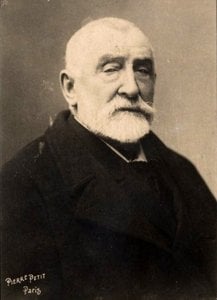
Henri-Joseph Harpignies

Henri-Joseph Harpignies

1819 - 1916 , France

Quick Facts

  • Birth Date: June 28, 1819
  • Birth Place: Valenciennes, France
  • Death Date: 1916
  • Influenced:
    • Émile Appay
    • James Wilson Morrice
  • Influenced By: Jean-Baptiste-Camille Corot
  • Movement: Barbizon School
  • Name: Henri-Joseph Harpignies
  • Nationality: French
  • Notable Works:
    • Soir sur les bords de la Loire
    • Les corbeaux
    • Le soir
    • La loire
    • Vue de Saint-Privé
Explore artworks organized by themes, styles, and characteristics.



































