Preview AR preview Buy Hand Made Painting Switch to Digital Image Send
Details Guide Add to favorites Download Similars X-Ray Diaporama Stats

Fruit

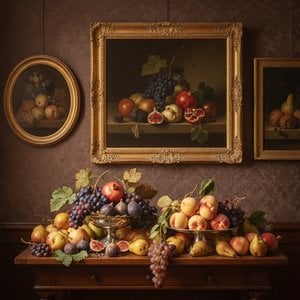
Exquisite 1860 still life by Harriet Cany Peale! A lavish fruit arrangement in Dutch Golden Age style, showcasing meticulous detail & dramatic lighting. Admire this timeless masterpiece!

Harriet Cany Peale (1799-1869) was an American landscape & portrait painter gaining recognition as a Hudson River School artist. Known for genre scenes like "Her Mistress's Clothes" and landscapes, she challenged expectations as a female artist in the 19th century.

Giclée / Art Print

Museum-quality giclée or canvas print with fast production and flexible finish options. ( Buy Hand Made Painting Switch to Digital Image)

Standard
custom
CM
INCH

Pick from our preset sizes that match the artwork's original proportions.

width
height

You may enter your own dimensions to fit a specific frame or space. If your selected size does not match the original image's proportions, we will either crop the artwork or extend the image with a mirrored or solid-fill edge. A digital mockup will be sent for your approval before production begins.
Please note that the on-screen preview does not reflect the actual cropping or extension. Only the mockup will accurately show the final composition.
While custom sizes are available, we recommend selecting a dimension from the predefined list to preserve the original proportions.

Worldwide Delivery () in 2 weeks instead of standard 4/5 weeks. (21 September)

why_choose_icon
Free Worldwide Express Shipping
why_choose_icon
High-Quality Linen Canvas
why_choose_icon
Full Shipping Insurance
why_choose_icon
Customs Tax Refund Guarantee
why_choose_icon
True Color Matching Guarantee
why_choose_icon
100-Day Return Policy (Defects Only)
why_choose_icon
100% Money-Back Guarantee
why_choose_icon
Bulk Discount Offer

Total Price

$ 69

reproduction

Fruit

Giclée / Art Print

Reproduction Size

-

Total Price

$ 69


Artist Biography

A Life Rediscovered: Harriet Cany Peale and the Hudson River School

Harriet Christina Cany Peale (1799-1869) stands as a compelling figure in American art history, an artist whose contributions were long overshadowed by her prominent family connections but who is now rightfully gaining recognition for her own distinct voice within the landscape and genre painting traditions of the mid-nineteenth century. Born in Philadelphia to Charles and Mary Cany, Harriet’s early life offered glimpses into the artistic world through her father's involvement in the “fancy goods business,” though formal training remained limited by the societal constraints placed upon women during that era. Before 1840, she navigated a path typical for women of her time, but one that would soon intersect dramatically with the established art community when she married Rembrandt Peale, son of the renowned portraitist Charles Willson Peale. This union, while providing access to artistic resources and mentorship, also initially obscured her individual identity as an artist, often leading to misattribution or categorization as merely a copyist.

Early Influences and Artistic Development

Harriet’s studies with Rembrandt Peale were foundational, exposing her to the techniques of French neoclassicism and the meticulous portraiture style favored by his family. However, she quickly demonstrated a broader artistic sensibility, drawn not only to portraits but also to the burgeoning landscape tradition that was defining American art at the time. The shared studio space with her husband fostered collaboration, yet it also presented challenges in establishing her unique aesthetic. While assisting Rembrandt with replicas of George Washington and other established works, Harriet began to develop her own genre scenes and landscapes, subtly imbuing them with a distinct perspective. Her early exhibitions at the Pennsylvania Academy of Fine Arts, beginning in 1840, marked the initial steps toward public recognition, though she often found herself competing within a male-dominated sphere where opportunities for women were scarce. The influence of her husband is undeniable, yet discerning critics are increasingly identifying the hallmarks of Harriet’s individual style—a delicate handling of light, an attention to atmospheric detail, and a nuanced portrayal of human emotion.

Genre Painting and Social Commentary

Harriet Cany Peale's work extended beyond landscapes into genre painting, where she tackled complex themes of power dynamics and social stratification. Her 1848 painting, Her Mistress’s Clothes, stands as a particularly striking example of her willingness to engage with challenging subject matter. The scene depicts an African American woman dressed in the finery of her white employer, peering into a mirror alongside the “mistress” herself. This composition is not merely a depiction of fashion; it's a potent exploration of class and racial hierarchies, subtly questioning the power structures inherent in antebellum society. Cany Peale’s portrayal of the servant’s features as “cruder” in contrast to the serene idealization of the mistress invites viewers to contemplate the complexities of identity and representation. This willingness to address social issues through her art sets her apart from many of her contemporaries, demonstrating a keen awareness of the world around her and a desire to provoke thought and discussion.

Recognition and Legacy within the Hudson River School

In recent years, scholarship has increasingly positioned Harriet Cany Peale as an important figure within the broader context of the Hudson River School. Her landscape painting, Kaaterskill Clove, became central to the 2010 traveling exhibition “Remember the Ladies: Women Artists of the Hudson River School,” organized by the Thomas Cole Historic Site. This work exemplifies her mastery of atmospheric perspective and her ability to capture the sublime beauty of the American wilderness. The rediscovery of paintings like Kaaterskill Clove has challenged previous assumptions about her artistic output, revealing a body of work that is both technically accomplished and emotionally resonant. While she may not have achieved the same level of fame as her male counterparts during her lifetime, Harriet Cany Peale’s legacy is now being re-evaluated, solidifying her place as a significant contributor to American art history and a pioneering woman artist who dared to forge her own path in a challenging era. Her work continues to inspire and provoke dialogue about the role of women in art, the complexities of social representation, and the enduring power of landscape painting.

Quick Facts

  • Artistic Movement Or Style: Hudson River School
  • Artists Who Influenced This Artist: ['Rembrandt Peale']
  • Date Of Birth: 1799
  • Date Of Death: January 12, 1869
  • Full Name: Harriet Christina Cany Peale
  • Nationality: American
  • Notable Artworks:
    • Her Mistress's Clothes
    • Kaaterskill Clove
  • Place Of Birth: Philadelphia, USA
Explore artworks organized by themes, styles, and characteristics.