

Museum-quality giclée or canvas print with fast production and flexible finish options. ( Buy Hand Made Painting Switch to Digital Image)





























Pick from our preset sizes that match the artwork's original proportions.

You may enter your own dimensions to fit a specific frame or space. If your selected size does not match the original image's proportions, we will either crop the artwork or extend the image with a mirrored or solid-fill edge. A digital mockup will be sent for your approval before production begins.
Please note that the on-screen preview does not reflect the actual cropping or extension. Only the mockup will accurately show the final composition.
While custom sizes are available, we recommend selecting a dimension from the predefined list to preserve the original proportions.
Worldwide Delivery () in 2 weeks instead of standard 4/5 weeks. (16 September)


untitled (3007)
Reproduction Size
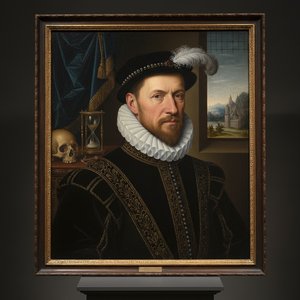
Hans Holbein the Younger's “untitled (3007)” stands as a testament to the meticulous observation and profound psychological understanding that characterized the Northern Renaissance. This portrait, depicting a woman adorned in elegant black drapery accented with shimmering gold trim, transcends mere likeness; it captures an aura of quiet confidence and contemplative grace—qualities deeply rooted in the artistic sensibilities of its era.
Beyond its visual splendor lies a rich tapestry of symbolism. The gold trim adorning the dress represents wealth and prestige—a visible manifestation of social status within Tudor society. Furthermore, the woman’s posture exudes composure and dignity, reflecting the moral virtues expected of aristocratic women during this period. The small object held in her hand remains enigmatic, prompting speculation about its significance – perhaps a token of remembrance or a symbol of faith.
"untitled (3007)" isn't merely a depiction of a person; it’s an exploration of inner character—a feat accomplished through Holbein’s masterful use of observation and psychological insight. The woman’s serene expression invites contemplation, prompting viewers to consider themes of grace, dignity, and quiet introspection. This enduring portrait continues to captivate audiences today because it speaks to the timeless human desire for beauty, truth, and understanding—qualities that resonate powerfully across centuries.


1497 - 1543 , Italy

Unveil the intricate mastery of Northern Renaissance Art. Explore the luminous oil techniques, hidden symbolism, and breathtaking realism of Flemish masters through an expert lens of art history and technical precision.
Explore the breathtaking precision of Hans Holbein the Younger. From Tudor royal portraits to intricate Northern Renaissance details, discover the mastery behind his legendary works and learn how to bring this historical grandeur into your collection with museum-quality reproductions.

Explore the dramatic evolution of Northern Mannerism. Discover how masters like Bosch and Grünewald transitioned from Renaissance harmony to profound, elegant distortion through an expert analysis of symbolism, emotional intensity, and artistic innovation.

 Preview
 Send
Send Share
Share
 Details

 Download
 Similars
 X-Ray
X-Ray Diaporama
 Stats
Stats

 Read More







 Glass option is only available in size under 110 CM


![Double Portrait of Jean de Dinteville and Georges de Selve (aka The Ambassadors) [detail]](/media/artworks/images-thumb/bb/ab/bbab7ce77b7dd15d23d21114a63b51a4.jpg)


