Oil On CanvasWallArtSymbolist Painting
 1868
1868 51.0 x 87.0 cm
Museum-quality giclée or canvas print with fast production and flexible finish options. ( Buy Hand Made Painting Switch to Digital Image)





























Pick from our preset sizes that match the artwork's original proportions.

You may enter your own dimensions to fit a specific frame or space. If your selected size does not match the original image's proportions, we will either crop the artwork or extend the image with a mirrored or solid-fill edge. A digital mockup will be sent for your approval before production begins.
Please note that the on-screen preview does not reflect the actual cropping or extension. Only the mockup will accurately show the final composition.
While custom sizes are available, we recommend selecting a dimension from the predefined list to preserve the original proportions.
Worldwide Delivery () in 2 weeks instead of standard 4/5 weeks. (7 October)


Prometheus
Reproduction Size
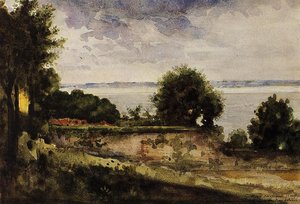
Gustave Moreau's 1868 painting, *Prometheus*, isn’t merely a depiction of the Greek titan; it’s an immersion into a realm of potent symbolism and deeply felt emotion. This oil on canvas, measuring a modest 51 x 87 cm, embodies the core tenets of Symbolism – a movement Moreau helped define – prioritizing evocative suggestion over literal representation. The painting invites us not to simply *see* Prometheus, but to *feel* his burden, his defiance, and the profound consequences of his act of generosity. Moreau masterfully utilizes color and texture to create an atmosphere thick with melancholy and ancient wisdom, drawing the viewer into a world where myth becomes intensely personal.
At the painting's center sits Prometheus, rendered not as a heroic figure of classical sculpture, but as a man profoundly weary. He is seated upon a rough-hewn rock, his posture suggesting both resignation and stubborn resolve. Moreau deliberately avoids idealized beauty; instead, he presents Prometheus with an almost unsettling stillness, his face etched with the weight of his transgression. The dog at his feet – a recurring motif in Moreau’s work – represents loyalty and perhaps even complicity, while the second dog nearby hints at the duality inherent in the titan's fate: a companion to both reward and punishment. The careful placement of these animals anchors Prometheus within a domestic space, subtly transforming a mythological narrative into a deeply human one.
Moreau’s genius lies in his layering of symbols. The two birds are particularly significant; one perched above Prometheus, seemingly observing him with detached wisdom, while the other, positioned near the upper right corner, suggests a distant, unattainable paradise – a reminder of what was lost when fire was stolen from the gods. The swirling clouds that dominate the background aren’t simply atmospheric detail; they represent chaos and the turbulent consequences of Prometheus's actions. They also evoke the heavens themselves, connecting the earthly scene with the divine realm from which the fire originated. The muted palette – dominated by browns, blues, and ochres – reinforces this sense of somber contemplation.
Created during a period when Symbolist painting was challenging the conventions of Realism and Impressionism, *Prometheus* exemplifies Moreau's distinctive approach. He eschewed bright colors and fleeting effects in favor of rich, dark tones and meticulous detail. His brushwork is deliberately dense and textured, creating a surface that feels almost sculptural. Moreau’s artistic training at the École des Beaux-Arts provided him with a solid foundation, but his true innovation lay in his ability to infuse traditional academic techniques with intensely personal symbolism. The painting's creation coincided with Moreau’s exploration of themes related to mythology, religion, and the human psyche – subjects he would continue to grapple with throughout his career. His dedication is further evidenced by the existence of the Musée National Gustave-Moreau in Paris, a testament to his profound influence on the art world.
A hand-painted reproduction of *Prometheus* offers an exceptional opportunity to bring this evocative masterpiece into your home or office. WahooArt’s meticulous reproductions capture the painting's rich textures and atmospheric depth with unparalleled accuracy, allowing you to experience the power and beauty of Moreau’s vision firsthand. Consider how this powerful image can add a touch of timeless mystery and intellectual resonance to your space.
"Prometheus" was created by Gustave Moreau. The information on this page describes Gustave Moreau's original work.
"Prometheus" belongs to the Mature Symbolism of Gustave Moreau's career. This classification relates the work to the artist's development.
The colors of "Prometheus" form an earthy palette. This classification describes the dominant color families.
The medium of "Prometheus" by Gustave Moreau is oil on canvas, and its recorded dimensions are 51 x 87 cm.
Gustave Moreau was 42 years old when creating "Prometheus" in 1868. The age is computed from the artist's birth year, 1826.
"Prometheus" by Gustave Moreau was created in 1868.
"Prometheus" by Gustave Moreau shows a monochromatic color intensity.


1826 - 1898 , France

Discover the enduring allure of oil on canvas. Explore how master techniques like impasto and glazing create the depth, texture, and emotional resonance found in the world's greatest masterpieces. An essential guide for fine art enthusiasts and discerning collectors.

Discover the enduring legacy of oil on board painting. Explore how historical techniques, rich impasto textures, and structural durability create timeless masterpieces that bridge Renaissance grandeur with modern art collecting excellence.

Explore the profound secrets of classical oil painting. From the delicate mastery of glazing to the dramatic depth of chiaroscuro, discover the timeless techniques used by Old Masters to create enduring, museum-quality masterpieces that capture light and emotion.

Embark on a sophisticated journey through the eternal allure of mythological art. Discover how master painters breathe life into ancient legends, from Greek deities to Baroque masterpieces, and learn to curate these timeless narratives within your own exquisite art collection.

Discover the profound allure of oil on canvas. Explore the mastery of impasto textures, the science of pigment longevity, and expert guides to selecting museum-quality reproductions that elevate your collection with timeless elegance and tactile depth.

 Preview
 Send
Send Share
Share
 Details
 Guide
Guide

 Download
 Similars
 X-Ray
X-Ray Diaporama
 Stats
Stats Read More







 Glass option is only available in size under 110 CM