

Hand-painted oil on canvas in your size and frame, made to order by our artists. ( Switch to Print Switch to Digital Image)





























Pick from our preset sizes that match the artwork's original proportions.

You may enter your own dimensions to fit a specific frame or space. If your selected size does not match the original image's proportions, we will either crop the artwork or extend the painting with additional hand-painted elements. A digital mockup will be sent for your approval before production begins.
Please note that the on-screen preview does not reflect the actual cropping or extension. Only the mockup will accurately show the final composition.
While custom sizes are available, we recommend selecting a dimension from the predefined list to preserve the original proportions.
Worldwide Delivery () in 3/4 weeks instead of standard 5 weeks. (23 September). No compromise on quality.


Prince Hamlet kill King Claudius
Reproduction Size
Gustave Moreau's “Prince Hamlet Kill King Claudius” is not merely a depiction of Shakespeare’s tragedy; it’s an immersion into the very heart of its profound despair. Painted during the height of Symbolism – a movement that sought to express subjective emotions and ideas rather than objective reality – this work exemplifies Moreau’s signature style: a haunting blend of classical allusion, dreamlike imagery, and intensely psychological drama. The painting captures a pivotal moment, frozen in a tableau of violence and betrayal, yet imbued with an almost unbearable sense of premonition.
Moreau’s artistic trajectory was profoundly influenced by the Symbolist movement, a reaction against the perceived materialism of Realism and Impressionism. He drew heavily on mythology, religious iconography, and esoteric symbolism to explore themes of mortality, guilt, and the subconscious. The crown-wearing figure, undoubtedly Hamlet, is not simply a warrior; he embodies a tormented prince grappling with his destiny. The woman observing the scene could represent Gertrude’s complicity or perhaps Ophelia's impending madness – figures shrouded in ambiguity, reflecting the play’s central themes of deception and loss.
The painting’s composition deliberately evokes a sense of claustrophobia and entrapment, mirroring Hamlet’s psychological state. The use of dark, somber colors—deep blues, purples, and browns—further enhances this feeling of dread and foreboding. Moreau's meticulous attention to detail – the glint of steel, the texture of fabric, the expressions on the characters’ faces – creates a powerfully immersive experience for the viewer.
Moreau was a key figure in the Parisian artistic scene during the late 19th century. His work reflects the intellectual ferment of the time, influenced by thinkers such as Nietzsche and Wagner, who were exploring themes of morality, power, and the subconscious. Moreau’s training at the École des Beaux-Arts provided him with a solid foundation in classical technique, but he ultimately rejected academic conventions in favor of his own unique vision. He was part of a group of artists known as "Les Symbolistes," who sought to create art that would evoke emotions and ideas rather than simply represent reality.
The painting’s dramatic intensity and psychological depth align with the broader trends in late 19th-century art, anticipating the Expressionist movement of the early 20th century. Moreau's exploration of human suffering and moral ambiguity continues to resonate with viewers today, solidifying his place as one of the most important figures in Symbolist painting.
"Prince Hamlet Kill King Claudius" possesses a haunting beauty that transcends its tragic subject matter. Moreau's masterful use of color, composition, and symbolism creates an image that is both visually arresting and emotionally profound. This reproduction offers a unique opportunity to own a piece of art history – a window into the mind of one of Symbolism’s most visionary artists. Its dramatic narrative and evocative atmosphere make it a compelling addition to any collection, while its meticulous detail ensures a stunning display within your interior design.


1826 - 1898 , France
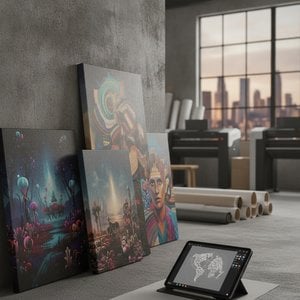
Transform your digital artistry into a prestigious global brand with WahooArt’s premium Giclée prints. Experience museum-quality archival excellence and seamless on-demand fulfillment designed for the modern creative entrepreneur seeking to build a lasting artistic legacy.

Master the nuances of Giclée printing with our expert guide. Discover how pigment-based inks and museum-grade substrates create fade-resistant, high-fidelity art reproductions designed for discerning collectors seeking unparalleled quality and longevity.

 Preview
 Send
Send Share
Share
 Details
 Guide
Guide

 Download
 Similars
 X-Ray
X-Ray Diaporama
 Stats
Stats

 Read More







 Glass option is only available in size under 110 CM


