Preview AR preview Buy Hand Made Painting Switch to Digital Image Send
Details Guide Add to favorites Download Similars X-Ray Diaporama Stats

Oedipus Wanderer

Delve into Gustave Moreau’s Symbolist masterpiece, ‘Oedipus Wanderer’! Explore intricate details of this iconic painting housed at Metz Museum & discover stunning handmade reproductions on WahooArt.

Explore the captivating Symbolist art of Gustave Moreau (1826-1898), famed for mythological & biblical paintings like 'Salome'. Influenced Matisse & Rouault. Discover his dreamlike world!

Giclée / Art Print

Museum-quality giclée or canvas print with fast production and flexible finish options. ( Buy Hand Made Painting Switch to Digital Image)

Corner sample of the P118B picture frame: moulded polystyrene, 5 cm wide and 3 cm thick
P118B $10
Corner sample of the P118H picture frame: moulded polystyrene, 5 cm wide and 3 cm thick
P118H $10
Corner sample of the P118W picture frame: moulded polystyrene, 5 cm wide and 3 cm thick
P118W $10
Corner sample of the P438Z picture frame: moulded polystyrene, 5.5 cm wide and 3.5 cm thick
P438Z $10
Corner sample of the P508JH picture frame: moulded polystyrene, 7 cm wide and 3.5 cm thick
P508JH $12
Corner sample of the P508YH picture frame: moulded polystyrene, 7 cm wide and 3.5 cm thick
P508YH $12
Corner sample of the P805H picture frame: moulded polystyrene, 5 cm wide and 3.5 cm thick
P805H $10
Corner sample of the P805Z picture frame: moulded polystyrene, 5 cm wide and 3.5 cm thick
P805Z $10
Corner sample of the P919BZ picture frame: moulded polystyrene, 7 cm wide and 3.5 cm thick
P919BZ $10
Corner sample of the P919G picture frame: moulded polystyrene, 7 cm wide and 3.5 cm thick
P919G $10
Corner sample of the P919XJ picture frame: moulded polystyrene, 7 cm wide and 3.5 cm thick
P919XJ $10
Corner sample of the P959ZH picture frame: moulded polystyrene, 5 cm wide and 3 cm thick
P959ZH $10
Corner sample of the P968JZ picture frame: moulded polystyrene, 6 cm wide and 4 cm thick
P968JZ $12
Corner sample of the W106C picture frame: solid wood, 5 cm wide and 3 cm thick
W106C $8
Corner sample of the W218G picture frame: solid wood, 5 cm wide and 3 cm thick
W218G $10
Corner sample of the W218JH picture frame: solid wood, 5 cm wide and 3 cm thick
W218JH $8
Corner sample of the W218Y picture frame: solid wood, 5 cm wide and 3 cm thick
W218Y $10
Corner sample of the W307PJ picture frame: solid wood, 6 cm wide and 3 cm thick
W307PJ $10
Corner sample of the W316G picture frame: solid wood, 6 cm wide and 3 cm thick
W316G $10
Corner sample of the W316PJ picture frame: solid wood, 6 cm wide and 3 cm thick
W316PJ $8
Corner sample of the W316Y picture frame: solid wood, 6 cm wide and 3 cm thick
W316Y $10
Corner sample of the W398PJ picture frame: solid wood, 5 cm wide and 3 cm thick
W398PJ $8
Corner sample of the W4111J picture frame: solid wood, 6.5 cm wide and 3.5 cm thick
W4111J $10
Corner sample of the W500HY picture frame: solid wood, 7 cm wide and 5 cm thick
W500HY $15
Corner sample of the W500JH picture frame: solid wood, 7 cm wide and 5 cm thick
W500JH $15
Corner sample of the W692G picture frame: solid wood, 8 cm wide and 4 cm thick
W692G $12
Corner sample of the W849H picture frame: solid wood, 5 cm wide and 3 cm thick
W849H $8
Corner sample of the W940BG picture frame: solid wood, 7.5 cm wide and 4.5 cm thick
W940BG $15
Corner sample of the W953PJ picture frame: solid wood, 6 cm wide and 3.5 cm thick
W953PJ $8

Standard
custom
CM
INCH

Pick from our preset sizes that match the artwork's original proportions.

width
height

Type the width and the height you need, to fit your frame or your wall. A print can only be cut, never made bigger than the picture, so a size with a different shape loses a part of the image. We send you a digital mockup to approve before we print anything. The picture shown on this page does not show the real cut — only the mockup does.

Worldwide Delivery () in 2 weeks instead of standard 4/5 weeks. (23 October)

Free Worldwide Express Shipping
High-Quality Linen Canvas
Full Shipping Insurance
Customs Tax Refund Guarantee
True Color Matching Guarantee
100-Day Return Policy (Defects Only)
100% Money-Back Guarantee
Bulk Discount Offer

Total Price

$ 69

Oedipus Wanderer

Giclée / Art Print

Reproduction Size

-

Total Price

$ 69

Quick Facts

  • Subject or theme: Philosophical contemplation; Fate
  • Title: Oedipus Wanderer
  • Year: 1888
  • Artistic style: Dreamlike; Decorative; Surrealist
  • Notable elements or techniques: Mythological imagery; Symbolic representation

Art Quiz

There is only one correct answer for each question.

Question 1:
In which museum is the painting 'Oedipus Wanderer' currently located?
Question 2:
What does the figure's wings represent in the painting?
Question 3:
In what year was 'Oedipus Wanderer' painted by Gustave Moreau?
Question 4:
What does the scepter held aloft in the painting signify?
Question 5:
Which artistic movement is 'Oedipus Wanderer' considered a cornerstone of?

A Descent Into Mythic Symbolism

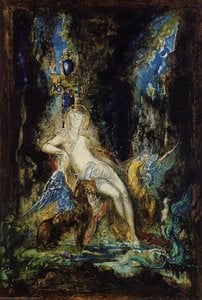
The Oedipus Wanderer, painted by Gustave Moreau in 1888, stands as a cornerstone of Symbolist art—a haunting tableau that transcends mere visual representation to delve into the depths of human psychology and spiritual contemplation. Currently residing within the Musée d'Art et d'Histoire in Metz, France, this monumental oil on canvas offers an unparalleled glimpse into Moreau’s singular artistic vision. More than just depicting a figure perched atop a rock adorned with wings, it embodies a complex tapestry of mythological allusion and psychological exploration that continues to fascinate scholars and collectors alike. In this work, the boundaries between reality and dream dissolve, inviting the viewer into a realm where the weight of destiny meets the lightness of transcendence.

A Visionary Encounter With Myth

Moreau's fascination with ancient myths—particularly the tragic trajectory of Oedipus—fueled his most profound artistic endeavors. The painting portrays a solitary figure, draped in regal attire and crowned with feathers, embodying both vulnerability and unwavering resolve. This figure, positioned atop a jagged rock formation symbolizing hardship and isolation, is not merely observing; she actively traverses a landscape fraught with symbolic significance. Her wings represent aspiration, transcendence, and the pursuit of spiritual enlightenment—a motif recurrent throughout Moreau’s oeuvre. The scepter held aloft signifies authority and dominion, yet it feels strangely powerless against the overwhelming presence of the surrounding environment. Through this encounter, Moreau captures the tension between human agency and the inexorable pull of fate, making the piece a profound meditation on the human condition.

Technique and the Ethereal Glow

The backdrop is dominated by a stylized forest teeming with fantastical flora and fauna—elements meticulously rendered in Moreau's signature technique. He employed glazing—a layering process where thin washes of translucent pigment are applied over subsequent layers—to achieve an ethereal luminosity that captures the elusive beauty of the natural world while simultaneously conveying a sense of unease and mystery. The muted palette, predominantly browns and greens punctuated by flashes of gold, contributes to a sense of ancient, weathered majesty. This meticulous application of paint creates a texture that feels almost tactile, as if the viewer could reach into the canvas and touch the very fabric of the mythic landscape. For the discerning collector or interior designer, such depth and luminosity provide a captivating focal point, offering a sophisticated layer of intellectual and aesthetic richness to any curated space.

The Emotional Resonance of Symbolism

To behold the Oedipus Wanderer is to experience a profound emotional journey. It is an invitation into a dreamscape where the shadows of the past meet the light of spiritual yearning. The painting does not merely tell a story; it evokes a mood of contemplative solitude and quiet strength. For those seeking to bring a sense of history, mystery, and high-art prestige into their homes, this masterpiece serves as a window into the late 19th-century Symbolist movement. It is a piece that demands attention, not through loud colors or jarring compositions, but through its ability to whisper secrets of the soul, making it an incomparable choice for those who value art that inspires deep thought and emotional connection.

Questions & Answers

Where should a reproduction of "Oedipus Wanderer" by Gustave Moreau be hung?

Format (portrait) and recommended space (living room) are the two placement facts recorded for "Oedipus Wanderer" by Gustave Moreau.

In what period was "Oedipus Wanderer" by Gustave Moreau made?

The historical period of "Oedipus Wanderer" by Gustave Moreau is 19th-Century. This classification situates the work in art history.

Where does "Oedipus Wanderer" fall in Gustave Moreau's career?

"Oedipus Wanderer" belongs to the Mature Period of Gustave Moreau's career. This classification relates the work to the artist's development.


Artist Biography

A Dream Weaver of Symbolism: The Life and Art of Gustave Moreau

Gustave Moreau, a name synonymous with the ethereal beauty and enigmatic depths of Symbolist painting, emerged from 19th-century Paris as a singular artistic voice. Born in 1826 into a bourgeois family—his father an architect and archivist—Moreau’s early life was steeped in intellectual curiosity and aesthetic sensibility. From a young age, he displayed a remarkable gift for drawing, nurtured through traditional academic training at the École des Beaux-Arts under figures like François-Édouard Picot. However, Moreau's artistic path would diverge sharply from the prevailing Realist and Impressionist currents of his time. He wasn’t interested in capturing fleeting moments or objective reality; instead, he sought to unlock the hidden realms of myth, religion, and the human psyche through a deeply personal and symbolic visual language. His journey was one of inward exploration, translating subjective emotions and spiritual yearnings onto canvas with an obsessive attention to detail and a vibrant, often opulent palette.

The Forge of Imagination: Influences and Artistic Development

Moreau’s artistic development wasn't born in a vacuum. While rejecting the dominant trends of his era, he drew inspiration from diverse sources. The dramatic use of color and exotic subject matter found in the works of Eugène Delacroix resonated deeply with him, igniting a passion for narrative painting imbued with emotional intensity. He also held Renaissance masters like Michelangelo and Leonardo da Vinci in high esteem, admiring their mastery of composition, anatomy, and psychological insight. Yet, Moreau wasn’t merely imitating these artists; he was synthesizing their influences into something entirely new. His travels to Italy in the 1850s proved pivotal, immersing him in the art of antiquity and the Renaissance, providing a wealth of motifs and stylistic cues that would populate his future works. He meticulously copied Old Master paintings, not as an exercise in replication, but as a means of absorbing their techniques and unlocking their secrets. This dedication to craft, combined with his burgeoning interest in mythology and literature, laid the foundation for his unique artistic vision.

A World of Symbols: Themes and Techniques

Moreau’s paintings are not simply illustrations of myths or biblical stories; they are complex allegories that invite contemplation and interpretation. He delved into narratives like those of Salome, Orpheus, Jupiter and Semele, and countless others, not to retell them literally, but to explore their underlying psychological and spiritual truths. His canvases teem with symbolic imagery—serpents representing temptation, jewels signifying earthly desires, and figures embodying abstract concepts like grief, loss, or redemption. He masterfully created a dreamlike atmosphere through intricate detail, rich textures, and an often unsettling juxtaposition of light and shadow. Moreau’s technique was characterized by meticulous layering of paint, creating surfaces that shimmer with iridescent colors and evoke a sense of otherworldly beauty. His use of gold leaf further enhanced this effect, lending his works a Byzantine quality that underscored their spiritual dimension. He wasn't concerned with capturing realistic textures or perspectives; instead, he prioritized the expressive power of color and form to convey mood and meaning.

Legacy and Influence: The Enduring Power of Symbolism

Though initially met with mixed reactions, Moreau became a central figure in the burgeoning Symbolist movement during the 1890s. Unlike some of his contemporaries who actively sought public attention, he remained somewhat reclusive, preferring to work independently and avoid artistic debates. However, his influence was undeniable. In 1893, he accepted a professorship at the École des Beaux-Arts, where he profoundly impacted generations of artists, including Henri Matisse and Georges Rouault. He encouraged his students to embrace imagination, symbolism, and individual expression, urging them to break free from conventional artistic norms. While Symbolism eventually waned in popularity after Moreau’s death in 1898, his work experienced a significant reevaluation in the latter half of the 20th century. Today, he is widely regarded as one of the most important figures in the movement and a precursor to modern art. The Musée Gustave Moreau, housed in his former studio and home in Paris, stands as a testament to his enduring legacy—a sanctuary where visitors can immerse themselves in the captivating world of this extraordinary artist. His paintings continue to resonate with audiences today, offering glimpses into the hidden depths of the human soul and reminding us of the power of art to transcend the boundaries of reality.

Notable Works

  • Salome Dancing before Herod: Perhaps his most famous work, this painting exemplifies Moreau’s opulent style and fascination with biblical narratives.
  • Jupiter and Semele: A dramatic depiction of the Greek myth, showcasing Moreau's mastery of composition and color.
  • Orpheus: Several paintings by Moreau explore the myth of Orpheus, reflecting themes of loss, grief, and artistic inspiration.
  • The Apparition: Demonstrates his skill in creating ethereal and otherworldly scenes.
  • Desdemona: A poignant portrayal of Shakespeare's tragic heroine.
Gustave Moreau

Gustave Moreau

1826 - 1898 , France

Quick Facts

  • Artistic Movement Or Style: Symbolism
  • Artists Or Movements Influenced By This Artist:
    • Henri Matisse
    • Georges Rouault
  • Artists Who Influenced This Artist:
    • Eugène Delacroix
    • Michelangelo
    • Leonardo da Vinci
  • Full Name: Gustave Moreau
  • Nationality: French
  • Notable Artworks:
    • Salome Dancing before Herod
    • Jupiter and Semele
    • Orpheus
    • The Apparition
    • Desdemona
  • Place Of Birth: Paris, France
  • Date Of Birth: 1826
  • Date Of Death: 1898
Explore artworks organized by themes, styles, and characteristics.