

 Oil On CanvasWallArtRealist Painting
 1866Early Medieval
 130.0 x 97.0 cm
 Metropolitan Museum of Art
Hand-painted oil on canvas in your size and frame, made to order by our artists. ( Switch to Print Switch to Digital Image)





























Pick from our preset sizes that match the artwork's original proportions.

You may enter your own dimensions to fit a specific frame or space. If your selected size does not match the original image's proportions, we will either crop the artwork or extend the painting with additional hand-painted elements. A digital mockup will be sent for your approval before production begins.
Please note that the on-screen preview does not reflect the actual cropping or extension. Only the mockup will accurately show the final composition.
While custom sizes are available, we recommend selecting a dimension from the predefined list to preserve the original proportions.
Worldwide Delivery () in 3/4 weeks instead of standard 5 weeks. (16 September). No compromise on quality.


The Young Bather
Reproduction Size
Gustave Courbet's "The Young Bather," painted in 1866, isn’t merely a depiction of a woman enjoying the water; it’s a carefully constructed tableau brimming with quiet defiance and a profound engagement with the realities of late 19th-century France. This work, now housed within the Metropolitan Museum of Art in New York, represents a pivotal moment in Courbet's career – a bold assertion of realism against the prevailing romanticized ideals dominating the art world. The painting immediately draws the viewer into a sun-drenched woodland scene, where a young woman, bathed in dappled light, occupies the central space with an almost unnerving sense of naturalism. Her posture is relaxed yet alert, her gaze lowered towards the water, suggesting both vulnerability and self-possession.
Courbet’s decision to portray a nude female figure in an outdoor setting was, at the time of its exhibition, profoundly controversial. The subject matter itself – a realistic, unidealized depiction of the human body – directly challenged the academic standards that prioritized mythological or historical subjects and emphasized idealized beauty. Critics initially condemned the painting for its perceived vulgarity, arguing it lacked artistic merit and violated societal norms. However, as art historian Albert Boime has noted, this very controversy served to elevate the work’s significance, forcing a critical examination of the role of the nude in art and society. The woman's physicality isn't presented with overt sensuality; rather, it embodies a celebration of the female form in its natural state – a radical statement for the era.
Courbet’s masterful technique is immediately apparent. He employs a meticulous observation of light and shadow, creating a remarkably tangible sense of depth and texture within the painting. The application of paint is deliberately rough and unpolished, mirroring the immediacy of direct observation. Notice how he captures the play of sunlight on the water's surface, the delicate folds of the woman’s dress, and the intricate details of the surrounding foliage. The muted palette – dominated by greens, blues, and earthy browns – contributes to a sense of tranquility while simultaneously emphasizing the materiality of the scene. The composition itself is carefully balanced; the figure occupies a central position, yet she doesn't dominate the space, allowing the viewer to fully appreciate the beauty of the natural setting.
"The Young Bather" transcends a simple depiction of a woman enjoying a bath. It speaks to themes of independence, self-sufficiency, and a connection with nature. The phrase “health itself” attributed to one critic highlights the painting’s potential symbolism – a return to primal instincts and a rejection of artificial constraints. Courbet's deliberate choice of a woodland setting further reinforces this idea, suggesting a sanctuary away from societal pressures. The woman’s gaze downwards can be interpreted as a moment of introspection, a quiet communion with her own body and the surrounding environment. Ultimately, the painting evokes a feeling of serene contemplation – a reminder to appreciate the simple pleasures of life and to embrace one's own individuality.
WahooArt offers exquisite, hand-painted reproductions of “The Young Bather,” allowing you to bring this iconic masterpiece into your home or office. Our artists meticulously recreate Courbet’s nuanced style and vibrant palette, ensuring a faithful representation of this pivotal work in art history. Explore our collection today and experience the enduring power of Courbet's vision.


1819 - 1877 , France

Explore 10 defining masterpieces of Romantic Realism! Discover Courbet, Millet & Daumier's powerful paintings—capturing emotion and social realities. Find museum-quality reproductions for your home at WahooArt.com.
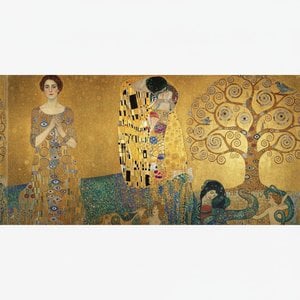
Delve into the world of Gustav Klimt with our top 25 masterpieces! Explore his iconic paintings – 'The Kiss,' 'Portrait of Adele,' and more. Discover museum-quality reproductions & curated decor ideas. Explore the full collection online at WahooArt.com.

Explore 10 defining Realism masterpieces – Courbet, Millet & more. Discover the stories behind these iconic paintings and their impact on art history. Find museum-quality reproductions for your home at !

Explore the revolutionary art of Gustave Courbet, pioneer of Realism. Discover his iconic paintings, social commentary, and lasting impact on 19th-century French art history. Expert analysis & insights.

Explore the captivating world of Realism in art! Discover key artists like Courbet, groundbreaking techniques & its lasting impact on society and modern painting. Expert insights at WahooArt.

 Preview
 Send
Send Share
Share
 Details

 Download
 Similars
 X-Ray
X-Ray Diaporama
 Stats
Stats Read More







 Glass option is only available in size under 110 CM


