

Museum-quality giclée or canvas print with fast production and flexible finish options. ( Buy Hand Made Painting Switch to Digital Image)





























Pick from our preset sizes that match the artwork's original proportions.

Type the width and the height you need, to fit your frame or your wall. A print can only be cut, never made bigger than the picture, so a size with a different shape loses a part of the image. We send you a digital mockup to approve before we print anything. The picture shown on this page does not show the real cut — only the mockup does.
Worldwide Delivery () in 2 weeks instead of standard 4/5 weeks. (22 October)
The bride
Reproduction Size
Gustav Klimt’s The Bride (circa 1902-1907) isn't merely a painting; it’s an immersive experience, a shimmering tableau vivant that encapsulates the spirit of Art Nouveau while simultaneously hinting at deeper psychological currents. This monumental work, housed in the Belvedere Museum in Vienna, immediately captivates with its opulent use of gold leaf – a signature technique of Klimt’s “golden phase” – and its exploration of female relationships within a carefully constructed symbolic landscape. The painting depicts a group of women in varying states of repose and interaction, arranged against a subtly textured outdoor backdrop that suggests both serenity and an underlying tension. It's a scene brimming with quiet intimacy, yet simultaneously imbued with a sense of mystery and unspoken narratives.
Klimt’s genius lies not just in his technical mastery – the meticulous application of gold, the fluid lines, and the evocative use of color – but also in his ability to imbue seemingly simple forms with profound meaning. The composition itself is deliberately complex, drawing the eye through a series of interconnected figures. The reclining woman, bathed in light, represents perhaps the central figure, while the others—standing, leaning, holding one another—suggest a network of support and shared experience. The use of ties, subtly woven into the women’s clothing, powerfully symbolizes their connection, their unity, and their mutual dependence – a visual representation of sisterhood and female solidarity.
The Bride stands as a quintessential example of Art Nouveau’s aesthetic principles. The movement, which flourished in the late 19th and early 20th centuries, rejected the rigid formality of academic art in favor of organic forms, flowing lines, and an embrace of nature's beauty. Klimt masterfully translates these ideals into his work, employing sinuous curves, intricate patterns, and a deliberate blurring of boundaries between figure and background. The painting’s surface is alive with ornamentation – delicate floral motifs, swirling designs, and the shimmering gold that dominates the composition—creating a rich tapestry of visual delight.
However, Art Nouveau in Klimt's hands transcends mere decorative excess. It becomes a vehicle for exploring themes of femininity, sexuality, and the complexities of human relationships. The figures are rendered with an undeniable sensuality, their bodies presented not as objects of idealized beauty but as vessels of emotion and experience. The painting’s atmosphere is one of quiet contemplation, inviting viewers to ponder the unspoken narratives that unfold within this intimate gathering.
Beyond its surface beauty, The Bride is rich in symbolic meaning. The outdoor setting, with its trees and dappled light, suggests a connection to nature—a realm of fertility, growth, and renewal. The women themselves are often interpreted as representing different aspects of the female psyche: strength, vulnerability, intuition, and compassion. The act of holding one another, particularly the gesture of one woman gently touching the face of another, speaks volumes about empathy, support, and the bonds that unite women.
The painting’s overall mood is ambiguous, leaving much open to interpretation. Some scholars suggest it reflects Klimt's own fascination with psychoanalysis and his exploration of the subconscious mind. Others see in it a commentary on the social constraints placed upon women during the early 20th century—a subtle rebellion against patriarchal norms through the depiction of female solidarity and mutual support. Regardless of its precise meaning, The Bride remains a powerful and enduring work of art that continues to resonate with viewers today.
For those captivated by the beauty and symbolism of Gustav Klimt’s The Bride, WahooArt.com offers meticulously crafted hand-painted oil reproduction reproductions that capture the essence of this iconic masterpiece. Our skilled artists replicate Klimt's signature techniques—the shimmering gold leaf, the fluid lines, and the evocative use of color—with unparalleled attention to detail. Each reproduction is created on high-quality linen canvas using traditional oil painting methods, ensuring a timeless piece of art for your home or office.
Whether you’re an art enthusiast, a collector, or simply seeking to add a touch of Art Nouveau elegance to your décor, a Klimt reproduction from WahooArt.com is the perfect way to experience the magic of this extraordinary painting. Explore our collection today and discover the beauty of Klimt's vision.
The themes present in "The bride" by Gustav Klimt include women, art nouveau, symbolism, gold, figures, community, decorative, leisure. Together they summarize the artwork's subject matter.
With its mysterious emotional tone, "The bride" by Gustav Klimt is recommended as a gift for wedding.
The colors of "The bride" by Gustav Klimt show a balanced soft saturation with a vivid intensity.

Born on July 14, 1862, in Baumgarten, near Vienna, Gustav Klimt entered a world where the boundaries of art and craft were intimately linked. His father, Ernst Klimt, worked as a gold engraver, a profession that left an indelible mark on his son’s visual language. The young Gustav learned to appreciate the weight of precious metals and the precision of fine detail long before he ever held a brush. This early exposure to the luster of gold leaf would later define his most famous period. Despite the financial hardships that forced his family through frequent moves within Vienna, his talent was undeniable. By 1876, he had entered the Vienna Kunstgewerbeschule, focusing on architectural painting under Ferdinand Laufberger.
His early professional years were marked by a steady, academic success. Alongside his brother Ernst and Franz von Matsch, Klimt formed a partnership that secured essential commissions for decorative murals and ceilings. These works required a disciplined hand and an eye for large-scale ornamentation. He found himself working on significant projects, such as the staircases of the Burgtheater in Vienna, earning the Gold Cross of Merit from Emperor Franz Joseph I. During this time, he looked toward the historical styles of Hans Makart, yet a restless energy was already beginning to stir beneath his formal training.
By the late 1890s, the constraints of the Viennese academic establishment had become stifling. Klimt sought a space where innovation could exist outside the rigid dictates of tradition. In 1897, he became the first president of the Vienna Secession, a movement designed to embrace new currents like Art Nouveau, Symbolism, and Japonism. This was an era of profound change, and Klimt stood at its center. He rejected the heavy, historical academicism in favor of organic lines and symbolic depth. His work began to explore the complexities of human intimacy, sexuality, and mortality with a frankness that often unsettled the conservative public.
This period of defiance brought both significant friction and profound creative growth. A notable instance occurred around 1900, when his commissions for the University of Vienna ceiling paintings—specifically Philosophy—were criticized as being too provocative. The backlash was severe enough that Klimt eventually withdrew from further public commissions, choosing instead to focus on private patronage. This shift allowed him to refine a more personal, decorative style. He drew heavily from the flattened perspectives and patterned aesthetics of Japanese art, integrating these elements into compositions that blurred the distinction between fine painting and ornamental design.
Around 1900, Klimt entered his most recognizable phase, often called his golden period. Inspired by the mosaics of Ravenna and medieval manuscripts, he began using gold leaf to create surfaces that seemed to radiate their own light. Works such as The Kiss (1907-1908) demonstrate this mastery, featuring figures enveloped in a shimmering, patterned aura. His portraits from this time, including the Portrait of Adele Bloch-Bauer I, captured more than mere physical likeness; they conveyed a psychological weight through the use of intricate, mosaic-like textures.
As his life drew toward its end, Klimt’s style underwent another subtle transformation. The heavy ornamentation of the golden phase began to give way to a more restrained and angular aesthetic. In works completed in 1918, such as The Jurisprudence, there is a move toward expressive simplification and sharper lines, perhaps reflecting the influence of the burgeoning Expressionist movement. His final years were marked by this continued evolution, even as he faced the physical toll of the Spanish Flu pandemic. He passed away on February 6, 1918, leaving behind a body of work that fundamentally altered the trajectory of Austrian modernism.

1862 - 1918 , Austria
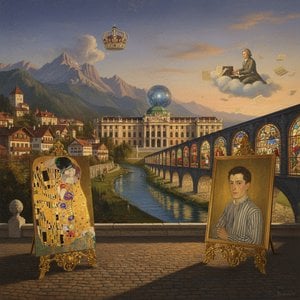
Embark on a sophisticated journey through Austrian art history. Explore the golden brilliance of Gustav Klimt and the elegance of the Vienna Secession through an expert lens, celebrating the enduring soul of Central European masterpieces.
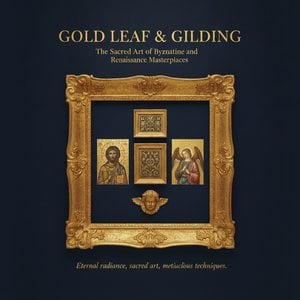
Explore the divine mastery of Byzantine gold leaf and gilding. Discover how ancient artisans used gold ground and mosaics to create celestial light, a timeless legacy of spiritual splendor and technical excellence in sacred art history.

Embark on a sophisticated journey through the splendor of Austrian art. From Gustav Klimt’s golden masterpieces to the elegance of the Viennese Secession, discover the history and symbolism behind Europe's most iconic works for the discerning collector.

Embark on a visual journey through the world's most radiant masterpieces. Discover how gold leaf, impasto textures, and gilded tones define luxury in fine art, from Byzantine icons to modern abstracts. Explore the eternal allure of gold in curated, museum-quality art collections.

Explore the profound impact of the Vienna Secession movement. Discover how visionaries like Gustav Klimt revolutionized modern art through symbolism, gold leaf, and bold ornamentation in this deep dive into the aesthetic revolution that redefined the visual landscape of Europe.

 Preview
 Send
Send Share
Share
 Details
 Guide
Guide

 Download
 Similars
 X-Ray
X-Ray Diaporama
 Stats
Stats

 Read More









 Glass option is only available in size under 110 CM


