
x


 WatercolorWallArtArt Nouveau
 1908Modern
 345.0 x 542.0 cm
 Leopold Museum
Hand-painted oil on canvas in your size and frame, made to order by our artists. ( Buy Print Buy Image)





























Pick from our preset sizes that match the artwork's original proportions.

You may enter your own dimensions to fit a specific frame or space. If your selected size does not match the original image's proportions, we will either crop the artwork or extend the painting with additional hand-painted elements. A digital mockup will be sent for your approval before production begins.
Please note that the on-screen preview does not reflect the actual cropping or extension. Only the mockup will accurately show the final composition.
While custom sizes are available, we recommend selecting a dimension from the predefined list to preserve the original proportions.
Worldwide Delivery () in 3/4 weeks instead of standard 5 weeks. (25 August). No compromise on quality.


Study for Judith II
Reproduction Size
Gustav Klimt’s “Study for Judith II,” created around 1908, offers a fascinating window into the artist’s meticulous working methods. Far from being a finished artwork in itself, this piece is a preparatory sketch—a vital stage in Klimt’s process of developing his iconic paintings. It reveals a dynamism and energy that differs significantly from the final “Judith II” (Salome) housed in the Galleria d’Arte Moderna in Venice, showcasing the evolution of an artistic vision.
The study depicts a woman strikingly reminiscent of a flamenco dancer. Her pose is vigorous, suggesting rapid movement across the page—a stark contrast to the more static and opulent portrayal in the finished painting. Klimt’s signature Art Nouveau style is evident in the flowing lines and decorative details, though here they are rendered with a looser, more expressive quality than in his later, more polished works. The subject's transformation from a dancer to the biblical figure of Judith—who famously beheaded Holofernes—highlights Klimt’s ability to imbue diverse subjects with symbolic depth.
Executed primarily in watercolor, this study demonstrates Klimt’s willingness to experiment with different media. Unlike many of his graphic works intended as preliminary sketches, this piece incorporates color—a rare occurrence for Klimt on paper. The technique involves wet-on-wet application, allowing colors to bleed and blend naturally, creating a soft, translucent effect. Visible brushstrokes contribute to the sense of immediacy and spontaneity. The artist skillfully contrasts the woman’s white, naked shoulders with her black dancing dress ornamented with red ruffles, drawing attention to key areas and enhancing the dramatic impact. The use of pencil, chalk, and gouache further enriches the composition.
“Study for Judith II” was created during a pivotal period in Klimt’s career, as he solidified his position within the Vienna Secession movement. This group of artists rejected traditional academic styles and sought to create art that reflected modern sensibilities. The choice of subject—Judith—is significant. In biblical lore, Judith is portrayed as a courageous woman who saved her people through cunning and decisive action. Klimt’s depiction, even in this preliminary study, hints at themes of female power, sensuality, and perhaps even a touch of melancholy, reflecting the complex portrayal of women prevalent in fin-de-siècle Vienna.
Beyond its artistic merit, “Study for Judith II” offers a unique emotional connection to Klimt’s creative process. It provides an intimate glimpse into the artist's studio—a space where ideas were explored and refined. The unfinished quality of the study adds an element of vulnerability and transience, inviting viewers to contemplate the journey from initial inspiration to finished masterpiece. This piece is not merely a sketch; it is a testament to Klimt’s artistic genius and his dedication to meticulous planning.


1862 - 1918 , Austria

Discover the ethereal beauty of watercolor through an art-historical lens. Master the delicate balance of light, fluidity, and pigment to capture the luminous essence of nature, inspired by the legendary techniques of the Old Masters and Impressionist greats.

Discover the exquisite world of Art Nouveau. Explore the elegant fusion of nature and design through architectural masterpieces, organic forms, and the legendary masters of the Belle Époque. Immerse yourself in a journey of timeless sophistication and ornamental beauty.

Discover the enchanting world of Art Nouveau. Explore the flowing lines of Alphonse Mucha and learn how to integrate these timeless, organic masterpieces into your collection with expert guidance on fine art appreciation and preservation.
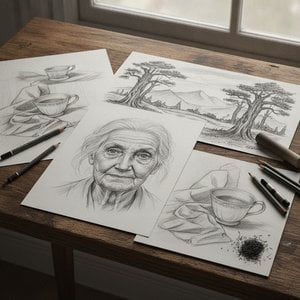
Explore the profound elegance of pencil and charcoal sketching. Discover how masters use line, shadow, and chiaroscuro to capture light and texture, bridging the gap between preparatory studies and timeless fine art masterpieces.

Explore the profound beauty of the sketch. Discover how masters use charcoal and graphite to capture raw emotion, anatomical precision, and fluid movement, bridging the gap between ephemeral marks and eternal oil masterpieces.


Stay updated with the latest art news, exclusive offers, and decoration ideas.
Tell us about your project and our art experts will provide you with 3 personalized art suggestions.
Let Us Curate 3 Options Just for You - Free!

 Preview
 Send
Send Share
Share
 Details

 Download
 Similars
 X-Ray
X-Ray Diaporama
 Read More







 Glass option is only available in size under 110 CM


