
 Acrylic On CanvasWallArtArt Nouveau
 1898
1898 55.0 x 36.0 cm
Museum-quality giclée or canvas print with fast production and flexible finish options. ( Buy Hand Made Painting Switch to Digital Image)





























Pick from our preset sizes that match the artwork's original proportions.

You may enter your own dimensions to fit a specific frame or space. If your selected size does not match the original image's proportions, we will either crop the artwork or extend the image with a mirrored or solid-fill edge. A digital mockup will be sent for your approval before production begins.
Please note that the on-screen preview does not reflect the actual cropping or extension. Only the mockup will accurately show the final composition.
While custom sizes are available, we recommend selecting a dimension from the predefined list to preserve the original proportions.
Worldwide Delivery () in 2 weeks instead of standard 4/5 weeks. (10 September)


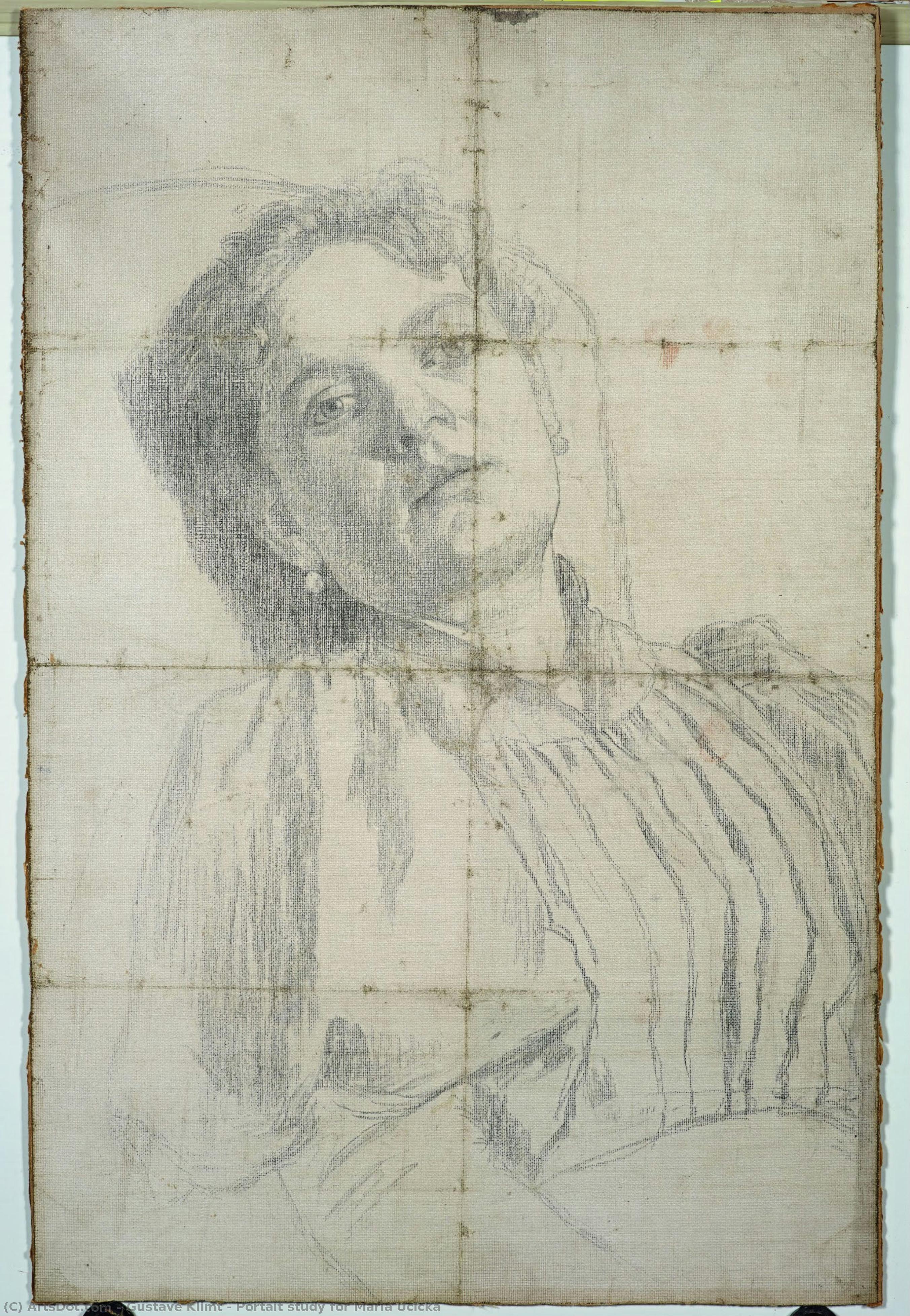
Portait study for Maria Ucicka
Reproduction Size
This intimate portrait study, executed by the visionary artist Gustav Klimt in 1898, offers a rare glimpse into the genesis of one of his most compelling works. More than just a preparatory sketch, it embodies Klimt’s burgeoning exploration of female psychology and his nascent fascination with decorative elements that would soon define his signature style. The painting depicts a young woman, identified as Maria Ucicka, gazing thoughtfully into the distance – an act of quiet contemplation rendered with remarkable sensitivity. The photograph itself captures the delicate texture of the original oil on canvas, revealing subtle brushstrokes and the ghosting of earlier layers, hinting at the evolution of Klimt’s ideas during this crucial period.
Born in Baumgarten near Vienna in 1862, Gustav Klimt's artistic journey was shaped by a complex interplay of influences. His father, Ernst Klimt, a gold engraver, instilled within him an appreciation for luxurious materials and intricate detail – a fascination that would later manifest in the lavish use of gold leaf that became synonymous with his work. Klimt’s early training at the Vienna Kunstgewerbeschule provided him with a foundational understanding of technique, yet he quickly sought to transcend academic constraints, driven by an urgent need to express his own unique vision. This period saw him experimenting with Symbolism and Art Nouveau, absorbing elements from Japanese prints and Celtic art while simultaneously forging his distinctive path.
“Portrait Study for Maria Ucicka” is not merely a likeness; it’s an exploration of the sitter's inner world. The woman’s downward gaze, coupled with her pensive expression, suggests introspection and perhaps even melancholy. Klimt masterfully uses light and shadow to sculpt her face, emphasizing the delicate contours of her features and conveying a sense of vulnerability. The braided hair, a common motif in Klimt’s work, adds an element of elegance and timelessness, hinting at a connection to ancient traditions. The two figures in the background – a man and a woman – remain enigmatic, possibly representing the social context or emotional landscape surrounding Maria Ucicka.
Executed in oil on canvas, this study reveals Klimt's meticulous approach to his craft. The loose brushwork and layering of colors suggest a process of experimentation and refinement. Notably, the use of muted tones – predominantly browns, greys, and ochres – creates a sense of intimacy and immediacy. While not as overtly opulent as his later works, this study foreshadows Klimt’s eventual embrace of gold leaf, demonstrating an early exploration of its transformative potential to imbue surfaces with both beauty and symbolic weight. The subtle variations in paint application—a delicate wash here, a bolder stroke there—speak volumes about the artist's considered hand.
WahooArt offers meticulously crafted reproductions of “Portrait Study for Maria Ucicka,” allowing you to experience the profound emotional resonance and artistic brilliance of this pivotal work by Gustav Klimt. Each reproduction is created using archival-quality materials, ensuring that the delicate nuances of the original are faithfully preserved, bringing a touch of Viennese mystique into your home or studio.


1862 - 1918 , Austria
Embark on a sophisticated journey through Austrian art history. Explore the golden brilliance of Gustav Klimt and the elegance of the Vienna Secession through an expert lens, celebrating the enduring soul of Central European masterpieces.
Discover the allure of Art Deco through a curated guide to its most iconic masterpieces. Explore the elegance of Erté and the innovation of Jean Dunand, perfect for collectors seeking timeless glamour and sophisticated design inspiration.

Discover the breathtaking allure of Art Deco. Explore the era's iconic geometry, legendary designers like Erté, and timeless glamour. Perfect for discerning collectors seeking to infuse their spaces with sophisticated modernist elegance and historical prestige.
Discover the allure of Art Deco style with our expert guide to luxury interiors. Explore iconic influences from Erté to Jean Dunand and learn to curate a sophisticated space filled with timeless glamour and geometric elegance.

Embark on a sophisticated journey through the splendor of Austrian art. From Gustav Klimt’s golden masterpieces to the elegance of the Viennese Secession, discover the history and symbolism behind Europe's most iconic works for the discerning collector.

 Preview
 Send
Send Share
Share
 Details

 Download
 Similars
 X-Ray
X-Ray Diaporama
 Stats
Stats Read More







 Glass option is only available in size under 110 CM


