

Museum-quality giclée or canvas print with fast production and flexible finish options. ( Buy Hand Made Painting Switch to Digital Image)





























Pick from our preset sizes that match the artwork's original proportions.

You may enter your own dimensions to fit a specific frame or space. If your selected size does not match the original image's proportions, we will either crop the artwork or extend the image with a mirrored or solid-fill edge. A digital mockup will be sent for your approval before production begins.
Please note that the on-screen preview does not reflect the actual cropping or extension. Only the mockup will accurately show the final composition.
While custom sizes are available, we recommend selecting a dimension from the predefined list to preserve the original proportions.
Worldwide Delivery () in 2 weeks instead of standard 4/5 weeks. (23 September)


Parents with Baby (Study for
Reproduction Size
Gustav Klimt’s “Mother and Child,” completed in 1905, stands as a cornerstone of Viennese Symbolism and Art Nouveau—a movement that sought to transcend mere representation and delve into the realm of emotion and spiritual significance. More than just a portrait, it's an exploration of femininity, motherhood, and the profound connection between mother and child, rendered with breathtaking artistry and imbued with layers of symbolic meaning.
Beyond its visual splendor, “Mother and Child” is rich in symbolism. Klimt’s deliberate choice of geometric patterns – particularly spirals – mirrors the cyclical nature of life and represents the unfolding beauty of motherhood. The gold leaf itself symbolizes divinity, purity, and immortality—suggesting that this maternal bond transcends earthly concerns.
"Mother and Child" transcends its formal elements to evoke a powerful emotional response in viewers. Klimt’s portrayal captures the quiet intimacy of maternal love—a scene that speaks to universal human values. The serene expression on Emilie Flöge's face, combined with the peaceful repose of Helene, communicates an unwavering tenderness that continues to captivate audiences today.
This artwork exemplifies Klimt’s ability to distill complex emotions into a single visual image—a testament to his enduring legacy as one of Austria’s most celebrated artists.Gustav Klimt (1862-1918) was born in Baumgarten near Vienna, Austria, and emerged from a family marked by both artistic inclination and financial hardship. His father, Ernst Klimt, practiced gold engraving—a craft that instilled in Gustav’s young mind an appreciation for meticulous detail and opulent decoration—influences that would profoundly shape his artistic style.
His engagement with Hans Makart, Vienna’s foremost history painter, solidified Klimt's commitment to academic training—yet he swiftly moved beyond convention, forging his own distinctive path toward Symbolism and Art Nouveau.
Klimt’s groundbreaking approach to painting – characterized by bold experimentation and a preoccupation with female figures – garnered considerable controversy during his time. However, he persevered in his artistic endeavors, achieving international acclaim for works like “The Kiss” and establishing himself as a pivotal figure within the Secession movement.
His legacy continues to inspire artists today—a testament to Klimt’s unwavering dedication to pushing the boundaries of artistic expression.


1862 - 1918 , Austria

Embark on a sophisticated journey through the splendor of Austrian art. From Gustav Klimt’s golden masterpieces to the elegance of the Viennese Secession, discover the history and symbolism behind Europe's most iconic works for the discerning collector.
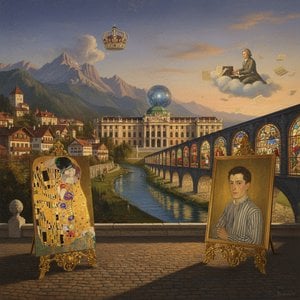
Embark on a sophisticated journey through Austrian art history. Explore the golden brilliance of Gustav Klimt and the elegance of the Vienna Secession through an expert lens, celebrating the enduring soul of Central European masterpieces.

Explore the profound impact of the Vienna Secession movement. Discover how visionaries like Gustav Klimt revolutionized modern art through symbolism, gold leaf, and bold ornamentation in this deep dive into the aesthetic revolution that redefined the visual landscape of Europe.

Explore the imperial grandeur of Vienna through art history. Discover the architectural mastery of Otto Wagner and the elegance of the Secessionist movement in this sophisticated guide to Austria's timeless aesthetic legacy.
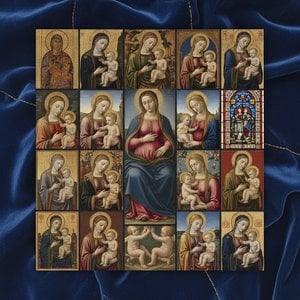
Embark on a sophisticated journey through art history with our curated guide to the most iconic Madonna and Child masterpieces. Discover the profound beauty, theological depth, and enduring legacy of these sacred Renaissance treasures.

 Preview
 Send
Send Share
Share
 Details
 Guide
Guide

 Download
 Similars
 X-Ray
X-Ray Diaporama
 Stats
Stats


 Read More







 Glass option is only available in size under 110 CM


