

Museum-quality giclée or canvas print with fast production and flexible finish options. ( Buy Hand Made Painting Switch to Digital Image)





























Pick from our preset sizes that match the artwork's original proportions.

Type the width and the height you need, to fit your frame or your wall. A print can only be cut, never made bigger than the picture, so a size with a different shape loses a part of the image. We send you a digital mockup to approve before we print anything. The picture shown on this page does not show the real cut — only the mockup does.
Worldwide Delivery () in 2 weeks instead of standard 4/5 weeks. (28 October)
idylle
Reproduction Size
Gustav Klimt's “Idylle,” completed in 1908, stands as a cornerstone of the Vienna Secession movement and an enduring testament to Klimt’s unparalleled artistic vision. More than just a depiction of three nude figures—a woman cradling her infant, a man gesturing upwards with outstretched hands, and another woman tending to the child—it's a carefully orchestrated tableau brimming with symbolic resonance and executed with breathtaking mastery of Art Nouveau technique.
“Idylle” continues to captivate audiences today not merely for its aesthetic brilliance but also for its profound exploration of human experience. Its legacy resides in Klimt's pioneering use of gold leaf and his masterful embodiment of Art Nouveau principles—a style that profoundly shaped the visual culture of the early 20th century.
Discover a museum-quality reproduction of “Idylle” at WahooArt.com and elevate your interior design with this iconic masterpiece!
The recorded mood of "idylle" by Gustav Klimt is romantic, and its emotional tone is mysterious.
"idylle" was created by Gustav Klimt, born in Austria, within the Art Nouveau movement. The artist's origin links the work to Art Nouveau as practiced by artists from Austria.
The color analysis of "idylle" by Gustav Klimt records a statement contrast and a unified palette harmony.

Born on July 14, 1862, in Baumgarten, near Vienna, Gustav Klimt entered a world where the boundaries of art and craft were intimately linked. His father, Ernst Klimt, worked as a gold engraver, a profession that left an indelible mark on his son’s visual language. The young Gustav learned to appreciate the weight of precious metals and the precision of fine detail long before he ever held a brush. This early exposure to the luster of gold leaf would later define his most famous period. Despite the financial hardships that forced his family through frequent moves within Vienna, his talent was undeniable. By 1876, he had entered the Vienna Kunstgewerbeschule, focusing on architectural painting under Ferdinand Laufberger.
His early professional years were marked by a steady, academic success. Alongside his brother Ernst and Franz von Matsch, Klimt formed a partnership that secured essential commissions for decorative murals and ceilings. These works required a disciplined hand and an eye for large-scale ornamentation. He found himself working on significant projects, such as the staircases of the Burgtheater in Vienna, earning the Gold Cross of Merit from Emperor Franz Joseph I. During this time, he looked toward the historical styles of Hans Makart, yet a restless energy was already beginning to stir beneath his formal training.
By the late 1890s, the constraints of the Viennese academic establishment had become stifling. Klimt sought a space where innovation could exist outside the rigid dictates of tradition. In 1897, he became the first president of the Vienna Secession, a movement designed to embrace new currents like Art Nouveau, Symbolism, and Japonism. This was an era of profound change, and Klimt stood at its center. He rejected the heavy, historical academicism in favor of organic lines and symbolic depth. His work began to explore the complexities of human intimacy, sexuality, and mortality with a frankness that often unsettled the conservative public.
This period of defiance brought both significant friction and profound creative growth. A notable instance occurred around 1900, when his commissions for the University of Vienna ceiling paintings—specifically Philosophy—were criticized as being too provocative. The backlash was severe enough that Klimt eventually withdrew from further public commissions, choosing instead to focus on private patronage. This shift allowed him to refine a more personal, decorative style. He drew heavily from the flattened perspectives and patterned aesthetics of Japanese art, integrating these elements into compositions that blurred the distinction between fine painting and ornamental design.
Around 1900, Klimt entered his most recognizable phase, often called his golden period. Inspired by the mosaics of Ravenna and medieval manuscripts, he began using gold leaf to create surfaces that seemed to radiate their own light. Works such as The Kiss (1907-1908) demonstrate this mastery, featuring figures enveloped in a shimmering, patterned aura. His portraits from this time, including the Portrait of Adele Bloch-Bauer I, captured more than mere physical likeness; they conveyed a psychological weight through the use of intricate, mosaic-like textures.
As his life drew toward its end, Klimt’s style underwent another subtle transformation. The heavy ornamentation of the golden phase began to give way to a more restrained and angular aesthetic. In works completed in 1918, such as The Jurisprudence, there is a move toward expressive simplification and sharper lines, perhaps reflecting the influence of the burgeoning Expressionist movement. His final years were marked by this continued evolution, even as he faced the physical toll of the Spanish Flu pandemic. He passed away on February 6, 1918, leaving behind a body of work that fundamentally altered the trajectory of Austrian modernism.

1862 - 1918 , Austria
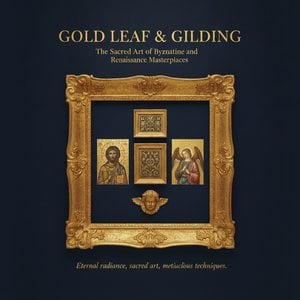
Explore the divine mastery of Byzantine gold leaf and gilding. Discover how ancient artisans used gold ground and mosaics to create celestial light, a timeless legacy of spiritual splendor and technical excellence in sacred art history.

Embark on a sophisticated journey through the eternal allure of mythological art. Discover how master painters breathe life into ancient legends, from Greek deities to Baroque masterpieces, and learn to curate these timeless narratives within your own exquisite art collection.

Embark on a sophisticated journey through the splendor of Austrian art. From Gustav Klimt’s golden masterpieces to the elegance of the Viennese Secession, discover the history and symbolism behind Europe's most iconic works for the discerning collector.

Explore the profound impact of the Vienna Secession movement. Discover how visionaries like Gustav Klimt revolutionized modern art through symbolism, gold leaf, and bold ornamentation in this deep dive into the aesthetic revolution that redefined the visual landscape of Europe.

Embark on a visual journey through the world's most radiant masterpieces. Discover how gold leaf, impasto textures, and gilded tones define luxury in fine art, from Byzantine icons to modern abstracts. Explore the eternal allure of gold in curated, museum-quality art collections.

 Preview
 Send
Send Share
Share
 Details
 Guide
Guide

 Download
 Similars
 X-Ray
X-Ray Diaporama
 Stats
Stats
 Read More









 Glass option is only available in size under 110 CM


