

Museum-quality giclée or canvas print with fast production and flexible finish options. ( Buy Hand Made Painting Switch to Digital Image)
Pick from our preset sizes that match the artwork's original proportions.

You may enter your own dimensions to fit a specific frame or space. If your selected size does not match the original image's proportions, we will either crop the artwork or extend the image with a mirrored or solid-fill edge. A digital mockup will be sent for your approval before production begins.
Please note that the on-screen preview does not reflect the actual cropping or extension. Only the mockup will accurately show the final composition.
While custom sizes are available, we recommend selecting a dimension from the predefined list to preserve the original proportions.
Worldwide Delivery () in 2 weeks instead of standard 4/5 weeks. (19 September)


Untitled, Harlem, New York
Reproduction Size
In the heart of 1952, amidst the rhythmic pulse and complex social tapestry of Harlem, New York, Gordon Parks captured a moment that transcends mere documentation to become a profound meditation on human existence. His photograph, Untitled, Harlem, New Res, is far more than a visual record; it is a distilled essence of an era, offering a quiet, observant gaze into the resilience and dignity of a community. Through his lens, the bustling streets of Harlem are transformed into a stage where the everyday becomes extraordinary, inviting the viewer to witness a slice of life characterized by both struggle and an unyielding spirit of togetherness.
The composition is masterfully orchestrated to draw the observer into the scene’s intimate orbit. A prominent diagonal line, formed by the ascending church steps, acts as a visual guide, pulling the eye upward and subtly suggesting themes of aspiration and hope. This movement is anchored by the verticality of a church sign, which serves as both a contextual landmark and a symbolic pillar of faith within the neighborhood. Parks utilizes strong horizontal lines from the ground plane and stairs to provide a sense of stability, while the organic, curved postures of the seated figures introduce a fluid, natural grace to the frame. This careful balance between geometric architecture and human softness creates a depth that feels both expansive and deeply personal.
Working within the medium of traditional black and white film photography, Parks achieved a level of tonal richness that remains breathtaking even decades later. Likely employing a large-format camera, he captured an exceptional range of detail—from the weathered textures of concrete and stone to the delicate nuances of skin tones. The lighting, reminiscent of a soft, overcast afternoon, avoids harsh contrasts in favor of diffused shadows and gentle highlights. This choice imbues the photograph with a palpable realism, making the atmosphere feel heavy with history yet light with the presence of the living.
The inherent graininess of the photographic print does not detract from the clarity; rather, it serves as a vital aesthetic layer that reinforces the documentary nature of the work. It acts as a temporal texture, reminding us of the era’s grit and the raw, unmanipulated truth Parks sought to convey. For the collector or designer, this monochromatic palette offers a timeless elegance. The interplay of light and shadow provides a sophisticated way to introduce depth into a space, offering a focal point that is both intellectually stimulating and visually soothing.
Beyond its technical brilliance, the emotional weight of this piece lies in its ability to evoke empathy and respect. As part of Parks’ larger mission to document the realities of poverty and civil rights in America, this photograph avoids the trap of mere tragedy. Instead, it celebrates the quiet dignity found in communal gathering. The presence of children and adults seated together outside a place of worship suggests a profound sense of belonging and the strength found in shared identity.
To possess a reproduction of this work is to hold a piece of American history. It is an invitation to contemplate themes of social realism, community spirit, and the enduring power of the human gaze. Whether gracing a modern gallery wall or providing a soulful accent in a curated interior, Untitled, Harlem, New York serves as a powerful reminder that within the most challenging environments, there exists a beautiful, unbreakable thread of humanity.

as a self-taught artist, parks began his career as a photographer, eventually becoming the first african american to work for life and vogue magazines. his iconic photos of poor americans during the 1940s, taken for a federal government project, are a testament to his skill and dedication.
gordon parks' legacy extends beyond his impressive body of work, as he paved the way for future generations of african american artists. his contributions to photojournalism, filmmaking, and music continue to inspire and influence artists today.

1912 - 2006 , United States of America

Explore the profound evolution of contemporary photography through a connoisseur's lens. From monochrome mastery to digital innovation, discover how modern photographic works shape fine art collections and define our cultural legacy.

Explore the profound evolution of documentary photography through a cultural lens. From early social realism to modern visual narratives, discover how photographers have captured history, labor, and the human condition to redefine fine art.

Explore the profound emotional depth of documentary photography art. Discover how collectors curate powerful historical narratives through museum-quality black and white prints and fine art reproductions that preserve humanity's most resilient moments.
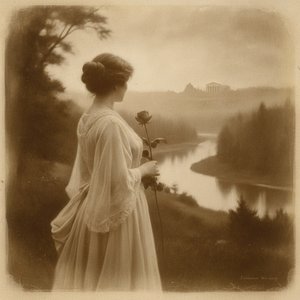
Explore the profound history of Pictorialism, the revolutionary movement that elevated photography to a fine art. Uncover how visionaries used painterly techniques and soft focus to transcend mere documentation, imbuing the lens with the emotional depth of classical masterpieces.

Explore the profound artistry of black and white photography. From historical mastery to the interplay of light and shadow, discover how monochrome captures timeless emotion and form through a sophisticated lens of art history.

 Send
Send Share
Share
 Details

 Download
 Similars
 Diaporama
 Stats
Stats


 Read More




































 Glass option is only available in size under 110 CM


