Artist Biography
A Monumental Presence: Exploring the World of Giacinto Cerone
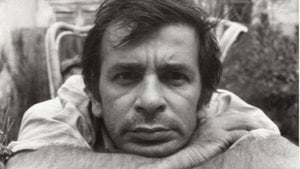
Giacinto Cerone, born in Melfi, Italy in 1957, remains a compelling figure within the landscape of contemporary ceramic sculpture. His tragically short life – he passed away in 2004 – nevertheless left behind a significant body of work characterized by its imposing scale and profound exploration of form and space. Cerone’s journey into art began with a formal education at the Fine Arts Academy in Rome, where he honed his skills under the tutelage of esteemed sculptors Umberto Mastroianni and Pericle Fazzini. This grounding in traditional sculptural techniques proved crucial to his later development, informing his approach to the inherently challenging medium of ceramic. While often categorized as a sculptor, Cerone’s work transcends simple categorization; he was fundamentally a spatial architect, using clay not merely to create objects but to construct immersive environments.
The Language of Clay: Technique and Process
Cerone's distinctive style emerged from a deliberate engagement with the material properties of ceramic. He wasn’t interested in replicating traditional forms or mimicking other mediums. Instead, he pushed the boundaries of what was considered possible within clay. His monumental pieces often involved complex construction methods – layering, building, and manipulating vast quantities of earth to achieve breathtaking scale and intricate detail. He frequently employed a technique of ‘dry stacking,’ meticulously assembling individual ceramic elements before applying slip (a liquid clay mixture) for bonding. This process demanded immense physical strength and an almost obsessive attention to balance and structural integrity, particularly vital given the inherent fragility of the material. The resulting surfaces were often deliberately rough and textured, reflecting both the physicality of his working method and a deliberate rejection of polished perfection – a conscious choice that added to the raw power of his sculptures.
Exploring Form and Space: Themes in Cerone’s Work
Cerone's work is deeply rooted in an exploration of spatial relationships and human scale. His pieces frequently evoke a sense of both grandeur and intimacy, inviting viewers to contemplate their own position within the monumental forms. Many critics have noted a recurring motif of verticality – soaring columns, towering structures, and spiraling forms – suggesting themes of aspiration, ambition, or even spiritual ascent. There’s also a subtle tension between solidity and fragility inherent in his creations; the immense weight of the clay contrasts with its delicate nature, prompting reflection on permanence versus transience. While he rarely offered explicit narratives, Cerone's sculptures possess an undeniable emotional resonance, tapping into universal themes of human experience and our relationship to the world around us. His work often draws parallels to ancient architectural forms, hinting at a dialogue across time and cultures.
Influences and Legacy
Tracing specific influences on Cerone’s artistic vision is complex, as he largely operated outside established art movements. However, it's possible to discern echoes of monumental sculpture traditions – from the Roman ruins that dominate the landscape of his native Italy to the vast scale of ancient Greek temples. Furthermore, his work shares affinities with the Brutalist architectural movement, characterized by its use of raw concrete and emphasis on functional form. Cerone’s connection to SantAgostino Ceramics, a renowned Italian ceramic workshop, provided him with invaluable experience and access to specialized techniques, though he ultimately forged his own unique path. His legacy lies not only in the sheer scale of his creations but also in his willingness to embrace the inherent challenges of working with clay, transforming it into powerful expressions of form, space, and human emotion.
A Lasting Impression
Giacinto Cerone’s untimely death cut short a promising career, yet his monumental sculptures continue to resonate powerfully today. His work stands as a testament to the transformative potential of ceramic – a medium often relegated to decorative purposes – when wielded with vision and technical mastery. His pieces are now exhibited internationally, offering viewers an opportunity to experience firsthand the imposing presence and profound emotional depth of this remarkable Italian sculptor. The images available on WahooArt.com offer a glimpse into his world, inviting us to contemplate the enduring impact of a brief but brilliant artistic life.


 Buy Hand Made Painting



 Preview
 Send
Send Share
Share
 Details

 Download
 Similars
 X-Ray
X-Ray Diaporama
 Stats
Stats

 Read More




































 Glass option is only available in size under 110 CM


