

 Impressionism
 45.0 x 52.0 cm
Hand-painted oil on canvas in your size and frame, made to order by our artists. ( Switch to Print Switch to Digital Image)
Pick from our preset sizes that match the artwork's original proportions.

You may enter your own dimensions to fit a specific frame or space. If your selected size does not match the original image's proportions, we will either crop the artwork or extend the painting with additional hand-painted elements. A digital mockup will be sent for your approval before production begins.
Please note that the on-screen preview does not reflect the actual cropping or extension. Only the mockup will accurately show the final composition.
While custom sizes are available, we recommend selecting a dimension from the predefined list to preserve the original proportions.
Worldwide Delivery () in 3/4 weeks instead of standard 5 weeks. (8 September). No compromise on quality.


Landscape (verso)
Reproduction Size

In the salt-sprayed landscapes of early twentieth-century Cornwall, Gertrude Harvey (née Bodinnar, 1879–1966) emerged as a profound voice within the Newlyn School, a collective renowned for its devotion to the rugged coastal beauty and the intimate rhythms of local life. Her artistry was far more than a mere recording of scenery; it was a deeply personal dialogue between the external world and an internal landscape of faith and observation. Born into a family where the natural world was intimately understood—her maternal grandfather, William Curnow, being a notable botanist and market gardener—Gertrude possessed an innate sensitivity to the botanical intricacies and atmospheric shifts that define the Cornish peninsula. This early immersion in the textures of flora and earth provided the foundational vocabulary for a career defined by meticulous detail and an evocative use of light.
The trajectory of her creative life was irrevocably altered through her connection with Harold Harvey, a fellow artist whose professional and personal partnership would become a cornerstone of her legacy. Initially entering the artistic circle as a model for students at the Forbes School of Painting in Newlyn, Gertrude’s presence in the studio was transformative. Her role as a muse for Harold did not merely provide subject matter; it fostered a shared spiritual conviction and an aesthetic synergy that permeated their collaborative existence. Under the guidance of mentors like Norman Garstin at the Penzance School of Arts, she embraced the tenets of Impressionism, learning to manipulate loose brushstrokes and vibrant palettes to capture the ephemeral, fleeting qualities of light as it dances across the Atlantic swells and settles upon the rolling hills of her homeland.
Gertrude Harvey’s work is characterized by a remarkable ability to balance the structural integrity of her subjects with the atmospheric fluidity of the Impressionist style. Her paintings often serve as windows into a tranquil, pastoral world, where the boundaries between the earth and sky seem to dissolve in the mist. Whether depicting a solitary landscape or a delicate still life, her hand is evident in the nuanced textures that suggest both the weight of the Cornish soil and the lightness of coastal air. Her membership in the Newlyn School placed her at the heart of a movement dedicated to truth in painting, yet she infused this realism with a spiritual introspection that set her work apart.
Her achievements were recognized by the most prestigious institutions of her era, including regular exhibitions at the Royal Academy, which solidified her standing within the British art establishment. Her oeuvre remains a testament to several key artistic pillars:
Today, the significance of Gertrude Harvey lies in her ability to have bridged the gap between the observational rigor of the Newlyn tradition and the emotive freedom of Impressionism. She remains a vital figure for those studying the evolution of British landscape painting, representing a period where art served as both a mirror to the natural world and a vessel for the enduring human spirit.

Discover the profound serenity of timeless pastoral landscapes. From Impressionist masterpieces to bespoke oil commissions, explore how curated fine art brings the enduring beauty and tranquility of nature into your luxury home interior.

Explore the ethereal beauty of Impressionist landscapes. Discover how masters like Monet captured fleeting light through color and texture, and learn to curate these timeless, luminous masterpieces for your home collection.

Elevate your personal landscapes into breathtaking Impressionist oil masterpieces. WahooArt transforms your cherished photos into museum-quality, hand-painted treasures through academic artistry and premium craftsmanship. Invest in a timeless legacy for your home today.
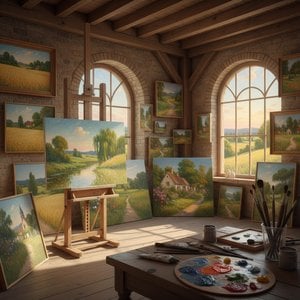
Discover the profound tranquility of rural art through an expert exploration of Impressionist landscapes. From pastoral scenes to textured oil masterpieces, learn how timeless nature-inspired artworks bring enduring elegance and serenity to sophisticated collectors.

 Preview
 Send
Send Share
Share
 Details

 Download
 Similars
 X-Ray
X-Ray Diaporama
 Stats
Stats Read More




































 Glass option is only available in size under 110 CM


