Purchase a high-resolution, enhanced digital image, far superior to the online preview.
Each file is meticulously prepared by our in-house specialists using advanced tools and expert manual retouching. We ensure every image has exceptional clarity, precise color accuracy, and fine detail.
The final file is delivered via email within 72 hours, optimized for immediate use in professional, editorial, and print environments. This is the same quality trusted by top-tier design studios, publishers, and galleries.
Download a high-resolution file for personal display, printing, and creative projects. ( Switch to Print Buy Hand Made Painting)
When you choose WahooArt.com, you're not just getting an image - you're receiving a professionally enhanced digital artwork, crafted with precision and backed by a satisfaction guarantee. Here's everything that comes with your order, automatically:
Your high-resolution digital image file will be emailed to you within 72 hours of ordering - ready for immediate use.
Your artwork is professionally optimized using advanced AI tools and manual editing, ensuring maximum detail, clarity, and color accuracy.
Accidentally deleted or lost your file? No worries - we'll resend it to you anytime, free of charge.
Enjoy your artwork instantly with zero customs, duties, or delivery fees - digital downloads are always tax-free.
We ensure your digital image reflects the original colors as closely as possible using professional tools and color management.
If you're not satisfied with your digital image, we'll revise it or refund 100% within 100 days - no questions asked.
Not satisfied? Get a full refund within 100 days of receiving your digital file - no questions asked.
Buy 3 images, save 10% - Buy 5, save 15% - Buy 10+, save 20%. Great for creative projects, galleries, and agencies.
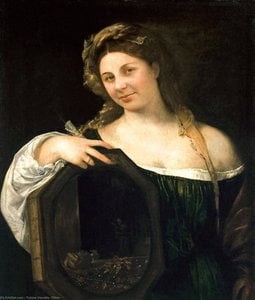
Gerard van Honthorst’s “Lute Player,” a captivating portrait dating from the mid-17th century, offers a glimpse into the opulent world of Dutch Golden Age society. The painting immediately draws the eye to its subject – a woman presented with an arresting blend of elegance and vulnerability. Dressed in a vibrant yellow gown meticulously trimmed with deep blue, she embodies the fashionable sensibilities of her era while simultaneously radiating a quiet introspection. The composition itself is carefully constructed; the lute held delicately in her hand becomes not merely an instrument but a focal point, drawing attention to her gesture and suggesting a moment of private contemplation or perhaps even performance.
Honthorst’s artistic journey was profoundly shaped by his time in Rome, where he encountered the revolutionary work of Caravaggio. This encounter ignited within him a passion for *tenebrism*, a technique characterized by dramatic contrasts between intensely dark shadows and pools of brilliant light. In “Lute Player,” this is evident in the way light dramatically illuminates the woman’s face and gown, creating a sense of theatrical depth and emphasizing her features. The darkness surrounding her isn't merely an absence of light; it actively contributes to the painting’s emotional weight, suggesting hidden depths within the subject’s character. This masterful manipulation of light and shadow is what earned Honthorst his nickname, “Gherardo delle Notti,” or Gerard of the Nights – a testament to his ability to conjure atmosphere and drama with such profound skill.
The setting within the painting provides valuable context for understanding its place in 17th-century Dutch life. The presence of a chair and dining table hints at an aristocratic or wealthy household, suggesting that the subject is likely a member of the upper class. A book resting near her adds another layer of meaning – perhaps representing education, refinement, or even musical knowledge. The inclusion of two other figures, partially visible in the background, subtly expands the narrative, inviting the viewer to imagine the social dynamics and relationships within this domestic scene. These details are not merely decorative; they contribute significantly to the painting’s overall story.
"Lute Player" transcends a simple portrait; it's an exploration of human emotion and psychological depth, a hallmark of Honthorst’s style. The woman’s gentle smile, combined with the dramatic lighting and carefully considered composition, evokes a sense of quiet beauty and perhaps even melancholy. Gerard van Honthorst’s work continues to resonate today because it captures not just a likeness but an essence – a moment frozen in time that speaks to universal themes of grace, contemplation, and the power of artistic expression. WahooArt.com is proud to offer meticulously crafted reproductions of this remarkable piece, allowing you to experience its beauty and historical significance firsthand.
"Lute Player" connects the Dutch Baroque movement with Netherlands through its creator's birthplace.
The dark colors of "Lute Player" by Gerard van Honthorst match its recommended space: a living room.
"Lute Player" by Gerard van Honthorst depicts lute player, portrait woman, dutch masterpiece, van honthorst art, baroque lighting, yellow dress”, “caravaggio influence”, in a romantic mood. Subject and atmosphere together describe the work.


1590 - 1656 , Netherlands

 Preview
 Send
Send Share
Share
 Details
 Guide
Guide

 Download
 Similars
 X-Ray
X-Ray Diaporama
 Stats
Stats
 Read More