

 Northern Renaissance
 1505
1505 12.0 x 9.0 cm
 Metropolitan Museum of Art
Museum-quality giclée or canvas print with fast production and flexible finish options. ( Buy Hand Made Painting Switch to Digital Image)





























Pick from our preset sizes that match the artwork's original proportions.

You may enter your own dimensions to fit a specific frame or space. If your selected size does not match the original image's proportions, we will either crop the artwork or extend the image with a mirrored or solid-fill edge. A digital mockup will be sent for your approval before production begins.
Please note that the on-screen preview does not reflect the actual cropping or extension. Only the mockup will accurately show the final composition.
While custom sizes are available, we recommend selecting a dimension from the predefined list to preserve the original proportions.
Worldwide Delivery () in 2 weeks instead of standard 4/5 weeks. (13 October)
Christ Blessing
Reproduction Size
Gerard David's "Christ Blessing," painted around 1505 in the Low Countries, isn’t merely a depiction of Jesus; it’s a portal – a carefully constructed window offering a glimpse into the spiritual heart of the late medieval and early Renaissance worlds. This exquisite panel, adapted from Byzantine icons, transcends simple representation, embodying a profound sense of serenity and divine grace. Unlike its austere predecessors, David's version breathes with an unprecedented freshness, evident in Christ’s remarkably lifelike face – a detail achieved through meticulous observation and a revolutionary approach to anatomical accuracy, informed by the artist’s own detailed drawings from life.
The painting’s genesis lies within the rich artistic traditions of Byzantium. Byzantine icons, renowned for their symbolic power and flattened perspective, served as models for artists across Europe during the 15th century. However, David masterfully departs from these established conventions. He introduces a dynamism previously absent – a subtle movement in Christ's posture, a delicate articulation of his hands that speaks to an understanding of human anatomy far surpassing the rigid formality of earlier iconographic styles. This shift reflects the burgeoning humanist interest in naturalism and observation that was transforming European art at the time.
David's skill is immediately apparent in his masterful use of oil paint on wood panel. The colors, rich and luminous – deep blues, vibrant reds, and earthy greens – are applied with a remarkable sensitivity to light and shadow. Notice the subtle gradations of tone that define Christ’s face, conveying both solemnity and an almost palpable warmth. The artist's attention to detail extends beyond mere color; the texture of Christ’s garments is rendered with astonishing realism, suggesting the weight and flow of fabric.
Crucially, David’s technique draws upon the innovations of Gerard van Eyck, a pioneer in oil painting. Van Eyck’s development of layering techniques allowed for greater depth, luminosity, and detail than previously possible. David skillfully builds up his image through multiple thin layers of paint, creating an effect of incredible richness and visual complexity. The frame itself, a carefully considered element, further enhances the artwork's impact, framing the scene within a space that invites contemplation.
The gesture depicted – Christ’s hand raised to his face – is laden with symbolic meaning. It’s often interpreted as an act of blessing, but also carries connotations of prayer, humility, and divine grace. The upward movement suggests a connection between the earthly realm and the heavens, reflecting the central theological theme of salvation through faith. The composition, too, contributes to this sense of spiritual resonance: Christ is positioned centrally, dominating the space with his serene presence, inviting the viewer into an intimate dialogue with divinity.
Furthermore, the painting’s roots in Byzantine iconography are significant. The gesture itself echoes common depictions found in Byzantine art, linking David's work to a vast and enduring artistic tradition. However, David doesn’t simply replicate these images; he transforms them, imbuing them with his own unique vision and stylistic flair. This blending of established traditions with innovative techniques is characteristic of the artist’s genius.
"Christ Blessing" stands as a testament to Gerard David's extraordinary talent and his pivotal role in bridging the gap between late medieval artistic conventions and the burgeoning Renaissance. WahooArt offers meticulously crafted, hand-painted reproductions that capture the essence of this iconic work – its luminous colors, exquisite detail, and profound spiritual depth. Whether you’re an art collector, a design enthusiast seeking inspiration, or simply someone captivated by beauty, our reproduction allows you to experience the timeless power of David's masterpiece in your own space.
Consider how this painting might complement your interior décor – its serene colors and contemplative subject matter creating a focal point for quiet reflection. The rich textures and subtle details will undoubtedly draw the eye and add an element of sophistication to any room. Explore our range of sizes and framing options to find the perfect way to bring "Christ Blessing" into your life.
The format of "Christ Blessing" is portrait, and the original measures 12 x 9 cm. Both are useful when planning a reproduction.
The recorded mood of "Christ Blessing" by Gerard David is calm, and its emotional tone is spiritual.
"Christ Blessing" connects the Northern Renaissance movement with Netherlands through its creator's birthplace.
When "Christ Blessing" was created in 1505, Gerard David - born in 1450 - was 55 years old.
The luminance recorded for "Christ Blessing" by Gerard David is soft shadow.
In "Christ Blessing" by Gerard David, the Northern Renaissance movement meets the Renaissance era.
The perceived brightness of "Christ Blessing" by Gerard David is shadow. It can be matched to the light of the intended space.
"Christ Blessing" has a calm atmosphere.


1450 - 1523 , Netherlands
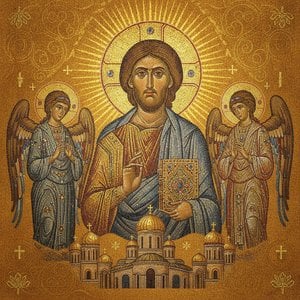
Immerse yourself in the golden splendor of Byzantine masterpieces. Explore luminous mosaics and sacred iconography through our premium, hand-painted oil reproductions. Discover museum-quality elegance and expert curation for your sophisticated interiors at WahooArt.com.

Explore the divine mastery of Byzantine gold leaf and gilding. Discover how ancient artisans used gold ground and mosaics to create celestial light, a timeless legacy of spiritual splendor and technical excellence in sacred art history.

Embark on a scholarly journey through the golden era of Byzantine art. Discover the profound symbolism, masterful mosaics, and imperial grandeur that defined an epoch of spiritual and aesthetic splendor in this expert-led guide for art enthusiasts.

 Preview
 Send
Send Share
Share
 Details
 Guide
Guide

 Download
 Similars
 X-Ray
X-Ray Diaporama
 Stats
Stats Read More









 Glass option is only available in size under 110 CM


