

The artwork displayed on this page is protected by copyright law, which means we cannot legally create or sell an identical reproduction. This protection is enforced under international agreements such as the Berne Convention and by national laws, including those outlined by the U.S. Copyright Law - Title 17.
This method fully complies with copyright regulations because it does not involve copying or duplicating the protected artwork. Instead, it is a creative reinterpretation - a new painting that is influenced by the original but not identical to it.
Museum-quality giclée or canvas print with fast production and flexible finish options. ( Buy Hand Made Painting Switch to Digital Image)





























Pick from our preset sizes that match the artwork's original proportions.

Type the width and the height you need, to fit your frame or your wall. A print can only be cut, never made bigger than the picture, so a size with a different shape loses a part of the image. We send you a digital mockup to approve before we print anything. The picture shown on this page does not show the real cut — only the mockup does.
Worldwide Delivery () in 2 weeks instead of standard 4/5 weeks. (10 November)
Bella Matribus Detestata.
Reproduction Size
Georges Rouault's “Bella Matribus Detestata” – Beautiful to Mothers, Hated by Mothers – is not merely a depiction of a mother and child; it’s an excavation of profound sorrow, a visceral rendering of vulnerability, and a testament to the artist’s deeply empathetic vision. Completed in 1927, this aquatint, roulette, and drypoint over heliogravure work embodies Rouault's signature style – a deliberate rejection of academic realism in favor of expressive distortion and an intensely emotional response to the human condition. The artwork immediately commands attention with its stark monochrome palette, dominated by shades of gray, black, and white, creating a sense of oppressive weight and quiet desperation.
The composition itself is powerfully simple: a mother and child are presented in a close embrace, their forms rendered with bold, thick lines that convey both solidity and fragility. The architectural element – a suggestion of a doorway or building – subtly frames the scene, adding depth without distracting from the central figures. Rouault’s masterful use of line isn't about precise representation; it’s about channeling emotion directly onto the paper. These aren’t delicate lines meant to capture detail; they are forceful strokes that imbue the mother and child with a palpable sense of suffering.
To fully appreciate “Bella Matribus Detestata,” one must understand Rouault's formative years. Born in Paris in 1871, he experienced firsthand the city’s turbulent history, including the brutal events of the Commune. This early exposure to violence and social unrest profoundly shaped his artistic sensibility, leading him to focus on the marginalized and forgotten – the poor, the sick, and the dying. His mother, a devout Catholic, instilled in him a deep sense of spirituality and compassion, themes that consistently informed his work. Rouault’s apprenticeship in stained glass further influenced his aesthetic; the bold outlines and luminous color fields he employed here are directly reminiscent of medieval artistry, creating a powerful connection to centuries-old traditions.
The title itself – “Bella Matribus Detestata” – is laden with symbolic weight. It’s a fragmented quotation from the Vulgate, referencing the biblical story of Rachel weeping for her children. This immediately establishes a narrative of profound grief and loss. The mother's face, rendered with large, almond-shaped eyes, conveys an overwhelming sense of sadness and despair. Her posture suggests both protection and anguish – she shields her child while simultaneously bearing the burden of their shared suffering. The simplified forms, devoid of realistic detail, contribute to a universality; these figures could represent any mother and child facing hardship, making the artwork profoundly moving and timeless.
Rouault’s technique is characterized by a deliberate contrast between dense shading and lighter highlights, creating a dramatic interplay of light and dark. The aquatint process, in particular, allows for subtle tonal variations that add to the artwork's emotional intensity. His approach wasn’t about meticulous detail; it was about capturing the essence of human emotion through expressive lines and bold color fields. “Bella Matribus Detestata” stands as a pivotal work in Rouault’s oeuvre, solidifying his reputation as one of the most significant figures of Expressionism. It remains a powerful example of how art can confront difficult truths and evoke profound emotional responses – a testament to the enduring power of human empathy.
In "Bella Matribus Detestata." by Georges Rouault, the Fauvism movement meets the Modern era.
A reproduction of "Bella Matribus Detestata." by Georges Rouault is recommended for statement. This suggestion follows from the work's subject, mood and colors.
"Bella Matribus Detestata." belongs to Georges Rouault's Fauvism work, whose recorded themes include medieval stained glass, catholic suffering, faith, parisian social critique, expressionist emotional depth, rouault’s spiritual vision.


1871 - 1958 , France
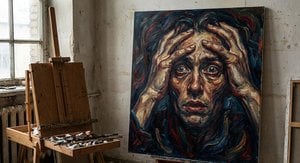
Explore the powerful world of Figurative Expressionism with WahooArt. Discover key artists like Kirchner & Beckmann, understand its emotional depth, and learn how to collect this influential 20th-century art movement.

Explore the raw emotion of Expressionism with WahooArt. Discover its history, key artists like Kirchner & Munch, and lasting influence on modern art. Expert insights for collectors & enthusiasts.
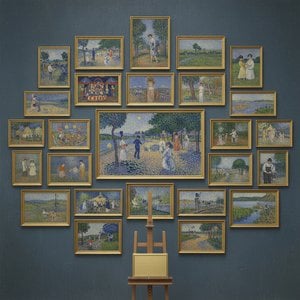
Explore 25 iconic Georges Seurat paintings & discover the brilliance of Pointillism. From 'La Grande Jatte' to his harbor scenes, delve into art history with WahooArt.com. Find museum-quality reproductions for your home decor. Explore the full collection online!

Explore 25 iconic Georges Braque masterpieces and the birth of Cubism. Discover museum-quality art on WahooArt.com.

Discover the raw emotion of Symbolic Expressionism. Our expert guide explores how masters like Munch use color and form to convey inner feelings, offering inspiration for collectors looking to bring powerful, soulful art into their modern homes.
 Preview
 Send
Send Share
Share
 Details
 Guide
Guide

 Download
 Similars
 X-Ray
X-Ray Diaporama
 Q&A
Q&A
 Stats
Stats

 Read More









 Glass option is only available in size under 110 CM


