Preview AR preview Buy Hand Made Painting Switch to Digital Image Send
Details Guide Add to favorites Download Similars X-Ray Diaporama Q&A Stats

The Three Boats

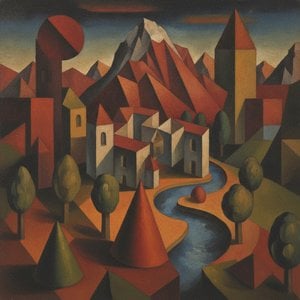
Georges Braque’s "The Three Boats" (1929) captures a stormy coastal scene in expressive Cubist style. Explore this oil painting's moody atmosphere & geometric forms – a key work by a 20th-century master.

Discover Georges Braque (1882-1963): Cubism pioneer & Fauvism master. Explore his innovative art, from 'Houses at L'Estaque' to stunning collages.

The artwork displayed on this page is protected by copyright law, which means we cannot legally create or sell an identical reproduction. This protection is enforced under international agreements such as the Berne Convention and by national laws, including those outlined by the U.S. Copyright Law - Title 17.

This method fully complies with copyright regulations because it does not involve copying or duplicating the protected artwork. Instead, it is a creative reinterpretation - a new painting that is influenced by the original but not identical to it.

Giclée / Art Print

Museum-quality giclée or canvas print with fast production and flexible finish options. ( Buy Hand Made Painting Switch to Digital Image)

Corner sample of the P118B picture frame: moulded polystyrene, 5 cm wide and 3 cm thick
P118B $10
Corner sample of the P118H picture frame: moulded polystyrene, 5 cm wide and 3 cm thick
P118H $10
Corner sample of the P118W picture frame: moulded polystyrene, 5 cm wide and 3 cm thick
P118W $10
Corner sample of the P438Z picture frame: moulded polystyrene, 5.5 cm wide and 3.5 cm thick
P438Z $10
Corner sample of the P508JH picture frame: moulded polystyrene, 7 cm wide and 3.5 cm thick
P508JH $12
Corner sample of the P508YH picture frame: moulded polystyrene, 7 cm wide and 3.5 cm thick
P508YH $12
Corner sample of the P805H picture frame: moulded polystyrene, 5 cm wide and 3.5 cm thick
P805H $10
Corner sample of the P805Z picture frame: moulded polystyrene, 5 cm wide and 3.5 cm thick
P805Z $10
Corner sample of the P919BZ picture frame: moulded polystyrene, 7 cm wide and 3.5 cm thick
P919BZ $10
Corner sample of the P919G picture frame: moulded polystyrene, 7 cm wide and 3.5 cm thick
P919G $10
Corner sample of the P919XJ picture frame: moulded polystyrene, 7 cm wide and 3.5 cm thick
P919XJ $10
Corner sample of the P959ZH picture frame: moulded polystyrene, 5 cm wide and 3 cm thick
P959ZH $10
Corner sample of the P968JZ picture frame: moulded polystyrene, 6 cm wide and 4 cm thick
P968JZ $12
Corner sample of the W106C picture frame: solid wood, 5 cm wide and 3 cm thick
W106C $8
Corner sample of the W218G picture frame: solid wood, 5 cm wide and 3 cm thick
W218G $10
Corner sample of the W218JH picture frame: solid wood, 5 cm wide and 3 cm thick
W218JH $8
Corner sample of the W218Y picture frame: solid wood, 5 cm wide and 3 cm thick
W218Y $10
Corner sample of the W307PJ picture frame: solid wood, 6 cm wide and 3 cm thick
W307PJ $10
Corner sample of the W316G picture frame: solid wood, 6 cm wide and 3 cm thick
W316G $10
Corner sample of the W316PJ picture frame: solid wood, 6 cm wide and 3 cm thick
W316PJ $8
Corner sample of the W316Y picture frame: solid wood, 6 cm wide and 3 cm thick
W316Y $10
Corner sample of the W398PJ picture frame: solid wood, 5 cm wide and 3 cm thick
W398PJ $8
Corner sample of the W4111J picture frame: solid wood, 6.5 cm wide and 3.5 cm thick
W4111J $10
Corner sample of the W500HY picture frame: solid wood, 7 cm wide and 5 cm thick
W500HY $15
Corner sample of the W500JH picture frame: solid wood, 7 cm wide and 5 cm thick
W500JH $15
Corner sample of the W692G picture frame: solid wood, 8 cm wide and 4 cm thick
W692G $12
Corner sample of the W849H picture frame: solid wood, 5 cm wide and 3 cm thick
W849H $8
Corner sample of the W940BG picture frame: solid wood, 7.5 cm wide and 4.5 cm thick
W940BG $15
Corner sample of the W953PJ picture frame: solid wood, 6 cm wide and 3.5 cm thick
W953PJ $8

Standard
custom
CM
INCH

Pick from our preset sizes that match the artwork's original proportions.

width
height

Type the width and the height you need, to fit your frame or your wall. A print can only be cut, never made bigger than the picture, so a size with a different shape loses a part of the image. We send you a digital mockup to approve before we print anything. The picture shown on this page does not show the real cut — only the mockup does.

Worldwide Delivery () in 2 weeks instead of standard 4/5 weeks. (30 October)

Free Worldwide Express Shipping
High-Quality Linen Canvas
Full Shipping Insurance
Customs Tax Refund Guarantee
True Color Matching Guarantee
100-Day Return Policy (Defects Only)
100% Money-Back Guarantee
Bulk Discount Offer

Total Price

$ 69

The Three Boats

Giclée / Art Print

Reproduction Size

-

Total Price

$ 69

Quick Facts

  • Artist: Georges Braque
  • Title: The Three Boats
  • Dimensions: 24 x 35 cm
  • Year: 1929
  • Notable elements: Geometric forms
  • Movement: Expressionism

Art Quiz

There is only one correct answer for each question.

Question 1:
What artistic movement is most closely associated with Georges Braque’s "The Three Boats"?
Question 2:
Based on the image description, what is a prominent feature of the painting’s composition?
Question 3:
What year was "The Three Boats" painted?
Question 4:
According to the artist biography, what was a key influence on Georges Braque’s early artistic development?
Question 5:
The image description suggests that the painting evokes what kind of feeling or mood?

A Stormy Vision of the Coastline

Georges Braque’s “The Three Boats” (1929) isn't merely a depiction of a coastal scene; it’s an immersion into a mood, a palpable sense of drama and isolation. Painted during a pivotal period in his artistic evolution, this oil on canvas captures the raw power of nature against a backdrop of muted blues and greys – colors that speak of impending storm or a lingering twilight. The composition immediately draws the eye to the turbulent sea, dominated by three small boats seemingly adrift amidst the churning waves. These aren’t idyllic vessels; they are humble craft, vulnerable yet resilient, hinting at the lives inextricably linked to this rugged coastline.

The painting's strength lies not in photographic realism but in Braque’s masterful manipulation of form and color. He employs a distinctly Expressionist approach, prioritizing emotional impact over precise detail. The boats themselves are rendered with simplified geometric shapes – rectangles and ovals – that contribute to the overall sense of dynamism and movement. The rocky shoreline is similarly abstracted, its jagged edges defined by bold, assertive lines. This deliberate flattening of perspective creates an almost theatrical stage for the drama unfolding before us.

Cubism’s Echoes and a Shift in Perspective

“The Three Boats” firmly resides within the burgeoning world of Cubism, though it moves beyond its purely analytical roots. Braque, alongside Pablo Picasso, was dismantling traditional notions of representation, fracturing objects into geometric components and presenting them from multiple viewpoints simultaneously. However, unlike some of Picasso’s more overtly intellectual explorations, Braque's work retains a strong connection to the natural world. He doesn’t simply dissect forms; he uses these fragmented shapes to evoke feeling – a sense of unease, perhaps, or the humbling power of the sea.

The painting’s historical context is crucial to understanding its significance. The 1920s were a time of rapid social and artistic change in Europe, marked by disillusionment after World War I and a growing interest in exploring subjective experience. Braque's work reflects this spirit of experimentation, pushing the boundaries of traditional art while retaining a deep appreciation for the beauty and power of the natural world.

Symbolism and Emotional Resonance

Beyond its formal qualities, “The Three Boats” is rich in symbolic meaning. The boats themselves can be interpreted as metaphors for human vulnerability and resilience – small vessels confronting the vastness and unpredictability of life. The stormy sky suggests challenges and uncertainties, while the quiet stillness of the shoreline offers a hint of solace or contemplation. The limited color palette—primarily blues, greys, and browns—reinforces this sense of melancholy and introspection.

Braque’s use of thick impasto – applying paint in heavy layers – adds to the painting's tactile quality and emotional intensity. The visible brushstrokes create a sense of immediacy and energy, as if the artist himself was wrestling with the subject matter. The textured surface invites viewers to engage physically with the artwork, further enhancing its immersive effect.

A Timeless Masterpiece for Art Lovers

“The Three Boats” is more than just a painting; it’s an experience. It's a powerful evocation of coastal drama, rendered with Braque’s signature blend of geometric precision and expressive emotion. Whether you are an art enthusiast, a collector seeking to enrich your collection, or an interior designer searching for a captivating piece to complement your space, this work offers a timeless appeal. Reproductions capture the essence of this dramatic scene, bringing its evocative power into any setting.

Questions & Answers

What size is "The Three Boats" by Georges Braque in real life?

The recorded dimensions of "The Three Boats" by Georges Braque are 24 x 35 cm. Reproductions can be ordered in other sizes while keeping the same proportions.

Which print setup is suggested for "The Three Boats" by Georges Braque?

medium size, landscape orientation: that is the print setup suggested for "The Three Boats" by Georges Braque.

At what size is "The Three Boats" suggested for a living room?

For a living room, the recommended print size of "The Three Boats" by Georges Braque is medium.


Artist Biography

Early Life and Artistic Foundations

Georges Braque, born in Argenteuil, France, in 1882, embarked on a path deeply intertwined with the evolving landscape of modern art. His upbringing within a family of house painters and decorators instilled in him not only a technical mastery of materials but also an early appreciation for form and structure. Though initially following in his father’s trade, Braque's inherent artistic inclinations soon led him to formal training at the École des Beaux-Arts in Le Havre, marking the beginning of his journey toward becoming one of the most influential painters of the 20th century. This foundation—a blend of practical craftsmanship and academic study—would prove crucial as he later deconstructed and reimagined traditional artistic conventions.

Moving to Paris in 1902, Braque continued his studies at the Académie Humbert, immersing himself in the vibrant artistic milieu of the city. It was here that he encountered artists like Marie Laurencin and Francis Picabia, forging connections that would shape his early development. His initial works reflected the prevailing influences of Impressionism and Post-Impressionism, but a pivotal encounter with the bold colors and expressive freedom of Fauvism in 1905 ignited a new direction in his artistic exploration.

The Embrace of Fauvism and the Dawn of Cubism

Braque’s adoption of Fauvist principles—characterized by intense, non-naturalistic color and emotional expression—is vividly exemplified in paintings like The Patience. This period saw him working alongside artists such as Henri Matisse and André Derain, experimenting with vibrant palettes and simplified forms. However, Braque's engagement with Fauvism was not merely imitative; he infused it with a unique sensibility, tempering the movement’s unrestrained exuberance with a more restrained and analytical approach.

A turning point arrived in 1907 with his exposure to the retrospective exhibition of Paul Cézanne's work. Cézanne’s emphasis on geometric forms and multiple perspectives profoundly impacted Braque, setting the stage for his groundbreaking collaboration with Pablo Picasso. Beginning in 1908, these two artistic titans embarked on a period of intense intellectual exchange that would give birth to Cubism—a revolutionary movement that shattered traditional notions of representation.

Together, Braque and Picasso developed Analytical Cubism, dissecting objects into fragmented geometric shapes and presenting multiple viewpoints simultaneously. Works like Houses at L'Estaque demonstrate this early phase, showcasing a radical departure from conventional perspective and a focus on the underlying structure of forms. Their palette became deliberately muted, emphasizing form over color, as they sought to represent the totality of an object’s presence rather than merely its appearance.

Innovation Through Fragmentation and Collage

The partnership between Braque and Picasso continued to push the boundaries of artistic expression, leading to the development of Synthetic Cubism around 1912. This phase saw the introduction of collage—the incorporation of real-world materials such as newspaper clippings, wallpaper, and fabric into paintings. This innovation challenged the traditional hierarchy between painting and sculpture, blurring the lines between art and life.

Braque’s pioneering use of *papier collé* (pasted paper) marked a significant turning point in his artistic evolution. By integrating fragments of everyday objects into his compositions, he disrupted the illusionistic space of traditional painting and introduced a new level of materiality and texture. This technique not only expanded the formal possibilities of art but also reflected a growing interest in the relationship between representation and reality.

The outbreak of World War I in 1914 brought an interruption to this intense collaboration, as Braque was called upon for military service. His wartime experiences profoundly affected his artistic vision, leading him to explore more personal and lyrical themes in his post-war work.

Later Years and Enduring Legacy

Following the war, Braque’s style evolved beyond the strict confines of Cubism, incorporating elements of classical composition and a renewed interest in still life. While retaining the geometric influences that had defined his earlier work, he developed a more nuanced and contemplative approach to painting. His later landscapes and interiors are characterized by their serene atmosphere and subtle harmonies of color.

Throughout his career, Braque remained committed to exploring the fundamental principles of form, space, and representation. He continued to experiment with different materials and techniques, pushing the boundaries of artistic expression until his death in 1963. His influence on subsequent generations of artists is immeasurable, shaping the course of modern art and inspiring countless painters, sculptors, and collagists.

Georges Braque’s legacy extends beyond his individual artworks; he fundamentally altered our understanding of how we perceive and represent the world around us. His collaborative spirit with Picasso, coupled with his own unique artistic vision, cemented his place as a true pioneer of modern art—a master who dared to challenge conventions and redefine the possibilities of painting.

Influences and Notable Works

  • Influenced By: Henri Matisse, André Derain, Paul Cézanne
  • Key Works: Houses at L'Estaque, The Patience, Violin and Palette, Mandola
  • Impact on Art History: Revolutionized 20th-century art through Cubism; challenged traditional notions of perspective and representation.

Georges Braque

Georges Braque

1882 - 1963 , France

Quick Facts

  • Artistic Movement Or Style:
    • Fauvism
    • Cubism
    • Analytical Cubism
    • Synthetic Cubism
  • Artists Or Movements Influenced By This Artist: ['Modern art']
  • Artists Who Influenced This Artist:
    • Henri Matisse
    • André Derain
    • Paul Cézanne
  • Full Name: Georges Braque
  • Nationality: French
  • Notable Artworks:
    • Houses at L'Estaque
    • The Patience
    • Violin and Palette
    • Mandola
  • Place Of Birth: Argenteuil, France
  • Date Of Birth: 1882
  • Date Of Death: 1963
Explore artworks organized by themes, styles, and characteristics.