

 Oil On PanelEarly Renaissance
 Renaissance
 87.0 x 62.0 cm
Purchase a high-resolution, enhanced digital image, far superior to the online preview.
Each file is meticulously prepared by our in-house specialists using advanced tools and expert manual retouching. We ensure every image has exceptional clarity, precise color accuracy, and fine detail.
The final file is delivered via email within 72 hours, optimized for immediate use in professional, editorial, and print environments. This is the same quality trusted by top-tier design studios, publishers, and galleries.
Download a high-resolution file for personal display, printing, and creative projects. ( Switch to Print Buy Hand Made Painting)
When you choose WahooArt.com, you're not just getting an image - you're receiving a professionally enhanced digital artwork, crafted with precision and backed by a satisfaction guarantee. Here's everything that comes with your order, automatically:

Your high-resolution digital image file will be emailed to you within 72 hours of ordering - ready for immediate use.

Your artwork is professionally optimized using advanced AI tools and manual editing, ensuring maximum detail, clarity, and color accuracy.

Accidentally deleted or lost your file? No worries - we'll resend it to you anytime, free of charge.

Enjoy your artwork instantly with zero customs, duties, or delivery fees - digital downloads are always tax-free.

We ensure your digital image reflects the original colors as closely as possible using professional tools and color management.

If you're not satisfied with your digital image, we'll revise it or refund 100% within 100 days - no questions asked.

Not satisfied? Get a full refund within 100 days of receiving your digital file - no questions asked.

Buy 3 images, save 10% - Buy 5, save 15% - Buy 10+, save 20%. Great for creative projects, galleries, and agencies.
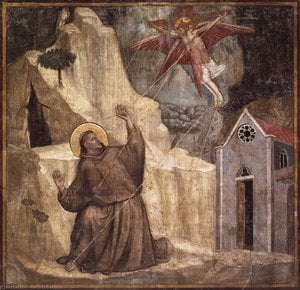
In the quiet contemplation of Gentile da Fabriano’s St. Francis, one is immediately transported to the dawn of the Italian Renaissance, where the boundaries between the earthly and the divine begin to blur. This evocative masterpiece captures Saint Francis of Assisi in a profound moment of spiritual ecstasy, a scene rendered with the delicate precision and opulent grace characteristic of the International Gothic style. The composition is masterfully orchestrated around a central axis of light; radiating lines emerge from the saint’s hands, stretching upward toward an angelic figure nestled in the upper corner. This visual bridge creates a sense of kinetic energy, as if we are witnessing the very moment of divine intervention. Through this interplay of light and form, the painting transcends mere portraiture to become a window into a state of pure, unadulterated devotion.
The technical execution of the piece reveals the hand of a master intimately acquainted with the textures of faith. Executed as an oil on panel, the work possesses a rich, tactile quality where layers of pigment build a surface that feels both ancient and alive. The artist employs a dramatic use of lighting, casting brilliant highlights upon the saint’s face and hands to simulate a celestial glow. This luminosity is balanced by a palette dominated by warm, earthy tones—deep yellows, ochres, and browns—which ground the spiritual event in a tangible landscape. Subtle accents of crimson and azure appear within the angelic figure and the sky, providing much-needed chromatic tension that guides the eye through the complex, layered topography of the mountains and trees surrounding the central figure.
Beyond its visual splendor, St. Francis serves as a profound symbolic narrative. Every element within the frame is imbued with theological significance; the radiating lines are not merely decorative but represent the flow of spiritual grace descending from the heavens to the mortal realm. The small chapel tucked into the lower landscape acts as a symbol of the Church and the structured world of man, standing in quiet contrast to the wild, rugged mountains that suggest the untamed nature of divine mystery. Gentile da Fabriano utilizes a flattened perspective, a hallmark of the era, which allows him to prioritize symbolic clarity over photographic realism. This stylistic choice forces the viewer to engage with the painting as a spiritual icon rather than a mere window into a landscape.
For the discerning collector or interior designer, this reproduction offers more than just an aesthetic centerpiece; it provides a focal point of historical depth and emotional resonance. The artwork’s ability to evoke intense religious fervor through its structured geometry and atmospheric effects makes it a timeless addition to any curated space. Whether placed in a gallery-style setting or as a soulful accent in a classical interior, the painting invites continuous rediscovery. It remains a testament to the era of Gentile da Fabriano—a period where the elegance of Gothic ornamentation met the burgeoning humanism of the Renaissance, creating a legacy of beauty that continues to inspire awe centuries after its creation.


1370 - 1427 , Italy

 Preview
 Send
Send Share
Share
 Details
 Guide
Guide

 Download
 Similars
 X-Ray
X-Ray Diaporama
 Stats
Stats Read More


![Life Of Saint Francis - [01] - Stigmatization Of Saint Francis — Giotto Di Bondone, Early Renaissance](/media/artworks/images-thumb/fd/6a/fd6ae2a8f5e88e0ace6b86a21d020ded.jpg)


