FREE ART CONSULTATION

x
Buy print Buy printBuy Image Buy Image SendSend
DetailsDetails Add to favorites Add to favorites DownloadDownload SimilarsSimilars X-RayX-Ray DiaporamaDiaporama

Angel

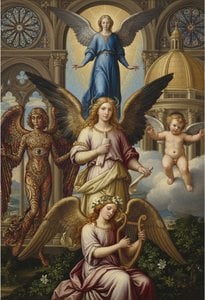
Fritz von Uhde’s "Angel" (1908) – a haunting oil painting blending realism & Symbolism. Explore its dramatic lighting, impasto texture, and melancholic spirituality.

Explore Fritz von Uhde's genre & religious paintings! A German Impressionist known for plein-air art, Dutch influences, & depicting rural life – a key figure in 20th-century German art.

Hand Made Oil Reproduction

Hand-painted oil on canvas in your size and frame, made to order by our artists.

P118B $10
P118H $10
P118W $10
P438Z $10
P508JH $12
P508YH $12
P805H $10
P805Z $10
P919BZ $10
P919G $10
P919XJ $10
P959ZH $10
P968JZ $12
W106C $8
W218G $10
W218JH $8
W218Y $10
W307PJ $10
W316G $10
W316PJ $8
W316Y $10
W398PJ $8
W4111J $10
W500HY $15
W500JH $15
W692G $12
W849H $8
W940BG $15
W953PJ $8

Standard
custom
CM
INCH

Pick from our preset sizes that match the artwork's original proportions.

width
height

You may enter your own dimensions to fit a specific frame or space. If your selected size does not match the original image's proportions, we will either crop the artwork or extend the painting with additional hand-painted elements. A digital mockup will be sent for your approval before production begins.
Please note that the on-screen preview does not reflect the actual cropping or extension. Only the mockup will accurately show the final composition.
While custom sizes are available, we recommend selecting a dimension from the predefined list to preserve the original proportions.

Examples of what can be changed: Replace face with customer photo; Add pet (e.g., replace cat with dog); Include hidden message in background; Change background landscape or elements.
After order, WahooArt.com team will email client for instructions and provide a mockup preview

Worldwide Delivery () in 3/4 weeks instead of standard 5 weeks. (1 July). No compromise on quality.

why_choose_icon
Free Worldwide Express Shipping
why_choose_icon
High-Quality Linen Canvas
why_choose_icon
Full Shipping Insurance
why_choose_icon
Customs Tax Refund Guarantee
why_choose_icon
True Color Matching Guarantee
why_choose_icon
60-Day Return Policy (Defects Only)
why_choose_icon
100% Money-Back Guarantee
why_choose_icon
Bulk Discount Offer

Total Price

-

reproduction

Angel

Reproduction Medium

Reproduction Size

-

Total Price

-

Quick Facts

  • Notable elements or techniques: Impasto, Dramatic Lighting
  • Artistic style: Realism & Symbolism
  • Year: 1908
  • Influences: Dutch Impressionism
  • Artist: Fritz von Uhde
  • Movement: Romanticism
  • Location: Private Collection

Artwork Description

Angel – Fritz von Uhde: A Symphony of Light and Sorrow

Fritz von Uhde’s “Angel” (1908) stands as a poignant testament to the intersection of Romanticism and Symbolism, capturing a moment of profound contemplation within a dimly lit interior. More than just a depiction of an angelic figure—a winged being radiating serene grace—the painting delves into themes of spirituality, vulnerability, and perhaps unspoken longing, resonating deeply with viewers even today.

  • Subject Matter: The central focus is undeniably the angel itself, positioned slightly off-center against a backdrop suggestive of a window and draped curtains. Its posture conveys stillness and introspection, inviting contemplation on matters beyond the visible realm.
  • Style & Influences: Uhde’s artistic vision leans heavily into Romantic sensibilities, prioritizing emotional expression over meticulous realism. However, subtle influences from Symbolism are discernible in the painting's atmospheric mood and deliberate use of symbolic elements – notably, the delicate flower held by the angel.
  • Technique: Executed in oil paints on canvas, Uhde employed a masterful technique characterized by thick impasto—layers of paint applied with considerable texture—creating a palpable surface quality that enhances the painting’s dramatic impact. The artist skillfully blended colors directly onto the canvas, maximizing luminosity and capturing the nuances of light and shadow.
  • Composition & Perspective: The composition prioritizes vertical space, emphasizing the angel's dominance while subtly flattening perspective to heighten emotional resonance. Lines are loose and gestural, contributing to a dynamic visual experience that transcends mere representation.
  • Lighting & Atmosphere: Dramatic lighting plays a crucial role in conveying the painting’s mood—strong highlights illuminate the angel’s face and wings, casting deep shadows across the room and floor. This chiaroscuro effect amplifies the sense of intimacy and underscores the melancholic atmosphere inherent in the scene.

The flower held by the angel serves as a powerful symbol of innocence and fragility—a poignant reminder of beauty’s vulnerability against the backdrop of existential contemplation. Uhde's deliberate choice to depict this quiet tableau speaks volumes about his artistic philosophy: to capture not just what is seen, but what is felt.

  • Historical Context: Painted during a period marked by intellectual ferment and shifting artistic conventions, “Angel” reflects the broader Romantic movement’s preoccupation with emotion and imagination. Uhde's pioneering embrace of plein-air painting—a revolutionary step away from studio practice—solidified his position as one of Germany’s foremost artists of his time.
  • Material & Support: Primarily oil paints applied to a canvas substrate, Uhde utilized materials that allowed for exceptional textural richness and tonal depth – characteristics essential to achieving the painting's expressive power.

“Angel” remains an enduring masterpiece—a captivating exploration of spirituality and emotion rendered with unparalleled artistic skill. Its luminous surface and evocative atmosphere continue to inspire admiration and offer a profound meditation on themes of beauty, sorrow, and transcendence.

Related Artworks


Artist Biography

Early Life and Artistic Influences

Fritz von Uhde (born Friedrich Hermann Carl Uhde; 22 May 1848 – 25 February 1911) was a German painter of genre and religious subjects. His style lay between Realism and Impressionism, marking him as one of the first artists to champion plein-air painting in Germany—a bold departure from the studio tradition dominant at the time. Born in Wolkenburg, Saxony, Uhde’s familial background instilled within him a deep appreciation for artistic pursuits. His father, a part-time painter himself, and his maternal grandfather, director of the Royal Museums in Dresden, nurtured an environment rich in visual culture. From a young age, Uhde demonstrated a fervent fascination with art at Gymnasium, where he excelled academically and found solace in creative expression. Notably, his family’s Lutheran faith profoundly shaped his worldview and artistic sensibilities.

Academic Training and Military Service

Driven by this passion, Uhde enrolled at the Dresden Academy of Fine Arts in 1866, encountering a prevailing artistic spirit markedly different from his own inclinations. Dissatisfied with the academy’s conservative approach, he swiftly abandoned formal studies to join the army, serving as horsemanship instructor to the regiment of the assembled guard and achieving the rank of Lieutenant in 1868. This military experience broadened his perspective and honed his observational skills—skills that would prove invaluable later in his artistic endeavors. The encounter with painter Makart in Vienna in 1876 proved pivotal, sparking a desire for independent artistic exploration and ultimately leading to his departure from the army in 1877.

The Pursuit of Artistic Independence and Parisian Influences

Determined to forge his own path, Uhde relocated to Munich in 1877, immersing himself in the vibrant artistic milieu of the Bavarian capital and enrolling at the Academy there. Seeking inspiration from Dutch Old Masters—particularly Rembrandt—he diligently studied their techniques and compositional strategies. He also found mentorship under Lilla Cabot Perry, whose influence extended beyond mere stylistic imitation; Perry encouraged Uhde to embrace a more expressive use of color, reflecting the burgeoning Impressionist movement. Despite facing rejection from prestigious studios like Piloty’s or Lindenschmit’s, Uhde persevered in his quest for artistic recognition, traveling to Paris in 1879 where he continued his studies under Mihály Munkácsy's guidance.

The Impressionist Breakthrough and Munich Secession

A transformative journey to the Netherlands in 1882 decisively altered Uhde’s artistic trajectory, prompting him to abandon the dark chiaroscuro favored by Munich artists in favor of a colorism deeply rooted in Impressionist principles. Encouraged by fellow artist Adolf Hölzel, Uhde experimented with plein-air painting—capturing landscapes and scenes directly from nature—a technique championed by luminaries like Claude Monet and Pierre Auguste Renoir. His iconic painting “The Singer” (1880), exhibited at the Paris Salon, garnered honorable mention and signaled a breakthrough moment in his artistic career. Recognizing the need for artistic renewal beyond academic confines, Uhde co-founded the Munich Secession in 1890 alongside Ludwig Dill and Lovis Corinth—a collective dedicated to challenging established conventions and advocating for a more liberated aesthetic vision.

Later Years and Legacy

Throughout his later years, Uhde continued to produce masterful paintings characterized by profound psychological depth and symbolic resonance. His work achieved considerable acclaim during his lifetime, earning him honorary membership in the academies of Munich, Dresden, and Berlin. He became the first President of the Secession, solidifying his role as a leader within the German avant-garde. Considered one of the most important artists of the 20th century, Fritz von Uhde’s enduring influence can be seen in the works of subsequent generations of painters—artists who embraced his pioneering spirit and championed the expressive power of color and observation.
Fritz von Uhde

Fritz von Uhde

1848 - 1911

Quick Facts

  • Artistic Movement Or Style: Impressionism
  • Artists Or Movements Influenced By This Artist: ['Vincent van Gogh']
  • Artists Who Influenced This Artist:
    • Rembrandt
    • Makart
  • Date Of Birth: May 22, 1848
  • Date Of Death: February 25, 1911
  • Full Name: Fritz Hermann Carl Uhde
  • Nationality: German
  • Notable Artworks:
    • The Singer
    • Fishermen's Children
  • Place Of Birth: Wolkenburg, Saxony
Explore artworks organized by themes, styles, and characteristics.