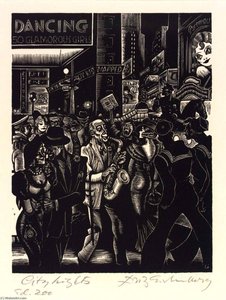
1934
1934 16.0 x 12.0 cm
The artwork displayed on this page is protected by copyright law, which means we cannot legally create or sell an identical reproduction. This protection is enforced under international agreements such as the Berne Convention and by national laws, including those outlined by the U.S. Copyright Law - Title 17.
As a respectful and legal alternative, we offer custom, hand-painted artworks inspired by the original. Our skilled and professional artists carefully study the original's style, mood, and artistic essence to create a new, unique piece that evokes the same feeling - while remaining an original creation in its own right.
This method fully complies with copyright regulations because it does not involve copying or duplicating the protected artwork. Instead, it is a creative reinterpretation - a new painting that is influenced by the original but not identical to it.
Hand-painted oil on canvas in your size and frame, made to order by our artists. ( Switch to Print Switch to Digital Image)
Pick from our preset sizes that match the artwork's original proportions.

Type the width and the height you need, to fit your frame or your wall. This is hand-painted, so for a size with a different shape the artist can paint a bit more around the picture, or cut a bit — you choose. We send you a digital mockup to approve before the painting starts. The picture shown on this page does not show the real result — only the mockup does.
Worldwide Delivery () in 3/4 weeks instead of standard 5 weeks. (21 October). No compromise on quality.
The Steps
Reproduction Size
"The Steps" by Fritz Eichenberg is still protected by copyright. This status governs how the image of the work may be reproduced.
"The Steps" can be examined layer by layer on the artwork's X-Ray page, a viewer inspired by a conservator's light bench with eleven optical readings of the image.
"The Steps" is shadow overall, and its luminance is gentle luminance.

Fritz Eichenenberg, a name perhaps less familiar than some of his contemporaries, stands as a profoundly significant figure in American illustration and printmaking during the mid-20th century. Born in Cologne, Germany, in 1901, his life was irrevocably shaped by the tumultuous events of World War I and the subsequent rise of Nazism, experiences that fueled a lifelong commitment to social justice and pacifism. Eichenberg’s artistic journey, marked by both technical mastery and deeply felt moral convictions, culminated in a body of work characterized by poignant depictions of religion, war, poverty, and the human condition – works that continue to resonate with their quiet power and enduring relevance.
Eichenberg’s early life was rooted in a traditional German artistic environment. He began his training as a printer's apprentice, developing a fundamental understanding of materials and processes that would later inform his meticulous approach to wood engraving. This practical foundation led him to the Municipal School of Applied Arts in Cologne and subsequently to the Academy of Graphic Arts in Leipzig, where he studied under Hugo Steiner-Prag, a renowned German printmaker. Steiner-Prag’s influence instilled in Eichenberg a deep appreciation for line quality and the expressive potential of woodcut and engraving techniques. Crucially, the devastation wrought by World War I profoundly impacted young Eichenberg's worldview, fostering a strong anti-war sentiment that would permeate much of his subsequent work.
The rise of Adolf Hitler in 1933 compelled Eichenberg to flee Germany with his wife and daughter. He sought refuge in the United States, settling in New York City and embarking on a new chapter in his artistic career. This emigration marked a turning point, not only for Eichenberg personally but also for his artistic development. In America, he found work as an illustrator for various publications, including newspapers and magazines, often tackling politically charged subjects with unflinching honesty. He joined the Works Progress Administration (WPA), contributing to public art projects during the Depression era, and became a member of the Society of American Graphic Artists. His outspoken political views, coupled with his artistic talent, made him a target for censorship and scrutiny, yet he remained steadfast in his commitment to social commentary.
Eichenberg’s signature technique was wood engraving – a demanding process requiring exceptional skill and patience. Unlike woodcut, which relies on carving into the *horizontal* grain of the wood, Eichenberg worked with the *end-grain*, creating incredibly fine lines by carefully incising the surface with a burin. This meticulous approach allowed him to achieve an astonishing level of detail and tonal subtlety, particularly evident in works like “The Subway” (1934), a powerful depiction of urban poverty and alienation, and "City Lights" (1935). His illustrations for books by authors such as Dostoyevsky, Tolstoy, and Brontë demonstrated his ability to capture the emotional depth and psychological complexity of literary narratives. Beyond illustration, Eichenberg produced a series of prints exploring religious themes, notably “The Temptations of St. Anthony” (1966), which showcased his mastery of composition and symbolism.
Fritz Eichenberg’s artistic legacy extends far beyond the immediate impact of his individual works. He was a crucial voice in American illustration during a period of significant social and political upheaval, using his art to advocate for peace, justice, and human dignity. His commitment to nonviolence and his willingness to confront difficult subjects with honesty and compassion continue to inspire artists today. Eichenberg’s meticulous technique, combined with his profound empathy and moral vision, solidified his place as a key figure in the history of American printmaking – an artist who, through the silent eloquence of his engravings, offered poignant reflections on the human condition.

 Preview
 Send
Send Share
Share
 Details
 Guide
Guide

 Download
 Similars
 X-Ray
X-Ray Diaporama
 Stats
Stats Read More






































 Glass option is only available in size under 110 CM