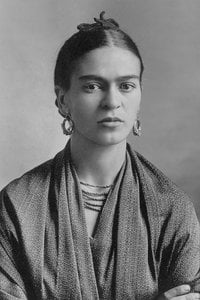
Self-portrait with Monkey (1945) by Frida Kahlo, hand-painted oil painting reproduction by a master artist
Preview AR preview Switch to Print Switch to Digital Image Send
Details Guide Add to favorites Download Similars X-Ray Diaporama Q&A Presentation Stats

Self-portrait with Monkey Hand-painted oil painting reproduction

Dimensions
59.0 x 42.0 cm

Experience Frida Kahlo's 'Self-Portrait with Monkey'! A powerful symbol of resilience & creativity, this 1945 oil on masonite depicts Kahlo’s complex identity. Explore symbolism, Mexican folk art influence & a captivating portrait.

Frida Kahlo's surrealist self-portraits like The Two Fridas define her legacy. Explore her iconic works and vibrant Mexican heritage today.

Hand Made Oil Reproduction

Hand-painted oil on canvas in your size and frame, made to order by our artists. ( Switch to Print Switch to Digital Image)

Corner sample of the P118B picture frame: moulded polystyrene, 5 cm wide and 3 cm thick
P118B $10
Corner sample of the P118H picture frame: moulded polystyrene, 5 cm wide and 3 cm thick
P118H $10
Corner sample of the P118W picture frame: moulded polystyrene, 5 cm wide and 3 cm thick
P118W $10
Corner sample of the P438Z picture frame: moulded polystyrene, 5.5 cm wide and 3.5 cm thick
P438Z $10
Corner sample of the P508JH picture frame: moulded polystyrene, 7 cm wide and 3.5 cm thick
P508JH $12
Corner sample of the P508YH picture frame: moulded polystyrene, 7 cm wide and 3.5 cm thick
P508YH $12
Corner sample of the P805H picture frame: moulded polystyrene, 5 cm wide and 3.5 cm thick
P805H $10
Corner sample of the P805Z picture frame: moulded polystyrene, 5 cm wide and 3.5 cm thick
P805Z $10
Corner sample of the P919BZ picture frame: moulded polystyrene, 7 cm wide and 3.5 cm thick
P919BZ $10
Corner sample of the P919G picture frame: moulded polystyrene, 7 cm wide and 3.5 cm thick
P919G $10
Corner sample of the P919XJ picture frame: moulded polystyrene, 7 cm wide and 3.5 cm thick
P919XJ $10
Corner sample of the P959ZH picture frame: moulded polystyrene, 5 cm wide and 3 cm thick
P959ZH $10
Corner sample of the P968JZ picture frame: moulded polystyrene, 6 cm wide and 4 cm thick
P968JZ $12
Corner sample of the W106C picture frame: solid wood, 5 cm wide and 3 cm thick
W106C $8
Corner sample of the W218G picture frame: solid wood, 5 cm wide and 3 cm thick
W218G $10
Corner sample of the W218JH picture frame: solid wood, 5 cm wide and 3 cm thick
W218JH $8
Corner sample of the W218Y picture frame: solid wood, 5 cm wide and 3 cm thick
W218Y $10
Corner sample of the W307PJ picture frame: solid wood, 6 cm wide and 3 cm thick
W307PJ $10
Corner sample of the W316G picture frame: solid wood, 6 cm wide and 3 cm thick
W316G $10
Corner sample of the W316PJ picture frame: solid wood, 6 cm wide and 3 cm thick
W316PJ $8
Corner sample of the W316Y picture frame: solid wood, 6 cm wide and 3 cm thick
W316Y $10
Corner sample of the W398PJ picture frame: solid wood, 5 cm wide and 3 cm thick
W398PJ $8
Corner sample of the W4111J picture frame: solid wood, 6.5 cm wide and 3.5 cm thick
W4111J $10
Corner sample of the W500HY picture frame: solid wood, 7 cm wide and 5 cm thick
W500HY $15
Corner sample of the W500JH picture frame: solid wood, 7 cm wide and 5 cm thick
W500JH $15
Corner sample of the W692G picture frame: solid wood, 8 cm wide and 4 cm thick
W692G $12
Corner sample of the W849H picture frame: solid wood, 5 cm wide and 3 cm thick
W849H $8
Corner sample of the W940BG picture frame: solid wood, 7.5 cm wide and 4.5 cm thick
W940BG $15
Corner sample of the W953PJ picture frame: solid wood, 6 cm wide and 3.5 cm thick
W953PJ $8

Standard
custom
CM
INCH

Pick from our preset sizes that match the artwork's original proportions.

width
height

Type the width and the height you need, to fit your frame or your wall. This is hand-painted, so for a size with a different shape the artist can paint a bit more around the picture, or cut a bit — you choose. We send you a digital mockup to approve before the painting starts. The picture shown on this page does not show the real result — only the mockup does.

Examples of what can be changed: Replace face with customer photo; Add pet (e.g., replace cat with dog); Include hidden message in background; Change background landscape or elements.
After order, WahooArt.com team will email client for instructions and provide a mockup preview

Worldwide Delivery () in 3/4 weeks instead of standard 5 weeks. (14 November). No compromise on quality.

Free Worldwide Express Shipping
High-Quality Linen Canvas
Full Shipping Insurance
Customs Tax Refund Guarantee
True Color Matching Guarantee
100-Day Return Policy (Defects Only)
100% Money-Back Guarantee
Bulk Discount Offer

Total Price

$ 272

Self-portrait with Monkey

Reproduction Medium

Reproduction Size

-

Total Price

$ 272

Quick Facts

  • Artist: Frida Kahlo
  • Subject or theme: Self-portrait; Fertility; Symbolism
  • Year: 1945
  • Artistic style: Primitive
  • Movement: Surrealism

Frida Kahlo’s Self-Portrait with Monkey: A Symbol of Resilience and Creativity

Frida Kahlo, arguably Mexico's most enduring artistic icon, continues to fascinate audiences worldwide. Her oeuvre transcends mere visual representation; it embodies a profound exploration of identity, pain, and the unwavering spirit of survival—themes powerfully conveyed in works like “Self-Portrait with Monkey,” painted in 1945 on masonite.

Located at the Museo Robert Brady in Cuernavaca, Mexico, this canvas measures 59 x 42 cm and exemplifies Kahlo’s distinctive artistic approach. Combining elements of Mexican folk art traditions with modernist techniques—particularly oil paint on masonite—the painting captures a striking image of Kahlo herself, rendered with meticulous detail.

A Portrait Steeped in Symbolism

Kahlo's self-portrait is far more than just a likeness; it’s laden with symbolic significance. The prominent monkey perched on her shoulder serves as a potent emblem of fertility and creativity—a direct reflection of Kahlo’s personal struggles surrounding motherhood and reproductive health, experiences that profoundly shaped her artistic vision.

Furthermore, the mustache adorning Kahlo's face is interpreted as an assertion of duality – embracing both masculine and feminine qualities. This deliberate stylistic choice underscores Kahlo’s complex understanding of gender roles and her refusal to conform to societal expectations. The necklace she wears symbolizes cultural heritage and perhaps a personal adornment reflecting her identity.

Stylistic Fusion: Primitivism Meets Modernism

Kahlo's artistic style in “Self-Portrait with Monkey” aligns perfectly with her primitivist tendencies, mirroring the influence of European avant-garde movements like Surrealism. However, unlike many artists of her time who embraced purely abstract forms, Kahlo skillfully blended traditional Mexican motifs—such as vibrant colors and stylized depictions—with modernist techniques to achieve a harmonious blend.

This masterful fusion allows for an emotional resonance that transcends stylistic conventions. The painting’s careful composition and meticulous brushstrokes convey not only visual beauty but also the palpable weight of Kahlo's inner life, inviting viewers to contemplate themes of vulnerability, strength, and artistic expression.

Notable Companions: Exploring Frida Kahlo’s Artistic Legacy

Alongside “Self-Portrait with Monkey,” Kahlo produced other unforgettable masterpieces, including “The Mask” (40 x 31 cm), housed at Museo Dolores Olmedo in Mexico City, and “Magnolias” (41 x 57 cm), residing in Frida Kahlo Museum, Mexico City. These works further solidify Kahlo’s reputation as a visionary artist who dared to confront personal trauma with unflinching honesty.

If you aspire to own a stunning reproduction of Frida Kahlo's art—specifically “Self-Portrait with Monkey”—WahooArt offers exceptional quality, handcrafted oil painting reproductions. Visit https://WahooArt.com to discover a captivating collection of her paintings and immerse yourself in the enduring beauty of Kahlo’s artistic legacy.

For further insights into Frida Kahlo's life and work, refer to Hayden Herrera’s seminal biography, “Frida Kahlo: T

Questions & Answers

What are the dimensions of the original "Self-portrait with Monkey" by Frida Kahlo?

"Self-portrait with Monkey" measures 59 x 42 cm in its original form. Original dimensions are a useful reference when choosing a reproduction size.

What orientation does "Self-portrait with Monkey" by Frida Kahlo have?

"Self-portrait with Monkey" by Frida Kahlo is a portrait composition. The proportions are worth checking before choosing a print size.

What does the 1945 date of "Self-portrait with Monkey" correspond to in Frida Kahlo's career?

Given its 1945 date, "Self-portrait with Monkey" falls in Frida Kahlo's Mature Period.


Artist Biography

Early Life and Family Background

Coyoacán, Mexico City, provides the setting for the birth of Magdalena Carmen Frieda Kahlo y Calderón on July 6, 1907. Her household is a convergence of different lineages. Her father, Guillermo Kahlo, works as a German-Mexican photographer. Her mother, Matilde, carries both Amerindian and Spanish descent. This domestic landscape shapes the early years of Frida Kahlo, a child whose physical reality begins to shift under the weight of illness.

At six years old, polio strikes. The disease leaves her with a permanent limp, a physical marker that will persist through her adulthood. She navigates a childhood defined by this vulnerability, yet her environment remains intellectually active. By 1922, she enters the National Preparatory School in Mexico City, one of only thirty-five female students in the institution. She is outspoken and brave in a space dominated by men.

A Life Defined by Physical Pain

The trajectory of Frida Kahlo's life shifts violently in 1925. A horrific bus accident shatters her reality, leaving her with catastrophic injuries including fractures to her spine, pelvis, and leg. The impact is not merely a momentary shock but a permanent state of being. She faces a lifetime of medical intervention, eventually undergoing 35 operations in total. The physical toll is relentless, a constant companion that dictates the rhythm of her existence.

Recovery begins in the stillness of confinement. Bound by plaster casts and the limitations of a broken body, she turns to a specialized easel adapted for use while lying down. This tool transforms her bed into a workspace. She begins to paint, turning her gaze inward to confront the trauma etched into her bones. Self-portraiture becomes her primary method of navigation, a way to document the reality of her own suffering. She once said, "I paint myself because I am often alone and I am the subject I know best."

Her canvas becomes a site of confrontation. She does not merely depict her likeness; she uses the medium to process the visceral experience of her own fragility. The pain is not a background element but the very substance of her visual language.

Marriage and Artistic Development

In 1929, Frida Kahlo marries the Mexican muralist Diego Rivera. The union is a volatile force, a tempestuous affair defined by intense passion and frequent infidelity. Their lives move between the studios of Mexico and the urban landscapes of San Francisco, California, and New York City. Amidst this emotional turbulence, a personal transformation occurs; around 1935, she drops the "e" from her name, transitioning from Frieda to Frida.

Her brushwork begins to coalesce into a singular visual language. She rejects simple imitation, instead blending the flattened forms and bright colors of Mexican folk art with elements of realism and surrealism. This style becomes her primary tool for navigating a life marked by separation and reconciliation. She does not merely paint her surroundings; she constructs a symbolic reality to process her existence.

Symbolic Works and Key Paintings

The canvas becomes a site of visceral confrontation. In Henry Ford Hospital (1932), the scene is raw and clinical, depicting her miscarriage through a floating arrangement of a fetus, a flower, a pelvis, and a snail, all tethered by veins. This unflinching gaze extends to her physical anatomy. In The Broken Column (1944), her torso is split open to reveal a crumbling Ionic column in place of her spine, held together by straps and pierced with nails. The pain is not merely felt; it is externalized through these heavy, structural metaphors.

Identity undergoes a violent split in her portraiture. The Two Fridas (1939) captures the duality of her selfhood following her divorce from Rivera, presenting two versions of herself linked by a shared circulatory system. This preoccupation with the self is a constant; of her 143 paintings, at least 55 are self-portraits. She uses her own image to navigate the complexities of her existence, often layering it with symbolic weight. In Self-Portrait with Thorn Necklace and Hummingbird (1940), thorns wrap around her neck to represent her enduring pain, while a hummingbird hangs suspended, a symbol of hope and resilience.

  • The Two Fridas (1939)
  • Self-Portrait with Thorn Necklace and Hummingbird (1940)
  • The Broken Column (1944)
  • Henry Ford Hospital (1932)

Legacy and Cultural Impact

The scale of her influence shifted dramatically after her death. While she lived in the shadow of the muralist movement, her reputation soared posthumously. By the 1980s, a surge of books focused on her life and work brought her image into the global consciousness. She became a figure who challenged traditional gender roles and societal expectations, using her own likeness to confront the viewer. Her presence moved beyond the canvas to become a symbol of resilience and strength for many.

André Breton recognized her within the Surrealist movement, describing her art as a ribbon around a bomb. This comparison captures the tension between her delicate forms and the explosive nature of her subject matter. She did not merely paint; she constructed a visual language of identity that resonated far beyond the borders of Mexico. Her life and her struggle became part of a larger cultural dialogue regarding the female experience and the politics of identity.

Frida Kahlo

Frida Kahlo

1907 - 1954 , Mexico

Quick Facts

  • Artistic Movement Or Style: Surrealism, Mexican folk art, Realism
  • Artists Or Movements Influenced By This Artist:
    • Surrealism
    • Feminist art
  • Artists Who Influenced This Artist: ['Diego Rivera']
  • Full Name: Magdalena Carmen Frieda Kahlo y Calderón
  • Nationality: Mexican
  • Notable Artworks:
    • The Two Fridas
    • Self Portrait with Thorn Necklace
    • The Broken Column
    • Henry Ford Hospital
    • Viva la Vida
  • Place Of Birth: Coyoacán, Mexico
  • Date Of Birth: 1907
  • Date Of Death: 1954
Explore artworks organized by themes, styles, and characteristics.