Early Life and Artistic Foundations
Frederick William Jackson, born on April 4th, 1843, in the small New York community of Keeseville, emerged from a family that nurtured artistic inclination. His father, George Hallock Jackson, provided stability, while it was his mother, Harriet Maria Allen—a skilled watercolorist herself—who first ignited within him a passion for visual expression. From a young age, Frederick demonstrated a natural talent, receiving foundational training directly from his mother’s practiced hand. This early exposure wasn't merely technical; it instilled in him an appreciation for the subtleties of light and color that would permeate his later work. However, Jackson’s path was soon diverted by the tumultuous events unfolding across the nation. In October 1862, he enlisted in the 12th Vermont Infantry, serving for nine months during the Civil War. This period proved formative not through battle, but through observation. He meticulously sketched scenes of army life—the weariness of soldiers, the starkness of camp settings, and the quiet moments between engagements—laying the groundwork for a lifelong dedication to documenting the world around him with an artist’s eye. Following his service, he briefly established himself as an artistic painter in Rutland, Vermont, but the lure of something more expansive beckoned.
Westward Expansion and Photographic Pioneering
In 1866, Jackson embarked on a transformative journey westward, traveling along the newly constructed Union Pacific Railroad. This wasn’t simply a relocation; it was an immersion into a landscape undergoing rapid change—a land of vast prairies, towering mountains, and diverse cultures. He quickly recognized the power of photography to capture this evolving frontier. Establishing a business with his brother Edward in Omaha, Nebraska, in 1867, Jackson began documenting the Native American tribes inhabiting the region: the Osages, Otoes, Pawnees, Winnebagoes, and Omahas. These weren’t merely ethnographic studies; they were portraits of dignity and resilience, capturing a way of life on the cusp of profound alteration. His work earned him the moniker “Missionary to the Indians,” reflecting his respectful approach and desire to preserve their image for posterity. A pivotal commission from the Union Pacific Railroad in 1869 further solidified his career. Tasked with photographing scenery along railroad routes, Jackson’s images served a promotional purpose—enticing settlers and investors westward—but also possessed an inherent artistic merit. This led to his most significant collaboration: joining Ferdinand Hayden's geological survey in 1870.
Documenting Yellowstone and Shaping National Identity
Jackson’s participation in Hayden’s geological surveys, particularly the expeditions of 1870-1871 focused on the Yellowstone River region and Rocky Mountains, proved to be a watershed moment. Working alongside fellow artist Thomas Moran, Jackson captured the breathtaking grandeur of Yellowstone with unprecedented detail. The wet collodion process he employed—a complex technique requiring on-site preparation, exposure, and development—demanded both technical skill and unwavering dedication. He utilized various camera types, from stereographic cameras to large format (up to 18x22") equipment, navigating challenging conditions and relying on ingenuity to overcome logistical hurdles. His photographs weren’t simply scientific documentation; they were evocative landscapes that conveyed the sublime beauty of the American West. These images played a crucial role in convincing Congress to establish Yellowstone National Park in 1872—a landmark decision that enshrined this natural wonder for future generations. Jackson's contribution wasn't just artistic, it was instrumental in shaping national identity and fostering a conservation ethic.
Legacy and Artistic Versatility
Frederick William Jackson’s legacy extends far beyond his iconic Yellowstone photographs. Recognized as one of the most accomplished explorers and photographers of the American West, he provided invaluable visual records of Native American cultures during a period of immense change. His work profoundly influenced landscape photography and helped shape perceptions of the region for both Americans and the wider world. While celebrated for his photographic achievements, Jackson remained a versatile artist throughout his life. He continued to paint, producing a diverse body of work that included landscapes, portraits, and genre scenes.
His paintings often reflect the same meticulous observation and appreciation for natural light evident in his photographs. His later years were marked by continued artistic pursuits, culminating in a long and productive career spanning nearly a century. He died in 1942 at the remarkable age of 99, leaving behind a rich artistic legacy that continues to inspire awe and admiration.
His work serves as a powerful reminder of the beauty and fragility of the American West, and his dedication to documenting its landscapes and cultures ensures his place among the most important artists of his time.
A Diverse Oeuvre
Beyond the sweeping vistas of Yellowstone and poignant portraits of Native Americans, Jackson’s artistic range was surprisingly broad. He produced detailed illustrations, such as “The process of cheese making” (1789), demonstrating a keen eye for technical detail and an appreciation for everyday life. His portraiture, exemplified by "John Armitage, Headmaster Of Oldham Technical School," showcases his skill in capturing character and dignity through realistic representation.
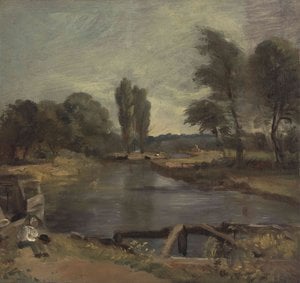
- His landscapes, like the serene “Landscape” depicting a rural village, reveal a sensitivity to color and atmosphere reminiscent of Impressionism.
- He was also adept at utilizing different mediums, seamlessly transitioning between painting and photography throughout his career.
- Jackson’s willingness to explore diverse subjects—from industrial processes to intimate portraits—highlights his intellectual curiosity and artistic versatility.
This multifaceted approach solidified his position not merely as a documentarian of the West, but as a truly accomplished artist capable of capturing the essence of his time.



 Preview
 Buy Print
 Send
Send Share
Share
 Details

 Download
 Similars
 X-Ray
X-Ray Diaporama
 Read More






































 Glass option is only available in size under 110 CM