Museum-quality giclée or canvas print with fast production and flexible finish options. ( Buy Hand Made Painting Switch to Digital Image)





























Pick from our preset sizes that match the artwork's original proportions.

Type the width and the height you need, to fit your frame or your wall. A print can only be cut, never made bigger than the picture, so a size with a different shape loses a part of the image. We send you a digital mockup to approve before we print anything. The picture shown on this page does not show the real cut — only the mockup does.
Worldwide Delivery () in 2 weeks instead of standard 4/5 weeks. (11 November)
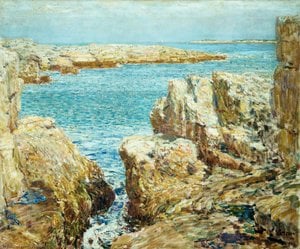
Havana
Reproduction Size
A print of "Havana" by Frederick Childe Hassam can be ordered directly on its Fine Art Print page: a fine art print on cotton canvas or archival canvas paper.
In the catalog, "Havana" by Frederick Childe Hassam is filed as wall art. The category helps find similar works.
In "Havana", a nostalgic mood accompanies an energetic emotion.

Frederick Childe Hassam was an American Impressionist painter whose life was rooted in the urban and coastal landscapes of the United States. Born on October 17, 1859, in the Dorchester neighborhood of Boston, Massachusetts, he entered a world that would eventually serve as the primary subject of his brush. He was known to all as "Childe," a name he adopted from his uncle.
His presence in the American art scene was marked by a steady evolution from his early beginnings to his established position as a leading figure of his movement. He moved through the changing social textures of the late 19th and early 20th centuries, capturing the energy of a nation in transition. He remained active in his craft until his death on August 27, 1935.
Born in Dorchester, Massachusetts, Frederick Childe Hassam entered a household defined by both commerce and a quiet connection to New England roots. His father, Frederick Fitch Hassam, managed a cutlery business, while his mother, Rosa Delia Hawthorne, brought the influence of her native Maine to the family. This practical environment shaped the young artist's early years, as the necessity of supporting his family required him to leave high school at the age of seventeen.
His early professional life was rooted in the meticulous demands of commercial art. He found work as a draftsman and illustrator, a period that required a disciplined eye for detail and a firm grasp of composition. These years of practical application were not merely a means of survival; they provided a foundational understanding of line and form. While working these roles, he simultaneously cultivated his skills as a painter, moving from the rigid requirements of illustration toward a more expressive visual language.
To formalize his technical abilities, he studied engraving techniques at the Boston School of the Arts. This training in engraving, characterized by precision and the careful management of light and shadow, would later inform the way he approached color and atmosphere in his oil paintings. His development was a gradual process of refinement, transitioning from the structured world of wood engravings and commercial design toward the fluid, observational style that would eventually define his career.
The formative years of Hassam’s development were shaped by a significant departure from the familiar landscapes of New England. In 1883, he embarked on a period of travel that would fundamentally alter his perception of light and composition. His path took him through the United Kingdom, the Netherlands, France, Italy, Switzerland, and Spain. During these excursions, he found himself particularly drawn to the watercolor techniques of J. M. W. Turner, whose approach to atmosphere and light left a lasting impression on his developing sensibilities.
By 1886, his commitment to formalizing his craft led him to Paris for a three-year stint of study. He was enrolled for a brief time at the Académie Julian, an institution known for its crowded studios and lack of rigid discipline. This environment allowed him to encounter a wide variety of styles from international students. It was during these years in Europe that he began to move away from his earlier, more subdued color palettes, moving instead toward a more expressive way of handling light and color that would define his later career.
Hassam’s artistic output was vast, encompassing over 3,000 works that spanned a diverse range of media. He was as comfortable with the precision of wood engravings and etchings as he was with the fluidity of watercolors and oils. His early years as an illustrator provided a foundation in detailed drawing, a skill that remained present even as his style underwent a significant transformation. After his time in Paris, his approach to the canvas shifted; he adopted a lighter palette and a looser brushwork that allowed him to capture the fleeting qualities of light and atmosphere.
This evolution allowed him to achieve a unique blend of European influences and American subjects. He did not merely transplant foreign methods onto domestic soil; instead, he adapted them to suit the specific character of his surroundings. His work often sought to render the energy of a bustling city or the quietude of a coastal landscape through a sensitive application of color. This technical versatility ensured that his depictions of modern life felt both immediate and atmospheric.
By 1897, the rigid structures of the established art world had become a source of friction for many progressive creators. In response to the conservative policies of the Society of American Artists, a group known as The Ten American Painters emerged to seek a more independent path. Hassam was central to this movement, serving as the first president of the collective. This group provided a necessary alternative for those seeking to exhibit their work outside of traditional academic constraints.
The collective was composed of artists who shared a desire for autonomy, including John Henry Twachtman, Willard Leroy Metcalf, and Edmund Tarbell. Through their independent exhibitions, they helped establish Impressionism as a legitimate movement within the United States. Hassam’s leadership within this circle helped steer the direction of American art toward a more modern, experimental sensibility. His involvement ensured that the group remained a significant force in the push for artistic independence.
Hassam’s ability to translate atmosphere into color is evident in his varied subject matter, ranging from intimate domesticity to the expansive sea. In 1893, he produced The Sonata, a work now held by the Nelson-Atkins Museum of Art in Kansas City. His interest in the coast was equally profound, seen in the 1899 depiction of Gloucester, which captures the specific light of the New England shoreline. These works demonstrate a shift from his early illustrative roots toward a more fluid, atmospheric approach to the American landscape.
The onset of global conflict prompted a significant change in his thematic focus. Between 1916 and 1919, he turned his attention to the American flag, producing a series of paintings that documented the patriotic fervor of the era. These works moved away from quiet landscapes to capture the energy of a nation in transition. One notable piece, Victory Day, May 1919, focuses on the atmosphere in the streets following the armistice, recording a specific moment of civic emotion through his characteristic brushwork.
Hassam’s impact on the American art landscape was felt through his ability to bridge the gap between European aesthetics and domestic sensibilities. He was instrumental in promulgating Impressionism to American collectors, dealers, and museums, helping to integrate these new visual languages into the national consciousness. By doing so, he helped establish American Impressionism as a distinct artistic movement, one that was no longer merely a derivative of French practice but a way to interpret the specific light and energy of the United States.
His presence in the American canon is cemented by the enduring placement of his work in significant public spaces. His paintings have found a permanent home in the White House, specifically within the Oval Office, where they contribute to the visual history of the nation's highest office. This placement reflects a broader recognition of his ability to capture the spirit of a changing country, from the bustling urbanity of New York to the quietude of the New England coast.
The reach of his influence extends through the generations of painters who followed his lead. His technical approach and his commitment to capturing the ephemeral qualities of light left a mark on the trajectory of American art. He moved the focus of the American painter away from traditional academic constraints and toward a more direct, observational engagement with the modern world.
The physical presence of Hassam’s vision remains scattered across several significant American institutions. In New York, the Metropolitan Museum of Art maintains a substantial collection, housing eleven of his works. The Brooklyn Museum also holds four pieces, offering a glimpse into his varied subject matter within the city's cultural landscape. These collections allow for a direct encounter with the light and atmosphere he sought to capture throughout his career.
Beyond the metropolitan centers of the East Coast, his influence is felt in the West and the Pacific Northwest. The Portland Art Museum in Portland preserves six of his paintings, while the Nelson-Atkins Museum of Art in Kansas City holds four. These holdings ensure that his approach to both urban and coastal scenes remains accessible to those studying the development of American Impressionism.

1859 - 1935 , United States of America

Explore the luminous beauty of American Impressionism and the Hudson River School. Discover a curated journey through light, landscape, and history, celebrating the enduring legacy of masters through exquisite, hand-painted oil reproductions for the discerning art lover.

Explore the rich history & techniques of oil painting – from Renaissance masters to Impressionism. Discover pigments, layering methods, and why this timeless medium endures. Expert insights for artists & art enthusiasts.

Explore the captivating world of Frederick Childe Hassam, a pioneer of American Impressionism. Discover his iconic paintings capturing light, urban life & coastal beauty. Learn about his legacy and influence on American art history.

Explore the captivating world of American Impressionism! Discover key artists, techniques & its lasting impact on art history. Find museum-quality reproductions and expert guidance at WahooArt.

Discover the enchanting alchemy of Impressionism. Explore how the mastery of oil on canvas, through glazing and impasto, captures eternal light and emotion. Perfect for lovers of Monet and Van Gogh seeking the profound depth of hand-painted fine art.
 Preview
 Send
Send Share
Share
 Details
 Guide
Guide

 Download
 Similars
 X-Ray
X-Ray Diaporama
 Q&A
Q&A
 Stats
Stats

 Read More









 Glass option is only available in size under 110 CM