The
Carriage Parade painting, created in 1888 by renowned American artist
Frederick Childe Hassam, is a stunning representation of a parade taking place in the city. This oil on canvas piece is housed at the
Haggin Museum in the United States and showcases Hassam's exceptional skill in capturing the essence of urban life.
A Glimpse into the Past
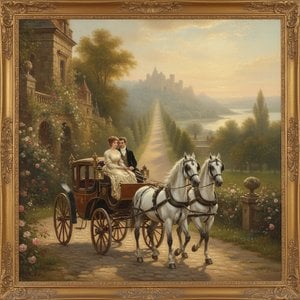
The painting features several people riding in horse-drawn carriages down a street, with at least 13 individuals visible in the scene. The horses pulling the carriages are prominently displayed, and two umbrellas add to the overall atmosphere of a lively city parade taking place during the daytime. This masterpiece is a testament to Hassam's ability to capture the beauty of everyday life.
Key Elements of the painting include:
- The use of oil on canvas, which provides a rich and vibrant texture to the piece
- The depiction of horse-drawn carriages, which adds to the sense of nostalgia and historical significance
- The inclusion of umbrellas, which contributes to the overall atmosphere of the parade
For more information on
Frederick Childe Hassam's work, visit /art/list/?Filter=frederick+childe+hassam,frederick,childe,hassam&. To explore other paintings by the artist, such as
Notre Dame Cathedral, Paris, 1888, go to /art/list/?Filter=8DP6SJ-Frederick-Childe-Hassam-Notre-Dame-Cathedral-Paris-1888.
Conservation and Preservation
The
Haggin Museum is dedicated to preserving and showcasing American art, including the works of
Frederick Childe Hassam. To learn more about the museum's collection and conservation efforts, visit /art/list/?Filter=haggin+museum,haggin,museum&. For information on the artist's life and work, see
Frederick Childe Hassam on Wikipedia.
The
Carriage Parade painting is a significant piece in American art history, and its preservation is crucial for future generations. By supporting institutions like the
Haggin Museum and exploring the works of artists like
Frederick Childe Hassam, we can appreciate the beauty and significance of these masterpieces.



 Preview
 Buy Hand Made Painting
 Send
Send Share
Share
 Details

 Download
 Similars
 X-Ray
X-Ray Diaporama

 Read More






































 Glass option is only available in size under 110 CM