Sell
x
PreviewPreview AR previewAR preview Buy Hand Made Painting Buy Hand Made PaintingBuy Image Buy Image SendSend
DetailsDetails Add to favorites Add to favorites DownloadDownload SimilarsSimilars X-RayX-Ray DiaporamaDiaporama

Small Composition III

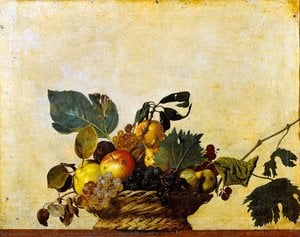
A vibrant symphony of crimson and geometric fruit shapes defines this 1914 German Expressionist masterpiece by Franz Marc, offering a profound spiritual experience for those looking to bring abstract energy into their home.

Discover Franz Marc (1880-1916), a German Expressionist pioneer & Der Blaue Reiter co-founder. Explore his iconic animal paintings, vibrant colors, and spiritual themes. Learn about his legacy!

Giclée / Art Print

Museum-quality giclée or canvas print with fast production and flexible finish options. (Buy Hand Made Painting Buy Hand Made PaintingBuy Image Buy Image)

P118B $10
P118H $10
P118W $10
P438Z $10
P508JH $12
P508YH $12
P805H $10
P805Z $10
P919BZ $10
P919G $10
P919XJ $10
P959ZH $10
P968JZ $12
W106C $8
W218G $10
W218JH $8
W218Y $10
W307PJ $10
W316G $10
W316PJ $8
W316Y $10
W398PJ $8
W4111J $10
W500HY $15
W500JH $15
W692G $12
W849H $8
W940BG $15
W953PJ $8

Standard
custom
CM
INCH

Pick from our preset sizes that match the artwork's original proportions.

width
height

You may enter your own dimensions to fit a specific frame or space. If your selected size does not match the original image's proportions, we will either crop the artwork or extend the image with a mirrored or solid-fill edge. A digital mockup will be sent for your approval before production begins.
Please note that the on-screen preview does not reflect the actual cropping or extension. Only the mockup will accurately show the final composition.
While custom sizes are available, we recommend selecting a dimension from the predefined list to preserve the original proportions.

Worldwide Delivery () in 2 weeks instead of standard 4/5 weeks. (19 August)

why_choose_icon
Free Worldwide Express Shipping
why_choose_icon
High-Quality Linen Canvas
why_choose_icon
Full Shipping Insurance
why_choose_icon
Customs Tax Refund Guarantee
why_choose_icon
True Color Matching Guarantee
why_choose_icon
60-Day Return Policy (Defects Only)
why_choose_icon
100% Money-Back Guarantee
why_choose_icon
Bulk Discount Offer

Total Price

$ 69

reproduction

Small Composition III

Giclée / Art Print

Reproduction Size

-

Total Price

$ 69

Quick Facts

  • Influences: Der Blaue Reiter
  • Movement: Expressionism
  • Artistic style: Abstract Expressionism
  • Location: Karl Ernst Osthaus Museum, Germany
  • Medium: Oil on canvas
  • Subject or theme: Still life
  • Dimensions: 46 x 58 cm

Art Quiz

There is only one correct answer for each question.

Question 1:
What artistic movement is ‘Small Composition III’ primarily associated with?
Question 2:
In what year was Franz Marc's painting ‘Small Composition III’ created?
Question 3:
Where is ‘Small Composition III’ currently housed?
Question 4:
What prominent journal did Franz Marc co-found that championed the German Expressionist movement?
Question 5:
The painting utilizes vibrant colors and abstract forms, reflecting a key characteristic of Marc’s artistic style and aligning with broader trends in modern art.

Collectible Description

A Symphony in Crimson: The Spiritual Vibrancy of Franz Marc

In the pantheon of German Expressionism, few works capture the raw, pulsating energy of the early twentieth century quite like Franz Marc’s “Small Composition III.” Painted in 1914, on the precipice of a world about to be transformed by the shadows of war, this masterpiece serves as a profound testament to the artist's quest for spiritual purity. Unlike the Impressionists, who sought to document the fleeting dance of light upon a surface, Marc turned his gaze inward. He utilized the canvas not as a mirror to reality, but as a window into the soul, employing a language of abstraction to communicate truths that words often fail to grasp. Through this work, we encounter a moment of intense chromatic harmony, where the boundaries between object and emotion begin to dissolve.

The visual journey begins with an arresting, dominant crimson background—a sea of deep red that immediately envelops the viewer in a sense of primal passion and vital force. This is not merely a backdrop; it is the very heartbeat of the composition. Scattered across this fiery expanse is a rhythmic arrangement of organic forms: apples, oranges, and bananas. While these elements may appear as simple still-life subjects at first glance, they are transformed by Marc’s hand into geometric symbols of life and fertility. The way these shapes interact with the red void creates a dynamic tension, a celestial dance where the weight of the fruit is balanced by the ethereal lightness of the surrounding space.

Technique and the Language of Color

To appreciate the depth of “Small Composition III,” one must look closely at the meticulous application of tempera paint. Marc’s choice of medium was deliberate, as tempera offers a unique luminosity and a matte, velvety texture that allows colors to appear both saturated and incredibly pure. The artist employed a sophisticated layering technique, building up hues of yellow, orange, and deep red to create a sense of internal glow. This meticulousness results in a surface that feels alive, where the light seems to emanate from within the pigment itself rather than reflecting off it.

The influence of Cubism is subtly woven into the fabric of the piece, visible in the fractured planes and the simplified, almost architectural, arrangement of the fruit. However, Marc avoids the coldness often associated with purely geometric abstraction. Instead, he infuses these shapes with a sense of organic movement. The composition is governed by an underlying mathematical harmony that feels natural rather than forced, guiding the eye in a continuous loop across the canvas. For the collector or interior designer, this creates a piece that is both intellectually stimulating and visually soothing—a focal point that commands attention through its structural integrity and vibrant warmth.

An Eternal Legacy for the Modern Space

Beyond its formal beauty, “Small Composition III” carries an emotional weight that remains profoundly relevant. As a founding member of Der Blaue Reiter (The Blue Rider), Marc sought to find a universal spiritual language through color. In this painting, the interplay of warm tones evokes a sense of optimism and the enduring cycle of nature. It is a work that celebrates existence in its most fundamental, colorful form. For those looking to curate a space with meaning, this artwork offers more than just decoration; it provides an atmosphere of contemplative energy.

Whether placed in a contemporary gallery setting or as a bold statement piece in a sophisticated residential interior, a high-quality reproduction of this work brings the transformative power of German Expressionism into the home. It invites viewers to pause, to look past the surface, and to reconnect with the primal, beautiful rhythms of the natural world that Marc so passionately sought to immortalize.


Artist Biography

A Life Immersed in Color and Spirit

Franz Moritz Wilhelm Marc, born in Munich in 1880, was a painter whose brief but intensely focused career irrevocably altered the course of German Expressionism. His story is one of profound spiritual seeking translated into a vibrant visual language, a quest to understand the essence of life through the purity he found in the natural world—particularly within the animal kingdom. Initially influenced by his father, Wilhelm Marc, a landscape painter, young Franz’s artistic path wasn't immediately certain. He briefly considered theology, grappling with questions of faith and existence before ultimately dedicating himself to art at the Academy of Fine Arts in Munich. These early explorations into religious thought would remain deeply embedded within his work, shaping his belief that art could be a conduit for spiritual experience. His academic training provided him with technical foundations, but it was encounters with the works of Vincent van Gogh during visits to Paris that truly ignited his artistic vision. Van Gogh’s emotive use of color and raw expression resonated profoundly with Marc, liberating him from conventional techniques and setting him on a path toward a more subjective and emotionally charged style.

The Blue Rider and a New Artistic Vision

Marc's artistic development wasn’t solitary; it flourished within the dynamic context of early 20th-century Munich. He experimented with various artist groups, including the Neue Künstlervereinigung München, before co-founding *Der Blaue Reiter* (The Blue Rider) in 1911 alongside Wassily Kandinsky. This wasn’t merely a group or an exhibition series; it was a philosophical and artistic revolution. *Der Blaue Reiter* sought to move beyond mere representation, aiming instead to express inner spiritual truths through abstraction and symbolic color. The journal of the same name became a platform for disseminating these ideas, showcasing not only their own work but also that of other forward-thinking artists and exploring diverse cultural influences from folk art to primitive sculpture. Marc’s contributions during this period were pivotal. He moved away from depicting landscapes as static scenes, instead focusing on animals—horses, deer, foxes—as vessels of spiritual energy. These weren't simply animal portraits; they were symbolic representations of innocence, harmony, and a connection to the natural world that he believed humanity had lost. The influence of Robert Delaunay’s exploration of abstract forms and vibrant colors further propelled Marc toward simplification and heightened emotional expression in his work. Paintings like *The Tiger* (1912) and *Red Deer* (1912) exemplify this shift, showcasing bold color choices and a growing focus on the inherent qualities of his subjects rather than realistic depiction.

Symbolism, Color, and the Essence of Being

Marc’s artistic style is immediately recognizable for its distinctive use of color and form. He didn't employ color descriptively; instead, he imbued it with symbolic meaning. Blue represented spirituality and masculinity, yellow signified joy and femininity, and red embodied violence and materiality. These weren’t arbitrary choices but a carefully constructed system designed to convey specific emotional and philosophical ideas. His animals aren’t merely subjects; they are embodiments of these concepts. The simplification of forms—reducing figures to their essential shapes—further emphasized the underlying spiritual essence he sought to capture. *The Tower of Blue Horses* (1913), sadly lost during World War II, is perhaps the most iconic example of this approach, a powerful and evocative composition that encapsulates his artistic vision. He believed animals possessed an inherent purity and connection to nature that humans had forfeited through societal constraints and intellectualization. By portraying them with such reverence and symbolic weight, Marc sought to remind viewers of this lost harmony and inspire a deeper appreciation for the natural world. His work wasn’t about depicting *what* he saw but rather *how* he felt—a deeply personal and spiritual response to his surroundings.

A Tragic End and Lasting Legacy

The outbreak of World War I in 1914 dramatically altered Marc's life and artistic trajectory. Despite seeking exemption due to his status as an artist, he was drafted into the German army, serving as a cavalryman. The horrors of war deeply affected him, yet even amidst the chaos, he continued to paint, finding solace and meaning in his art. Tragically, Franz Marc died on March 4, 1916, at the Battle of Verdun, a devastating loss for the art world. His untimely death cut short a career brimming with potential, but it also cemented his place as a pivotal figure in modern art history. His work continues to resonate today, influencing generations of artists and captivating audiences with its emotional depth and spiritual resonance. Marc’s paintings are exhibited in major museums worldwide, including the Lenbachhaus in Munich, which holds an extensive collection of his work. He is remembered not only as a pioneer of German Expressionism but also as a visionary artist who dared to explore the profound connection between art, spirituality, and the natural world—a legacy that continues to inspire awe and contemplation. His artistic vision remains a testament to the power of art to transcend the material realm and touch upon something deeper within the human spirit.
Franz Marc

Franz Marc

1880 - 1916 , Germany

Quick Facts

  • Artistic Movement Or Style: German Expressionism
  • Artists Or Movements Influenced By This Artist:
    • Abstract art
    • Der Blaue Reiter
  • Artists Who Influenced This Artist:
    • Van Gogh
    • Delaunay
  • Date Of Birth: February 8, 1880
  • Date Of Death: March 4, 1916
  • Full Name: Franz Moritz Wilhelm Marc
  • Nationality: German
  • Notable Artworks:
    • The Tiger
    • Red Deer
    • Tower of Blue Horses
  • Place Of Birth: Munich, Germany
Explore artworks organized by themes, styles, and characteristics.