Preview AR preview Switch to Print Switch to Digital Image Send
Details Guide Add to favorites Download Similars X-Ray Diaporama Stats

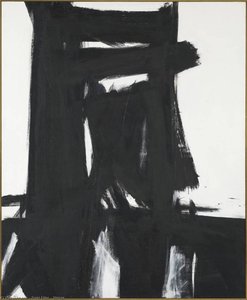
Delaware Gap

Franz Kline’s ‘Delaware Gap’ (1958) is a powerful Abstract Expressionist work featuring bold black brushstrokes on white canvas. Explore its dynamic energy & textural depth.

Franz Kline (1910-1962): Pioneer of Abstract Expressionism renowned for dynamic black brushstrokes & powerful action paintings. Explore his legacy!

The artwork displayed on this page is protected by copyright law, which means we cannot legally create or sell an identical reproduction. This protection is enforced under international agreements such as the Berne Convention and by national laws, including those outlined by the U.S. Copyright Law - Title 17.

As a respectful and legal alternative, we offer custom, hand-painted artworks inspired by the original. Our skilled and professional artists carefully study the original's style, mood, and artistic essence to create a new, unique piece that evokes the same feeling - while remaining an original creation in its own right.

This method fully complies with copyright regulations because it does not involve copying or duplicating the protected artwork. Instead, it is a creative reinterpretation - a new painting that is influenced by the original but not identical to it.

Hand Made Oil Reproduction

Hand-painted oil on canvas in your size and frame, made to order by our artists. ( Switch to Print Switch to Digital Image)

Corner sample of the P118B picture frame: moulded polystyrene, 5 cm wide and 3 cm thick
P118B $10
Corner sample of the P118H picture frame: moulded polystyrene, 5 cm wide and 3 cm thick
P118H $10
Corner sample of the P118W picture frame: moulded polystyrene, 5 cm wide and 3 cm thick
P118W $10
Corner sample of the P438Z picture frame: moulded polystyrene, 5.5 cm wide and 3.5 cm thick
P438Z $10
Corner sample of the P508JH picture frame: moulded polystyrene, 7 cm wide and 3.5 cm thick
P508JH $12
Corner sample of the P508YH picture frame: moulded polystyrene, 7 cm wide and 3.5 cm thick
P508YH $12
Corner sample of the P805H picture frame: moulded polystyrene, 5 cm wide and 3.5 cm thick
P805H $10
Corner sample of the P805Z picture frame: moulded polystyrene, 5 cm wide and 3.5 cm thick
P805Z $10
Corner sample of the P919BZ picture frame: moulded polystyrene, 7 cm wide and 3.5 cm thick
P919BZ $10
Corner sample of the P919G picture frame: moulded polystyrene, 7 cm wide and 3.5 cm thick
P919G $10
Corner sample of the P919XJ picture frame: moulded polystyrene, 7 cm wide and 3.5 cm thick
P919XJ $10
Corner sample of the P959ZH picture frame: moulded polystyrene, 5 cm wide and 3 cm thick
P959ZH $10
Corner sample of the P968JZ picture frame: moulded polystyrene, 6 cm wide and 4 cm thick
P968JZ $12
Corner sample of the W106C picture frame: solid wood, 5 cm wide and 3 cm thick
W106C $8
Corner sample of the W218G picture frame: solid wood, 5 cm wide and 3 cm thick
W218G $10
Corner sample of the W218JH picture frame: solid wood, 5 cm wide and 3 cm thick
W218JH $8
Corner sample of the W218Y picture frame: solid wood, 5 cm wide and 3 cm thick
W218Y $10
Corner sample of the W307PJ picture frame: solid wood, 6 cm wide and 3 cm thick
W307PJ $10
Corner sample of the W316G picture frame: solid wood, 6 cm wide and 3 cm thick
W316G $10
Corner sample of the W316PJ picture frame: solid wood, 6 cm wide and 3 cm thick
W316PJ $8
Corner sample of the W316Y picture frame: solid wood, 6 cm wide and 3 cm thick
W316Y $10
Corner sample of the W398PJ picture frame: solid wood, 5 cm wide and 3 cm thick
W398PJ $8
Corner sample of the W4111J picture frame: solid wood, 6.5 cm wide and 3.5 cm thick
W4111J $10
Corner sample of the W500HY picture frame: solid wood, 7 cm wide and 5 cm thick
W500HY $15
Corner sample of the W500JH picture frame: solid wood, 7 cm wide and 5 cm thick
W500JH $15
Corner sample of the W692G picture frame: solid wood, 8 cm wide and 4 cm thick
W692G $12
Corner sample of the W849H picture frame: solid wood, 5 cm wide and 3 cm thick
W849H $8
Corner sample of the W940BG picture frame: solid wood, 7.5 cm wide and 4.5 cm thick
W940BG $15
Corner sample of the W953PJ picture frame: solid wood, 6 cm wide and 3.5 cm thick
W953PJ $8

Standard
custom
CM
INCH

Pick from our preset sizes that match the artwork's original proportions.

width
height

You may enter your own dimensions to fit a specific frame or space. If your selected size does not match the original image's proportions, we will either crop the artwork or extend the painting with additional hand-painted elements. A digital mockup will be sent for your approval before production begins.
Please note that the on-screen preview does not reflect the actual cropping or extension. Only the mockup will accurately show the final composition.
While custom sizes are available, we recommend selecting a dimension from the predefined list to preserve the original proportions.

Examples of what can be changed: Replace face with customer photo; Add pet (e.g., replace cat with dog); Include hidden message in background; Change background landscape or elements.
After order, WahooArt.com team will email client for instructions and provide a mockup preview

Worldwide Delivery () in 3/4 weeks instead of standard 5 weeks. (9 October). No compromise on quality.

Free Worldwide Express Shipping
High-Quality Linen Canvas
Full Shipping Insurance
Customs Tax Refund Guarantee
True Color Matching Guarantee
100-Day Return Policy (Defects Only)
100% Money-Back Guarantee
Bulk Discount Offer

Total Price

$ 272

Delaware Gap

Reproduction Medium

Reproduction Size

-

Total Price

$ 272


Artist Biography

A Life Forged in Contrast: The World of Franz Kline

Franz Kline, a pivotal figure in the Abstract Expressionist movement, remains an artist whose work resonates with raw power and emotional depth. Born in Wilkes-Barre, Pennsylvania, in 1910, his life was marked by early hardship – the suicide of his father when he was just seven years old cast a long shadow, influencing a sensibility that would later find expression in the stark contrasts defining his art. This formative experience led to a nomadic youth and eventual enrollment at Girard College, a Philadelphia boarding school for boys who had lost their fathers. It was here, amidst structured discipline, that Kline’s artistic inclinations began to surface, nurtured by traditional training in illustration and drafting. He continued his studies at Boston University and later honed his skills at the Heatherley School of Fine Art in London, immersing himself in the works of the Old Masters – Rembrandt, Velázquez, El Greco, Goya, Dürer – and absorbing the nuances of Japanese prints. These early influences, though seemingly distant from his eventual abstract style, laid a foundation for his understanding of composition, light, and the expressive potential of line.

From Representation to Revelation: The Evolution of an Abstract Vision

Kline’s artistic journey wasn't immediate or linear. Throughout the 1930s and early 40s, he worked as a figurative painter, creating landscapes, cityscapes, portraits, and even murals. His “Hot Jazz” mural series from 1940, commissioned for a Greenwich Village tavern, signaled a shift towards simplification, hinting at the bold forms to come. However, it was a pivotal encounter with Willem de Kooning in 1948 that truly unlocked his abstract potential. De Kooning suggested projecting one of Kline’s sketches onto a wall using a Bell-Opticon projector – an act that dramatically enlarged and transformed the image, reducing it to its essential strokes. This experience proved revelatory for Kline; he began exploring large-scale abstractions characterized by dynamic black brushstrokes on white canvases. He abandoned representationalism not as a rejection of form, but as a pursuit of pure expression, stripping away narrative content to focus on the visceral impact of gesture and line. The resulting works weren’t merely paintings, they were *events* – energetic confrontations between darkness and light, control and chaos.

The Language of Black and White: Defining Kline's Aesthetic

Kline’s mature style is instantly recognizable for its monochromatic palette—primarily black on white. This wasn’t a limitation but a deliberate choice, emphasizing the interplay of positive and negative space, creating a visual tension that draws the viewer into the heart of the composition. He believed the white was as crucial as the black, not merely an absence of color but an active participant in the dialogue between form and void. His brushstrokes were fluid, dynamic, and often applied with house-painting brushes on large canvases, immersing the spectator within his abstract world. While some observers have noted similarities to Japanese calligraphy, Kline consistently denied any conscious influence, asserting that his work stemmed from a more primal, intuitive source. He frequently titled his paintings after places from his childhood or industrial landscapes – “Lehighton,” “Mahoning” – offering subtle anchors to his personal history without dictating the interpretation of the abstract forms. These titles served as echoes rather than explanations, inviting viewers to engage with the work on their own terms.

Legacy and Influence: A Lasting Impact on Modern Art

By the 1950s, Franz Kline had achieved significant recognition within the New York School—an informal group of artists including Jackson Pollock, Willem de Kooning, Robert Motherwell, and Lee Krasner who were redefining American art. He exhibited at prestigious galleries like Egan Gallery and Sidney Janis Gallery, participated in the Venice Biennale in 1960 (receiving the Italian Ministry of Public Instruction Prize), and taught at Black Mountain College and Pratt Institute. Kline’s influence extended beyond Abstract Expressionism, subtly shaping the development of Minimalism. His reluctance to imbue his work with hidden meanings resonated with artists like Donald Judd and Richard Serra, who sought to reduce art to its essential forms. Tragically, Kline's career was cut short by declining health; diagnosed with rheumatic heart disease in 1961, he died in New York City in 1962 at the age of 51. Despite his relatively brief artistic output, Franz Kline left an indelible mark on modern art, establishing gestural abstraction as a powerful and enduring force. His paintings continue to captivate audiences with their raw energy, emotional intensity, and profound exploration of form and space—a testament to a life forged in contrast and expressed through the bold language of black and white.

Franz Kline

Franz Kline

1910 - 1962 , United States of America

Quick Facts

  • Full Name: Franz Kline
  • Nationality: American
  • Date Of Birth: 1910
  • Date Of Death: 1962
  • Place Of Birth: Wilkes-Barre, United States of America
  • Notable Artworks:
    • Lehighton
    • Palladio
    • Kitzker
    • Untitled
  • Artistic Movement Or Style: Abstract Expressionism
  • Artists Who Influenced This Artist:
    • Rembrandt
    • Velasquez
    • El Greco
    • Goya
    • De Kooning
  • Artists Or Movements Influenced By This Artist:
    • Minimalism
    • Donald Judd
    • Richard Serra
Explore artworks organized by themes, styles, and characteristics.