x


 Graphite PencilModernism
 1939
1939 34.0 x 26.0 cm
 Bauhaus Dessau Foundation
Museum-quality giclée or canvas print with fast production and flexible finish options. ( Buy Hand Made Painting Buy Image)





























Pick from our preset sizes that match the artwork's original proportions.

You may enter your own dimensions to fit a specific frame or space. If your selected size does not match the original image's proportions, we will either crop the artwork or extend the image with a mirrored or solid-fill edge. A digital mockup will be sent for your approval before production begins.
Please note that the on-screen preview does not reflect the actual cropping or extension. Only the mockup will accurately show the final composition.
While custom sizes are available, we recommend selecting a dimension from the predefined list to preserve the original proportions.
Worldwide Delivery () in 2 weeks instead of standard 4/5 weeks. (4 September)


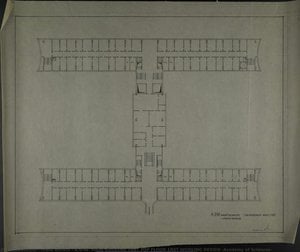
2-family house (Floor plan)
Reproduction Size
To gaze upon this architectural rendering by Franz Ehrlich is not merely to look at lines on paper; it is to step into the very blueprint of a modern existence. Dating from 1939, this detailed floor plan for a two-family house captures the rigorous spirit of early 20th-century design. The piece speaks in the precise, unwavering language of graphite pencil upon textured paper—a dialogue between human habitation and structural necessity. It embodies the modernist ideal: functionality elevated to an art form. One can almost hear the scratch of the draftsman's pencil as Ehrlich meticulously mapped out the divisions of space, suggesting a life lived with order, efficiency, and clean lines.
The historical context surrounding this work is inseparable from its aesthetic power. Emerging from the intellectual crucible of the Bauhaus movement, Ehrlich’s hand carries the weight of avant-garde principles. The composition is dominated by orthogonal geometry—the perfect rectangles and squares that define rooms and walls. This adherence to pure form reflects a cultural yearning for clarity amidst the turbulent times leading up to the Second World War. While the subject matter is purely utilitarian—a dwelling plan—its execution imbues it with profound symbolic weight. It suggests a belief in rational living, where every square foot has its purpose, echoing the utopian aspirations of modernist architects.
Technically, the piece is a masterclass in restraint. The palette is almost entirely monochromatic, ranging from the palest grey wash to deep charcoal accents. This limitation forces the viewer's attention entirely onto the quality of the line itself. Ehrlich employs hatching—the careful cross-hatching technique—not just for shading, but as a tool to suggest depth and volume where none naturally exists in a top-down view. The visible texture of the paper acts as an integral part of the artwork, giving the graphite markings a palpable connection to history. It is this delicate interplay between the artist's precise hand and the aged materiality of the support that gives the reproduction its enduring allure.
For the contemporary collector or designer, this piece offers more than mere decoration; it offers inspiration for thought. While there are no overt emotional narratives, the sense of profound order is deeply affecting. It speaks to a desire for sanctuary—a perfectly organized haven. The inclusion of the smaller sketch, perhaps a stylized lamp fixture, adds a touch of delicate artistry to the otherwise severe structure, reminding us that even the most functional space must accommodate beauty and light. Owning this reproduction allows one to curate an environment steeped in intellectual rigor and timeless design elegance.


1907 - 1984 , Germany

Elevate your artistic practice with this expert guide to mastering the line. Discover advanced techniques in graphite, charcoal, and contour drawing designed for art students seeking technical precision and expressive depth in their fine art studies.

Explore the profound artistry of graphite drawing. Discover professional techniques for mastering depth, texture, and detail through a lens of art history, from classical sketches to modern masterpieces. Elevate your understanding of the pencil medium with our expert guide.

Discover the sophisticated mastery of graphite drawing. Explore expert techniques for achieving profound depth, intricate texture, and hyper-realistic detail through the alchemy of carbon, curated for the discerning art enthusiast and professional collector.



Stay updated with the latest art news, exclusive offers, and decoration ideas.
Tell us about your project and our art experts will provide you with 3 personalized art suggestions.
Let Us Curate 3 Options Just for You - Free!

 Preview
 Send
Send Share
Share
 Details

 Download
 Similars
 X-Ray
X-Ray Diaporama
 Read More







 Glass option is only available in size under 110 CM