

 Oil On CanvasWallArtDutch Golden Age
 1615Early Modern
 131.0 x 100.0 cm
 Metropolitan Museum of Art
Hand-painted oil on canvas in your size and frame, made to order by our artists. ( Switch to Print Switch to Digital Image)





























Pick from our preset sizes that match the artwork's original proportions.

You may enter your own dimensions to fit a specific frame or space. If your selected size does not match the original image's proportions, we will either crop the artwork or extend the painting with additional hand-painted elements. A digital mockup will be sent for your approval before production begins.
Please note that the on-screen preview does not reflect the actual cropping or extension. Only the mockup will accurately show the final composition.
While custom sizes are available, we recommend selecting a dimension from the predefined list to preserve the original proportions.
Worldwide Delivery () in 3/4 weeks instead of standard 5 weeks. (21 September). No compromise on quality.


Shrovetide Revellers
Reproduction Size
To stand before this depiction of Shrovetide Revellers is to be instantly transported across the centuries, right into the warm, intoxicating glow of a communal celebration. This large oil on canvas captures not merely a gathering, but a palpable moment of shared humanity—a vibrant tableau where gaiety and camaraderie are the central subjects. The scene pulses with life; one can almost hear the laughter echoing off the unseen walls and smell the mingled scents of wine and good company. It is an intimate portrait of revelry, masterfully composed to draw the viewer into the very heart of the festivities.
What elevates this work beyond a mere snapshot in time is the breathtaking technical skill displayed by its creator. The artist, Frans Hals I, was renowned for his ability to capture life in motion, eschewing rigid formality for something far more immediate and spontaneous. Observe the brushwork; it is loose, energetic, and utterly alive. Hals employs these expressive strokes not as mere decoration, but as carriers of emotion itself. This technique grants the figures a remarkable sense of immediacy, making their interactions feel unposed and deeply genuine. The way the light catches on the objects—the bowl resting nearby, the gleam off the cups, the presence of those scattered knives—is handled with an effortless dexterity that speaks to a master at work.
Dating from 1615, this painting anchors us firmly within the rich tapestry of the Dutch Golden Age. The subject matter itself—a Shrovetide celebration—speaks volumes about the social customs and seasonal rhythms of the time. These festivals were crucial moments for community bonding, a temporary suspension of daily routine where merriment reigned supreme. While the specific details surrounding the gathering are wonderfully ambiguous, this ambiguity is its strength; it allows every viewer to project their own cherished memories of celebration onto the canvas. It is a historical document filtered through an artist's profound understanding of human joy.
For the contemporary admirer or designer seeking art that breathes life into a space, this piece offers more than just decoration; it offers an emotional anchor. The gathering itself symbolizes connection—the enduring power of friendship and family bonds. The objects scattered throughout—the vessels, the implements—are not incidental clutter but subtle props in a narrative of shared experience. Owning a reproduction of Shrovetide Revellers is to invite that same feeling of warmth, conviviality, and spirited abandon into your own home or gallery. It suggests that even amidst the formality of modern life, moments of unbridled joy are always within reach.

Frans Hals I was a Dutch painter born in Antwerp, Belgium, around 1580. Though his early life remains somewhat shrouded in mystery, he rose to become one of the most important figures of the Dutch Golden Age, celebrated for his innovative portraiture and genre scenes.
Details surrounding Hals’s formative years are scarce. It is believed he received initial artistic training in Antwerp, a prominent center for painting at the time. However, due to religious and political turmoil, his family relocated to Haarlem in the Netherlands. He became a member of the Haarlem Guild of St. Luke in 1610, marking the formal beginning of his professional career.
Hals distinguished himself through a remarkably fresh and spontaneous style. Unlike many of his contemporaries who favored meticulous detail, Hals employed a loose and expressive brushstroke. This technique imbued his paintings with a sense of immediacy and vitality, capturing the personality and character of his subjects in a way that was revolutionary for its time.
While Hals produced a wide range of works, he is best known for his portraits. Some of his most celebrated paintings include:
He also created compelling genre scenes – depictions of everyday life – that offered glimpses into Dutch society.
Determining Hals’s direct influences is challenging, as he developed a highly individual style. However, it's likely he was aware of the work of earlier Flemish painters like Pieter Bruegel the Elder. His innovative approach to portraiture profoundly impacted subsequent generations of artists.
Frans Hals I played a crucial role in shaping Dutch painting during the Golden Age. His work reflects the burgeoning prosperity and individualism of the Netherlands at that time. He moved away from rigid formality towards a more naturalistic and expressive style, leaving an enduring legacy on the art world.
Today, his paintings are highly sought after and can be found in major museums worldwide, including the Frans Hals Museum in Haarlem, which houses the largest collection of his work. His contributions continue to inspire artists and captivate audiences centuries later.

1580 - 1585 , Belgium
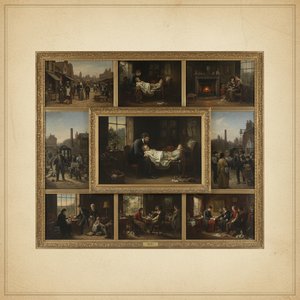
Explore the poignant world of Samuel Luke Fildes, a master of Victorian Social Realism. Discover his iconic paintings like 'The Doctor' and delve into his artistic journey with WahooArt.

Explore the revolutionary portraiture of Frans Hals I, a master of the Dutch Golden Age. Discover his innovative techniques, captivating character studies & lasting impact on art history. Learn more at WahooArt.

Explore 25 breathtaking artworks by Giotto di Bondone, a Renaissance master. Discover the stories behind iconic frescoes & paintings like the Scrovegni Chapel cycle. Find museum-quality Giotto reproductions and elevate your home decor with WahooArt.com.

Journey through the Golden Age with our guide to the Top 10 Dutch Baroque masterpieces! Explore iconic paintings by Rembrandt, Vermeer & Frans Hals. Find museum-quality art reproductions and elevate your home decor at WahooArt.com.

Journey through El Greco's 25 most iconic paintings! Explore the spiritual depth & dramatic beauty of this Spanish Renaissance master. Discover art history, techniques & find museum-quality reproductions for your home at WahooArt.com.

 Preview
 Send
Send Share
Share
 Details
 Guide
Guide

 Download
 Similars
 X-Ray
X-Ray Diaporama
 Stats
Stats Read More







 Glass option is only available in size under 110 CM


