
x


 Impressionism
 1938
1938 64.0 x 76.0 cm
Hand-painted oil on canvas in your size and frame, made to order by our artists. ( Buy Print Buy Image)
Pick from our preset sizes that match the artwork's original proportions.

You may enter your own dimensions to fit a specific frame or space. If your selected size does not match the original image's proportions, we will either crop the artwork or extend the painting with additional hand-painted elements. A digital mockup will be sent for your approval before production begins.
Please note that the on-screen preview does not reflect the actual cropping or extension. Only the mockup will accurately show the final composition.
While custom sizes are available, we recommend selecting a dimension from the predefined list to preserve the original proportions.
Worldwide Delivery () in 3/4 weeks instead of standard 5 weeks. (27 August). No compromise on quality.


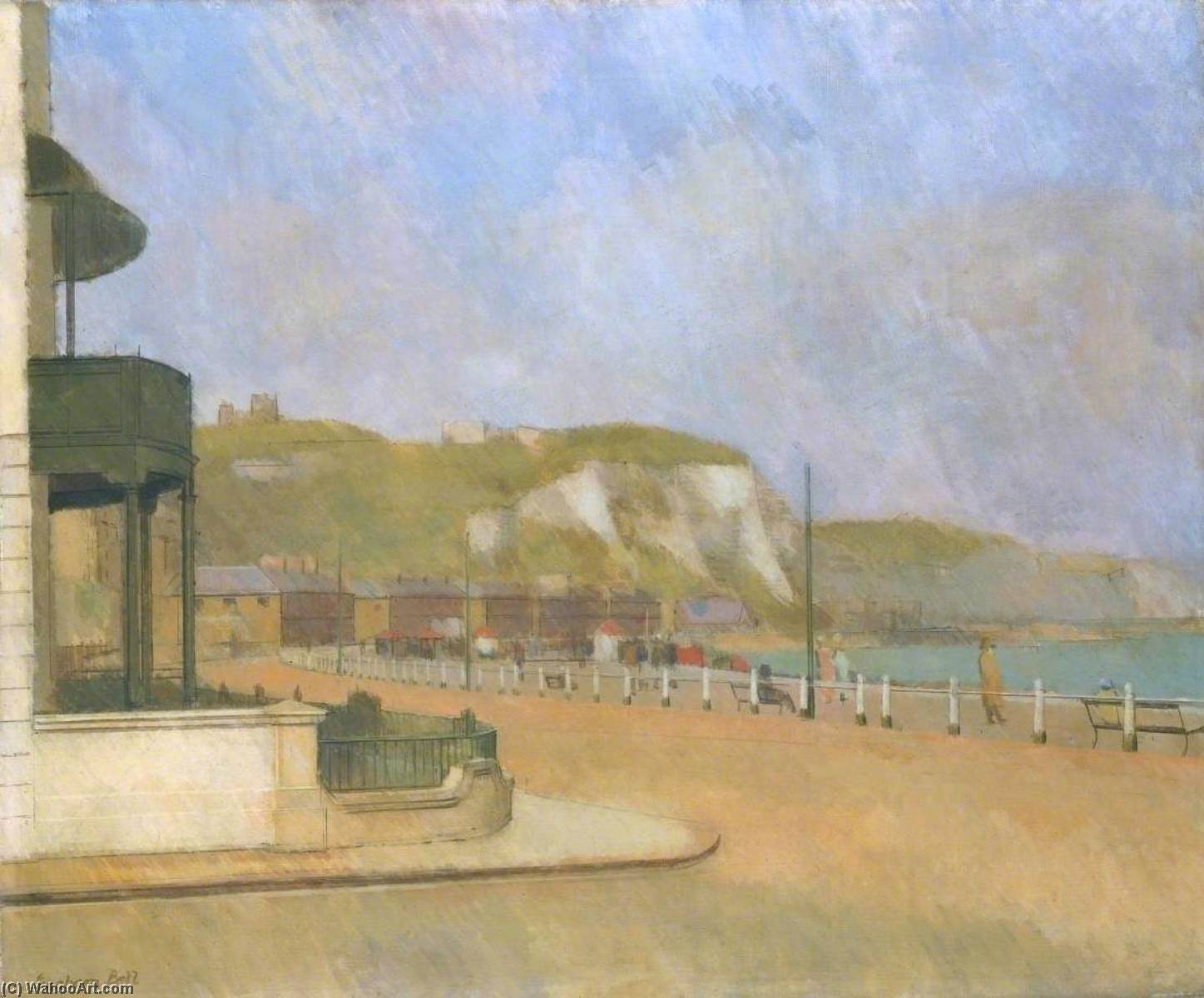
Dover Front
Reproduction Size

The history of British modernism is often told through the lens of radical abstraction, yet there exists a profound, quieter movement that sought truth in the tangible world. At the heart of this movement stood Frank Graham Bell, an artist whose brief but luminous career left an indelible mark on the landscape of twentieth-century realism. Born in 1910 in the vibrant landscapes of South Africa, Bell’s journey was one of migration and metamorphosis. His early years in Durban provided a foundational connection to the natural world, nurtured through studies at the Durban Art School. This period of formative growth culminated in his first solo exhibition at the City Hall in Durban in 1931, a moment that signaled the arrival of a talent capable of translating the essence of his surroundings with remarkable precision and emotional depth.
In 1931, Bell’s trajectory shifted irrevocably as he moved to London, bringing with him a fresh perspective from the Southern Hemisphere. This relocation was not merely a change in geography but an immersion into the intellectual ferment of the British art scene. Alongside his wife, Anne Bilbrough, Bell navigated a world of shifting aesthetic values. His early inspirations were drawn from the expressive, fluid landscapes of Duncan Grant, yet he soon found himself gravitating toward a more disciplined approach to observation. The encounter with William Coldstream proved transformative; Coldstream’s rigorous commitment to meticulous realism provided Bell with the technical framework to pursue an art that was both objective and deeply felt. This pursuit of truth through careful looking would become the hallmark of his mature style.
Bell’s most significant contribution to art history lies in his role as a founding member of the Euston Road School. This collective emerged as a deliberate reaction against the perceived fragmentation and stylistic excesses of the avant-garde. For Bell and his contemporaries, the mission was clear: to capture the essence of rural England and the dignity of everyday life through a lens of social consciousness and technical mastery. His work during this era reflects a profound engagement with the landscape, where the textures of the earth, the light of the coast, and the stillness of a mill are rendered with an almost reverent clarity.
His paintings from this period, such as the evocative Dover Front or the tranquil Baylham Mill, demonstrate a sophisticated command of composition and atmosphere. While his technique drew inspiration from the structural legacies of Cézanne, Bell infused his work with a unique sensitivity to the ephemeral qualities of light and weather. His art was never merely a photographic reproduction; rather, it was an attempt to document the soul of a place. This commitment to the "objective" was further nuanced by the influence of Geoffrey Tibble, whose ideas on abstraction encouraged Bell to find the underlying structure within his realistic observations, creating a harmony between form and feeling.
The trajectory of Bell’s life was tragically cut short by the ravages of global conflict. As World War II descended upon Europe, the artist’s life became inextricably linked to the era's profound upheavals. His death in a flying accident during the war silenced a voice that was only beginning to reach its full expressive potential. Yet, despite the brevity of his career, the impact of Frank Graham Bell remains palpable in the annals of British art. He stood as a bridge between the traditionalist reverence for nature and a modern sensibility that demanded honesty and social relevance.
Today, we remember Bell not only as a painter of landscapes, portraits, and still-lifes but as a vital participant in a movement that sought to find beauty in the unadorned truth. His legacy is found in:
Through his eyes, we are invited to look closer at the world around us, finding the extraordinary within the ordinary and the eternal within the fleeting moment.

1910 - 1943

Explore the ethereal beauty of Impressionist landscapes. Discover how masters like Monet captured fleeting light through color and texture, and learn to curate these timeless, luminous masterpieces for your home collection.

Discover the profound serenity of timeless pastoral landscapes. From Impressionist masterpieces to bespoke oil commissions, explore how curated fine art brings the enduring beauty and tranquility of nature into your luxury home interior.


Stay updated with the latest art news, exclusive offers, and decoration ideas.
Tell us about your project and our art experts will provide you with 3 personalized art suggestions.
Let Us Curate 3 Options Just for You - Free!

 Preview
 Send
Send Share
Share
 Details

 Download
 Similars
 X-Ray
X-Ray Diaporama
 Read More




































 Glass option is only available in size under 110 CM


