x


 Oil On CanvasWallArtRococo
 1723
1723 184.0 x 151.0 cm
 Wallace Collection
Purchase a high-resolution, enhanced digital image, far superior to the online preview.
Each file is meticulously prepared by our in-house specialists using advanced tools and expert manual retouching. We ensure every image has exceptional clarity, precise color accuracy, and fine detail.
The final file is delivered via email within 72 hours, optimized for immediate use in professional, editorial, and print environments. This is the same quality trusted by top-tier design studios, publishers, and galleries.
Download a high-resolution file for personal display, printing, and creative projects. ( Buy Print Buy Hand Made Painting)
When you choose WahooArt.com, you're not just getting an image - you're receiving a professionally enhanced digital artwork, crafted with precision and backed by a satisfaction guarantee. Here's everything that comes with your order, automatically:

Your high-resolution digital image file will be emailed to you within 72 hours of ordering - ready for immediate use.

Your artwork is professionally optimized using advanced AI tools and manual editing, ensuring maximum detail, clarity, and color accuracy.

Accidentally deleted or lost your file? No worries - we'll resend it to you anytime, free of charge.

Enjoy your artwork instantly with zero customs, duties, or delivery fees - digital downloads are always tax-free.

We ensure your digital image reflects the original colors as closely as possible using professional tools and color management.

If you're not satisfied with your digital image, we'll revise it or refund 100% within 60 days - no questions asked.

Not satisfied? Get a full refund within 60 days of receiving your digital file - no questions asked.

Buy 3 images, save 10% - Buy 5, save 15% - Buy 10+, save 20%. Great for creative projects, galleries, and agencies.
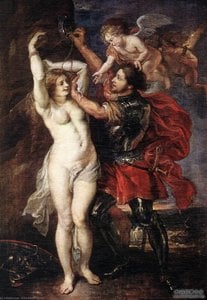
François Lemoyne's “Perseus and Andromeda,” painted in 1723, isn’t merely a depiction of a classical myth; it’s a vibrant, dynamic tableau brimming with the energy and theatricality characteristic of the Rococo period. Housed within the Wallace Collection in London, this oil on canvas offers a captivating glimpse into the artistic sensibilities of a master craftsman – Lemoyne himself – who sought to elevate mythological narratives beyond simple illustration, imbuing them with dramatic intensity and emotional resonance. The painting immediately draws the viewer in with its scale—184 x 151 cm—and its masterful composition, which expertly balances action, light, and shadow to create a scene of both perilous rescue and triumphant victory.
At first glance, the scene unfolds with arresting clarity. Perseus, positioned powerfully on the left, is rendered in robust detail: his muscular form clad in flowing robes, a shield held firmly in his right hand and a gleaming sword grasped by his left. His expression is one of focused determination, conveying the weight of his heroic task – slaying the monstrous Cetus that threatened to engulf Andromeda. Opposite him, Andromeda stands poised on the rocky coastline, her posture suggesting both vulnerability and nascent gratitude as she awaits rescue. The sea monster itself—a terrifying amalgamation of scales, claws, and serpentine form—looms large in the lower left corner, a potent symbol of chaos and impending doom. The background, a dramatic expanse of clear blue sky beneath a rugged coastline, provides a vital stage for this epic confrontation.
Lemoyne’s style is undeniably Rococo, yet it's infused with the grandeur and theatricality often associated with Baroque art. The vibrant color palette—rich reds, oranges, and browns contrasted against cool blues and greens—creates a sense of opulent drama. Notice how Lemoyne skillfully employs chiaroscuro – the dramatic interplay of light and shadow – to sculpt the figures and landscape, adding depth and volume to the scene. The brushwork is remarkably smooth, indicative of a meticulous approach that prioritizes detail and polished finish. This technique allows for an almost photographic realism within the context of a stylized narrative.
The composition itself is meticulously crafted, utilizing a diagonal thrust from the monstrous Cetus to Perseus’s descent, guiding the viewer's eye through the scene with compelling momentum. Linear perspective subtly recedes into the distance, anchoring the figures within a believable landscape while simultaneously creating an illusion of depth. The artist’s attention to detail is particularly evident in the rendering of the rocky coastline and the intricate scales of the sea monster – elements that contribute significantly to the painting's overall impact.
Beyond its aesthetic merits, “Perseus and Andromeda” is rich in symbolic meaning. The story itself speaks volumes about themes of heroism, courage, and divine intervention. Perseus’s act of slaying the monster represents a triumph over adversity, while his rescue of Andromeda embodies the concept of salvation. The sea monster, Cetus, serves as a potent symbol of danger, chaos, and the forces that threaten human existence. The painting subtly suggests the role of fate and divine favor in shaping human destiny – Perseus’s success is not solely due to his own strength but also to the intervention of the gods.
Furthermore, Andromeda's pose—a mixture of vulnerability and acceptance—evokes a powerful emotional response. She represents not only a damsel in distress but also a symbol of resilience and hope. The painting’s enduring appeal lies in its ability to resonate with universal themes of courage, sacrifice, and the triumph of good over evil – themes that continue to captivate audiences centuries after its creation.


1688 - 1737 , France


Stay updated with the latest art news, exclusive offers, and decoration ideas.
Tell us about your project and our art experts will provide you with 3 personalized art suggestions.
Let Us Curate 3 Options Just for You - Free!

 Preview
 Send
Send Share
Share
 Details

 Download
 Similars
 X-Ray
X-Ray Diaporama
 Read More