

Hand-painted oil on canvas in your size and frame, made to order by our artists. ( Switch to Print Switch to Digital Image)





























Pick from our preset sizes that match the artwork's original proportions.

You may enter your own dimensions to fit a specific frame or space. If your selected size does not match the original image's proportions, we will either crop the artwork or extend the painting with additional hand-painted elements. A digital mockup will be sent for your approval before production begins.
Please note that the on-screen preview does not reflect the actual cropping or extension. Only the mockup will accurately show the final composition.
While custom sizes are available, we recommend selecting a dimension from the predefined list to preserve the original proportions.
Worldwide Delivery () in 3/4 weeks instead of standard 5 weeks. (18 September). No compromise on quality.


John Russell Scott (1879–1949)
Reproduction Size
This meticulously crafted hand-painted reproduction captures "John Russell Scott," a portrait executed in 1920 by the American artist Francis Dodd. Measuring 46 x 50 cm, the artwork presents a striking depiction of a man—likely a businessman or professional given his formal attire—possessing an undeniably stern gaze directed towards the viewer. Dodd’s skill lies not merely in representation but in conveying a palpable sense of seriousness and quiet authority that defines the subject's character.
Beyond a simple likeness, "John Russell Scott" invites contemplation regarding the symbolism embedded within the portrait. The man's stern expression suggests a deliberate control, an adherence to duty, or perhaps even a guarded nature. The red tie, a bold accent against the muted background, could represent ambition, passion, or simply a desire for distinction. The overall impression is one of contained power—a figure accustomed to command and responsible for weighty decisions.
Born in Holyhead, United States of America, in 1874, Francis Dodd was a skilled artist who dedicated his career to capturing the essence of human character through portraiture. While details about his life and artistic influences are somewhat limited, his work demonstrates a mastery of traditional techniques and an ability to imbue his subjects with a sense of realism and psychological depth. Dodd’s style is reminiscent of late 19th-century American portrait painters, blending technical skill with a subtle understanding of human emotion.
Artist Information: Birth Year: 1874 Birth City: Holyhead Birth Country: United States of America"John Russell Scott" is more than just a reproduction; it’s a timeless piece of art that can enhance any interior space or become a valued addition to an art collection. Its formal style and evocative subject matter make it suitable for traditional, classic, or even contemporary settings. This hand-painted reproduction offers collectors and design enthusiasts alike the opportunity to own a beautiful and historically significant artwork – a testament to the skill of Francis Dodd and a captivating portrait of a man defined by resolve.

Oscar-Claude Monet, born in Le Havre, Normandy, on November 14, 1840, wasn’t simply a painter; he was a revolutionary. He didn't seek to replicate reality with meticulous detail but rather to capture its fleeting essence – the way light dances upon surfaces, the subtle shifts of color as time unfolds. His life and work are inextricably linked to his relentless pursuit of this ephemeral beauty, a philosophy that fundamentally reshaped the course of art history and established Impressionism as a dominant force.
Monet’s early years were marked by a quiet yearning for artistic expression, often at odds with his father's desire for him to enter the family grocery business. His mother’s death in 1857 profoundly impacted him, fueling a deep-seated need to find solace and meaning through art. He began his formal training at the Le Havre secondary school of the arts, quickly finding kinship with Eugène Boudin, a local artist who introduced him to the crucial concept of *plein air* painting – working outdoors directly from nature. This practice, coupled with his studies under Charles Gleyre in Paris, exposed Monet to a new generation of artists experimenting with loose brushstrokes and capturing the immediate impression of light and color.
The 1870s proved pivotal. The Franco-Prussian War brought upheaval and disillusionment, but also provided a catalyst for artistic innovation. Monet’s relocation to London during the conflict exposed him to the landscapes of John Constable and Joseph Mallord William Turner, artists who had mastered the depiction of atmospheric effects and the subtle nuances of light. Upon returning to Paris, he became deeply involved with the burgeoning Impressionist movement, collaborating closely with fellow artists like Renoir, Sisley, and Pissarro. The 1874 exhibition at Nadar’s studio, dubbed “The Salon des Refusés,” marked a turning point, providing a platform for these artists to showcase their radical approach – rejecting the rigid conventions of the established Salon in favor of capturing fleeting moments of perception.
Monet's artistic journey was fundamentally driven by his obsession with light. He wasn’t interested in rendering a scene accurately; he sought to convey *how* it appeared at a specific moment, influenced by the atmospheric conditions and the interplay of colors. This is vividly illustrated in his series of paintings depicting Rouen Cathedral, where he meticulously observed how the cathedral's appearance changed dramatically throughout the day and under different weather conditions. Similarly, his water lily pond at Giverny became an endless source of inspiration, providing a constantly shifting canvas for his artistic explorations.
His technique evolved over time. Initially, Monet employed short, broken brushstrokes to build up color and texture, creating a sense of vibrancy and immediacy. As he matured, he developed a looser, more fluid style, allowing the paint itself to contribute to the overall impression. He experimented with complementary colors, often juxtaposing them side-by-side to create visual excitement and heighten the sense of luminosity. His use of color was not descriptive but evocative – designed to stimulate the viewer’s imagination and convey a feeling rather than a literal representation.
Monet's oeuvre is vast and remarkably consistent in its focus on capturing light and atmosphere. Some of his most celebrated works include:
Claude Monet’s impact on art is immeasurable. He liberated painters from the constraints of academic tradition, paving the way for modernism and influencing generations of artists who followed. His emphasis on subjective perception, his innovative use of color, and his dedication to capturing the ephemeral beauty of nature continue to resonate with viewers today.
Beyond his artistic achievements, Monet’s life itself became a subject of fascination. His unwavering commitment to his vision, his willingness to challenge convention, and his profound connection to the natural world have cemented his place as one of the most beloved and enduring figures in art history. His legacy extends far beyond the canvas, inspiring us to see the world with fresh eyes and appreciate the fleeting beauty that surrounds us.

1874 - 1949 , United States of America

Explore the captivating world of Charles Marion Russell, 'the cowboy artist.' Discover his life, iconic paintings, advocacy for Native Americans, and investment potential. A guide for discerning art collectors.

Journey through John Constable's 25 most celebrated landscapes. Explore Romanticism, Dedham Vale & his masterful use of light in iconic paintings like 'Hay Wain'. Find museum-quality art reproductions and elevate your home decor on WahooArt.com.
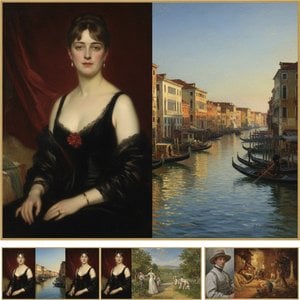
Explore 25 iconic John Singer Sargent paintings – from dazzling portraits to Impressionist landscapes. Discover the stories behind Madame X, El Jaleo & more! Find museum-quality art reproductions and elevate your home decor with WahooArt.com.
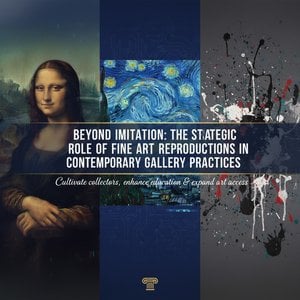
Explore the strategic role of fine art reproductions in today's galleries. Discover how they cultivate collectors, enhance education & expand access to art. Expert insights for discerning buyers and professionals.

Delve into the haunting world of Francis Bacon with WahooArt. Explore 25 iconic paintings, from his visceral portraits to powerful triptychs. Discover the stories behind these masterpieces & find museum-quality art reproductions for your home. Explore the full collection online!

 Preview
 Send
Send Share
Share
 Details

 Download
 Similars
 X-Ray
X-Ray Diaporama
 Stats
Stats


 Read More







 Glass option is only available in size under 110 CM


