

The artwork displayed on this page is protected by copyright law, which means we cannot legally create or sell an identical reproduction. This protection is enforced under international agreements such as the Berne Convention and by national laws, including those outlined by the U.S. Copyright Law - Title 17.
This method fully complies with copyright regulations because it does not involve copying or duplicating the protected artwork. Instead, it is a creative reinterpretation - a new painting that is influenced by the original but not identical to it.
Museum-quality giclée or canvas print with fast production and flexible finish options. ( Buy Hand Made Painting Switch to Digital Image)





























Pick from our preset sizes that match the artwork's original proportions.

Type the width and the height you need, to fit your frame or your wall. A print can only be cut, never made bigger than the picture, so a size with a different shape loses a part of the image. We send you a digital mockup to approve before we print anything. The picture shown on this page does not show the real cut — only the mockup does.
Worldwide Delivery () in 2 weeks instead of standard 4/5 weeks. (22 October)
Seated Figure
Reproduction Size
Francis Bacon's “Seated Figure,” painted in 1961, isn’t merely a portrait; it’s an excavation of the human psyche, a raw and unsettling glimpse into the depths of isolation and existential dread. This work, residing within the intimate confines of Bacon’s London studio at 7 Reece Mews, immediately confronts the viewer with a figure rendered in agonizing distortion – a slumped man seemingly trapped within the claustrophobic space defined by a worn couch and shadowed curtains. It's a painting that lingers long after viewing, prompting reflection on themes of loneliness, anxiety, and the inherent vulnerability of the human condition.
Bacon’s signature style is powerfully evident here: brushstrokes are not carefully blended but aggressively applied, creating a palpable sense of movement and instability. The muted palette – dominated by browns, greys, blacks, and punctuated by flashes of orange and blue – contributes to this feeling of unease. These colors aren't used descriptively; instead, they’re deployed with gestural abandon, mirroring the emotional turmoil at the heart of the piece. The blurred forms, particularly in the figure’s face and body, further amplify this sense of disorientation, as if reality itself is fracturing before our eyes.
The composition itself is deceptively simple – a central figure occupying almost all of the frame. However, this apparent simplicity belies a carefully constructed tension. The couch, chairs, and curtains aren’t merely background elements; they actively contribute to the painting's claustrophobic atmosphere, suggesting a confinement that mirrors the subject’s internal state. Bacon deliberately flattened perspective, eliminating any sense of spatial recession, forcing the viewer into an uncomfortable proximity with the figure’s suffering. This flattening is not accidental; it’s a deliberate tactic to heighten the emotional impact and create a feeling of being trapped within the painting's unsettling space.
Technically, “Seated Figure” exemplifies Bacon’s expressionistic approach. He employed oil paint on canvas with visible brushstrokes – layers built up with a rough texture that speaks to the urgency and physicality of his process. The layering is not smooth or polished; it's deliberately uneven, reflecting the chaotic nature of the subject’s emotional state. Notably, the crimson and blue staining of the background and furniture are exceptionally vivid, hinting at a potential symbolic significance – perhaps representing blood and sorrow, or the overwhelming intensity of the figure’s experience.
Painted in 1961, “Seated Figure” is considered part of a series created during a pivotal period in Bacon's career. Following the death of his lover, George Dyer, in 1971, many of his works became increasingly introspective and focused on themes of mortality and loss. Research suggests that this particular painting was intended as one of the major pieces for a 1962 Tate Gallery retrospective, initially titled “Seated Man with Turkey Rug.” The inclusion of the turkey rug itself is intriguing – it’s a recurring motif in Bacon's work, often associated with themes of decay and vulnerability.
The figure’s slumped posture, anguished expression, and distorted features powerfully convey a sense of profound isolation and psychological distress. While the exact identity of the subject remains ambiguous, many art historians believe it represents Peter Lacy, a close friend and companion to Bacon who tragically died in 1964. The open-necked shirt, a recurring cipher for Lacy, further solidifies this interpretation. “Seated Figure” isn’t simply a depiction of a man; it's an embodiment of the anxieties and uncertainties that plagued the human condition during the mid-20th century – a timeless meditation on loneliness, despair, and the fragility of existence.
WahooArt offers meticulously hand-painted reproductions of Francis Bacon's “Seated Figure,” capturing the raw emotion and visceral intensity of this iconic work. Our skilled artists replicate Bacon’s distinctive brushwork, color palette, and textural approach with remarkable accuracy, ensuring that your reproduction faithfully embodies the painting’s original power. Whether displayed in a contemporary art space or incorporated into a sophisticated interior design scheme, “Seated Figure” – now rendered in exquisite detail – serves as a potent reminder of Bacon's enduring legacy and his profound exploration of the human psyche.
"Seated Figure" shows isolation, anxiety, distortion, figure, couch, tension, psychological, human condition, and its recorded mood is dramatic.
"Seated Figure" by Francis Bacon is recorded as deep_shadow, with a dark luminance.
A reproduction of "Seated Figure" fits well in a living room.

To look at a Francis Bacon canvas is to encounter a direct assault on the nervous system. He did not seek to decorate; he sought to capture the raw, often terrifying reality of existence through a distinctive and disturbing realism. While his contemporaries drifted toward the safety of abstraction, Bacon anchored himself in the human form, though he stripped that form of any dignity or comfort. His work functions as a visceral response to the mid-twentieth century, translating anxiety and physical vulnerability into smeared, violent colors and contorted limbs.
The power of his imagery stems from a refusal to look away from degradation. He utilized oils with a fluidity that allowed for the depiction of flesh that seems to be dissolving or bruising under pressure. By placing figures within geometric structures—transparent cages or architectural space-frames—he forced a sense of claustrophobia upon the viewer. These frames were not mere compositional tools; they were devices to concentrate the image and trap the subject in a state of permanent isolation.
Bacon’s path to the canvas was far from academic. Born in Dublin, Ireland, his early years were marked by instability and a difficult relationship with his parents. He moved through London, Berlin, and Paris, living a life that was often as turbulent as his later paintings. Before he was recognized as a painter, he worked as an interior designer and decorator. This period of his life produced tangible, structured objects:
This background in design provided a structural foundation that would later manifest in his use of cubic, architectural framing. He was a self-taught artist who bypassed the traditional art school route, instead absorbing influences through direct observation and chance encounters. His transition from decorator to painter was catalyzed by seeing Picasso’s work in Paris, which revealed the possibilities of using organic, bone-like structures to distort the human image.
Bacon’s visual language was built from a specific set of cinematic and classical references. He did not invent his horrors in a vacuum; he reconfigured existing imagery to suit a more primal purpose. The screaming face, a recurring motif, finds its roots in the visceral imagery of Sergei Eisenstein's film Battleship Potemkin. Similarly, his fascination with the distortion of the body was informed by the works of Picasso and the studies of motion by Eadweard Muybridge.
His most famous reinterpretations involved taking established authority and breaking it. In his series of works based on Velázquez’s Portrait of Pope Innocent X, he transformed a dignified papal figure into a nightmarish, screaming specter. He used the concept of the crucifixion not as a religious statement, but as an armature to hang sensations of suffering. This approach allowed him to explore universal themes of mortality and the human condition without the distraction of spiritual solace.
Bacon’s significance lies in his ability to confront the darker corners of the soul with brutal honesty. He rejected the polished beauty of traditional portraiture in favor of an unflinching portrayal of agony and isolation. His later works, while often utilizing lighter colors, maintained this core intensity, focusing on the psychological weight of his subjects, including his lover George Dyer. He remains a central figure because he provided a visual language for the twentieth century's deepest anxieties, ensuring that the image of the suffering human remains impossible to ignore.

1909 - 1992 , Ireland

Delve into the haunting world of Egon Schiele with our curated selection of his 25 most iconic Expressionist paintings. Explore the artist's life, technique & emotional depth. Find museum-quality Schiele reproductions and elevate your home decor on WahooArt.com.
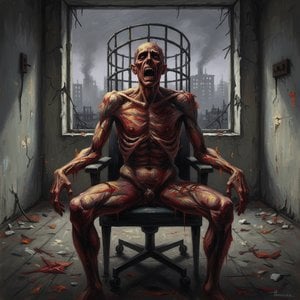
Explore the profound existential anguish of Francis Bacon's art. Discover how trauma shaped his iconic paintings & lasting influence on modern expressionism. A guide for discerning collectors.

Explore the fascinating intersection of art & emotion! Discover how color, form, and texture convey feelings in masterpieces. Expert analysis for collectors & enthusiasts.

Delve into the haunting world of Francis Bacon with WahooArt. Explore 25 iconic paintings, from his visceral portraits to powerful triptychs. Discover the stories behind these masterpieces & find museum-quality art reproductions for your home. Explore the full collection online!

Journey through 25 iconic artworks by Paul Cézanne – a master of Impressionism and Post-Impressionism. Explore his landscapes, still lifes, and the stories behind these timeless masterpieces. Discover museum-quality reproductions & curated decor at WahooArt.com.

 Preview
 Send
Send Share
Share
 Details
 Guide
Guide

 Download
 Similars
 X-Ray
X-Ray Diaporama
 Stats
Stats

 Read More









 Glass option is only available in size under 110 CM


