

Hand-painted oil on canvas in your size and frame, made to order by our artists. ( Switch to Print Switch to Digital Image)





























Pick from our preset sizes that match the artwork's original proportions.

You may enter your own dimensions to fit a specific frame or space. If your selected size does not match the original image's proportions, we will either crop the artwork or extend the painting with additional hand-painted elements. A digital mockup will be sent for your approval before production begins.
Please note that the on-screen preview does not reflect the actual cropping or extension. Only the mockup will accurately show the final composition.
While custom sizes are available, we recommend selecting a dimension from the predefined list to preserve the original proportions.
Worldwide Delivery () in 3/4 weeks instead of standard 5 weeks. (14 September). No compromise on quality.


Figura tumbada
Reproduction Size
To stand before a depiction such as Figura tumbada is not merely to observe paint on canvas; it is to confront an emotional landscape rendered in pigment. Francis Bacon’s work has always been characterized by its raw, almost brutal honesty—a visual scream echoing the anxieties of the modern condition. This particular piece presents a figure reclining, seemingly suspended against a backdrop of deep, brooding purple. The subject itself, nude and dramatically posed with limbs elevated, possesses an unsettling yet compelling physicality. Bacon strips away the veneer of classical beauty, leaving us instead with something more primal: the exposed state of being. The distortion inherent in the form is not a failure of representation, but rather a deliberate artistic choice, suggesting a psychological weight pressing upon the physical shell.
Bacon’s technique rarely favors delicate brushwork; instead, it embraces an immediacy that suggests speed, urgency, and visceral energy. The application of paint here feels both monumental and fleeting. Against the saturated, almost suffocating purple wall—a color often associated with royalty, mystery, or deep melancholy—the central figure emerges in stark contrast. Notice the inclusion of the smaller attendant figures on either side; they function less as narrative elements and more as compositional anchors, framing the central drama. They contribute to a sense of entrapment or perhaps an audience observing a private moment of profound vulnerability. The interplay between the vibrant, almost sickly colors of the flesh tones and the deep background creates a palpable tension that pulls the viewer into the painting’s emotional vortex.
The reclining nude in Bacon's oeuvre is rarely about sensuality; it speaks instead to themes of mortality, confinement, and the struggle for selfhood. The prone position suggests surrender, yet the exaggerated quality prevents this from becoming mere repose. It feels more like a moment caught between breaths—a suspended state of being. Symbolically, the figure can be read as humanity itself laid bare before the overwhelming forces of existence. The surrounding space, particularly that intense purple void, acts as an abstract representation of psychological pressure or societal expectation, against which the fragile human form struggles to maintain its integrity.
For collectors and designers seeking art with profound narrative weight, Figura tumbada offers an unparalleled focal point. It is a piece that demands attention, refusing to be quietly absorbed into the background of a room. Reproducing this work allows one to integrate Bacon’s intense emotional vocabulary into a domestic space. Whether placed above a console table or anchoring a gallery wall, its raw power serves as a constant, compelling conversation starter. Owning a reproduction is acquiring not just an image, but a piece of confrontational artistic dialogue—a reminder that the most beautiful art often springs from the deepest wells of human unease.


1909 - 1992 , Ireland

Explore the raw emotion of Expressionism with WahooArt. Discover its history, key artists like Kirchner & Munch, and lasting influence on modern art. Expert insights for collectors & enthusiasts.

Delve into the haunting world of Francis Bacon with WahooArt. Explore 25 iconic paintings, from his visceral portraits to powerful triptychs. Discover the stories behind these masterpieces & find museum-quality art reproductions for your home. Explore the full collection online!

Explore the powerful world of Figurative Expressionism with WahooArt. Discover key artists like Kirchner & Beckmann, understand its emotional depth, and learn how to collect this influential 20th-century art movement.
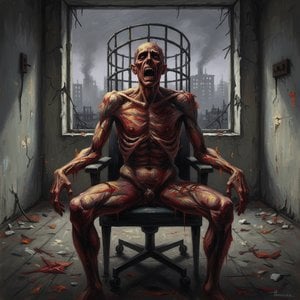
Explore the profound existential anguish of Francis Bacon's art. Discover how trauma shaped his iconic paintings & lasting influence on modern expressionism. A guide for discerning collectors.

Explore the profound history of Surrealist Expressionism. Discover how artists blended dream logic with raw emotion to navigate post-war trauma through masterful, evocative imagery and psychological depth.

 Preview
 Send
Send Share
Share
 Details

 Download
 Similars
 X-Ray
X-Ray Diaporama
 Stats
Stats
 Read More







 Glass option is only available in size under 110 CM


