Preview AR preview Buy Hand Made Painting Switch to Digital Image Send
Details Guide Add to favorites Download Similars X-Ray Diaporama Stats

King David

Explore Fra Angelico's (c. 1395-1455) serene Renaissance art: devout frescoes, vibrant colors & spiritual depth. Discover the 'Angelic Painter' & his legacy!

Giclée / Art Print

Museum-quality giclée or canvas print with fast production and flexible finish options. ( Buy Hand Made Painting Switch to Digital Image)

Corner sample of the P118B picture frame: moulded polystyrene, 5 cm wide and 3 cm thick
P118B $10
Corner sample of the P118H picture frame: moulded polystyrene, 5 cm wide and 3 cm thick
P118H $10
Corner sample of the P118W picture frame: moulded polystyrene, 5 cm wide and 3 cm thick
P118W $10
Corner sample of the P438Z picture frame: moulded polystyrene, 5.5 cm wide and 3.5 cm thick
P438Z $10
Corner sample of the P508JH picture frame: moulded polystyrene, 7 cm wide and 3.5 cm thick
P508JH $12
Corner sample of the P508YH picture frame: moulded polystyrene, 7 cm wide and 3.5 cm thick
P508YH $12
Corner sample of the P805H picture frame: moulded polystyrene, 5 cm wide and 3.5 cm thick
P805H $10
Corner sample of the P805Z picture frame: moulded polystyrene, 5 cm wide and 3.5 cm thick
P805Z $10
Corner sample of the P919BZ picture frame: moulded polystyrene, 7 cm wide and 3.5 cm thick
P919BZ $10
Corner sample of the P919G picture frame: moulded polystyrene, 7 cm wide and 3.5 cm thick
P919G $10
Corner sample of the P919XJ picture frame: moulded polystyrene, 7 cm wide and 3.5 cm thick
P919XJ $10
Corner sample of the P959ZH picture frame: moulded polystyrene, 5 cm wide and 3 cm thick
P959ZH $10
Corner sample of the P968JZ picture frame: moulded polystyrene, 6 cm wide and 4 cm thick
P968JZ $12
Corner sample of the W106C picture frame: solid wood, 5 cm wide and 3 cm thick
W106C $8
Corner sample of the W218G picture frame: solid wood, 5 cm wide and 3 cm thick
W218G $10
Corner sample of the W218JH picture frame: solid wood, 5 cm wide and 3 cm thick
W218JH $8
Corner sample of the W218Y picture frame: solid wood, 5 cm wide and 3 cm thick
W218Y $10
Corner sample of the W307PJ picture frame: solid wood, 6 cm wide and 3 cm thick
W307PJ $10
Corner sample of the W316G picture frame: solid wood, 6 cm wide and 3 cm thick
W316G $10
Corner sample of the W316PJ picture frame: solid wood, 6 cm wide and 3 cm thick
W316PJ $8
Corner sample of the W316Y picture frame: solid wood, 6 cm wide and 3 cm thick
W316Y $10
Corner sample of the W398PJ picture frame: solid wood, 5 cm wide and 3 cm thick
W398PJ $8
Corner sample of the W4111J picture frame: solid wood, 6.5 cm wide and 3.5 cm thick
W4111J $10
Corner sample of the W500HY picture frame: solid wood, 7 cm wide and 5 cm thick
W500HY $15
Corner sample of the W500JH picture frame: solid wood, 7 cm wide and 5 cm thick
W500JH $15
Corner sample of the W692G picture frame: solid wood, 8 cm wide and 4 cm thick
W692G $12
Corner sample of the W849H picture frame: solid wood, 5 cm wide and 3 cm thick
W849H $8
Corner sample of the W940BG picture frame: solid wood, 7.5 cm wide and 4.5 cm thick
W940BG $15
Corner sample of the W953PJ picture frame: solid wood, 6 cm wide and 3.5 cm thick
W953PJ $8

Standard
custom
CM
INCH

Pick from our preset sizes that match the artwork's original proportions.

width
height

Type the width and the height you need, to fit your frame or your wall. A print can only be cut, never made bigger than the picture, so a size with a different shape loses a part of the image. We send you a digital mockup to approve before we print anything. The picture shown on this page does not show the real cut — only the mockup does.

Worldwide Delivery () in 2 weeks instead of standard 4/5 weeks. (27 October)

Free Worldwide Express Shipping
High-Quality Linen Canvas
Full Shipping Insurance
Customs Tax Refund Guarantee
True Color Matching Guarantee
100-Day Return Policy (Defects Only)
100% Money-Back Guarantee
Bulk Discount Offer

Total Price

$ 69

King David

Giclée / Art Print

Reproduction Size

-

Total Price

$ 69

Quick Facts

  • Dimensions: 395 x 275 cm
  • Year: 1443
  • Notable elements: Harp, birds, book
  • Medium: Painting
  • Title: King David

Art Quiz

There is only one correct answer for each question.

Question 1:
The painting ‘King David’ by Fra Angelico, created in 1443, primarily depicts:
Question 2:
What architectural element is subtly included in the background of the painting, suggesting a setting within a religious space?
Question 3:
Fra Angelico’s early career involved illuminating manuscripts. What skill did this work primarily develop for him?
Question 4:
The presence of two birds flanking King David likely symbolizes:
Question 5:
Considering Fra Angelico’s background as a Dominican friar, what is the most likely thematic focus of this artwork?

A Moment of Majesty: Fra Angelico’s Reverent Depiction of King David

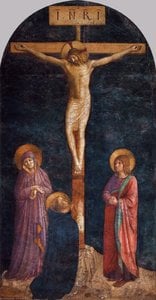
Fra Angelico's "King David" – completed in 1443 – is more than simply a portrait; it’s a profound meditation on faith, music, and the very soul of humanity. Painted during his formative years within the Dominican Order, this work embodies the artist’s unique synthesis of artistic skill and spiritual devotion. The painting captures King David not as a warrior king, but as a man deeply connected to the divine through his musical gift – a harp resonating with an almost palpable serenity. The muted palette, dominated by earthy browns, deep blues, and touches of gold, immediately establishes a contemplative atmosphere, far removed from the vibrant hues often associated with Renaissance portraiture. This restrained approach speaks volumes about Angelico’s artistic philosophy: to illuminate the spiritual rather than merely depict the physical.

The Anatomy of Devotion: Style and Technique

Angelico's technique is characterized by a remarkable clarity and precision, honed during his early work illuminating manuscripts. He employs *tempera* on panel – a medium known for its luminous quality and ability to capture subtle gradations of color – creating an effect that feels both immediate and enduring. Notice the meticulous detail in David’s hands as he plays the harp; each finger is rendered with painstaking accuracy, conveying not just the physical act but also the focused concentration required for such a sacred performance. The drapery, flowing around him with graceful folds, isn't merely decorative; it subtly suggests movement and a sense of timelessness. The background, deliberately simple, directs all attention to the central figure, reinforcing his importance within the composition.

  • Tempera on Panel: This technique lends the painting its distinctive luminosity and archival stability.
  • Meticulous Detail: Angelico’s dedication to rendering textures – from the harp strings to David's garments – is a hallmark of his style.
  • Restrained Palette: The muted colors contribute to the painting’s contemplative mood, emphasizing spiritual themes over opulent display.

Symbolism and Sacred Narrative

The inclusion of the harp itself is laden with symbolic meaning. In biblical tradition, David was renowned for his musical talent, using his lyre to soothe King Saul’s troubled spirit and to celebrate God's victories. Here, the harp represents not just a musical instrument but also a conduit to the divine – a means by which David connects with God’s presence. The two birds perched on either side of David are often interpreted as symbols of hope and prophecy, echoing the prophetic visions that accompanied David’s reign. The book in the background, though partially obscured, likely represents the Psalms, further anchoring the scene within its biblical context. The crown, subtly rendered, acknowledges his royal status but doesn't overshadow the spiritual significance of the moment.

A Window into a Soul: Emotional Resonance and Legacy

“King David” transcends mere representation; it’s an invitation to contemplate themes of faith, humility, and artistic devotion. The painting’s quiet dignity and serene atmosphere evoke a sense of peace and reverence. It's easy to imagine this work hanging in a chapel or monastic cell, serving as a constant reminder of the power of music and spirituality. Fra Angelico’s legacy extends far beyond his technical mastery; he created images that continue to resonate with viewers centuries later, offering glimpses into the profound spiritual world he inhabited. A reproduction of this piece offers a beautiful opportunity to bring this moment of contemplative majesty into your own space – a testament to the enduring power of art to inspire and uplift.

Questions & Answers

What other names is Fra Angelico known by?

Other names recorded for Fra Angelico, creator of "King David", include Giovanni da Fiesole, Fra Giovanni, Fra Giovanni da Fiesole, Fra Giovanni Angelico, Beato Angelico.

What technique was used for "King David", and when was it created?

"King David" was created in 1443 using the acrylic on canvas technique. Material and date describe how and when the original was made.

What use is suggested for "King David" by Fra Angelico?

A reproduction of "King David" by Fra Angelico is recommended for statement. This suggestion follows from the work's subject, mood and colors.


Artist Biography

Early Life and Spiritual Formation

Born Giovanni da Fiesole around 1395 in the Tuscan hills near Florence, Fra Angelico’s early life remains shrouded in a gentle obscurity that seems fitting for an artist whose work would become synonymous with ethereal beauty and devout spirituality. Little is known of his family or childhood, but it's believed he received a solid education, preparing him for a life beyond the humble origins of Rupesana. The pivotal moment arrived when the young Giovanni entered the Dominican Order at Fiesole, embracing a life of religious contemplation and service. It was within the walls of the monastery that he received the name Fra (Brother) Angelico, a moniker that would soon reflect not only his monastic vows but also the angelic quality inherent in his art. Initially tasked with illuminating manuscripts – a meticulous craft demanding precision and vibrant color – he honed skills that would later blossom into breathtaking frescoes and panel paintings. This early training instilled in him a profound respect for detail, a mastery of pigment, and an understanding of how to convey narrative through visual storytelling. The Dominican Order’s emphasis on theological study undoubtedly shaped his artistic vision, imbuing his work with a deep sense of faith and purpose.

The Blossoming of a Unique Style

Fra Angelico's artistic development wasn’t born in isolation; he absorbed the currents of Florentine painting circulating at the time. The elegant linearity and decorative patterns of Lorenzo Monaco, a leading painter of the era, are evident in his early works. However, Fra Angelico didn’t merely imitate his predecessor. He began to synthesize these influences with a burgeoning naturalism, likely sparked by exposure to the groundbreaking frescoes of Masaccio. While Masaccio revolutionized painting with his dramatic use of perspective and realistic depiction of human form, Fra Angelico charted a different course. He embraced perspective not for its own sake, but as a means to create a more immersive spiritual experience. His figures, though graceful and often idealized, possess a quiet dignity and emotional resonance that transcends mere representation. Crucially, his art was inextricably linked to his faith; he viewed painting not as a profession, but as an act of prayer – a way to contemplate the divine and make it visible to others. This deeply held belief infused every brushstroke with reverence and sincerity.

Masterpieces of Faith and Color

Fra Angelico’s artistic legacy is anchored by several monumental works that continue to inspire awe centuries later. The frescoes within the San Marco monastery in Florence are widely considered his masterpiece. Commissioned for the Dominican convent, these scenes from the life of Christ radiate a serene simplicity and emotional depth rarely encountered in Renaissance art. Each image – from the Annunciation to the Crucifixion – is imbued with a sense of quiet contemplation, inviting viewers into a personal encounter with the sacred narrative. Beyond San Marco, his *Perugia Altarpiece* showcases his evolving style, particularly in its delicate depiction of the Annunciation. The recurring theme of the Annunciation itself appears in numerous versions throughout his oeuvre, each rendered with ethereal beauty and symbolic richness. Works like *St. Lawrence Giving Alms* demonstrate his skill in narrative composition and his ability to portray human emotion with sensitivity and grace. His palette is characterized by bright, clear colors – blues, golds, and reds – that seem to glow from within, creating an atmosphere of otherworldly radiance.

Legacy and Lasting Influence

Fra Angelico stands as a pivotal figure in the Early Renaissance, embodying the era’s fusion of religious devotion and artistic innovation. He wasn't simply a painter; he was a spiritual visionary who translated his faith into visual form. His work reflects the humanist ideals of the period, emphasizing human dignity and the potential for spiritual contemplation. Giorgio Vasari, the celebrated art historian, lauded Fra Angelico in his *Lives of the Artists*, proclaiming that no amount of praise could adequately capture the beauty of his creations. This recognition cemented his place within the canon of Western art. His influence extended far beyond his own time, inspiring generations of artists with his devotional style and masterful use of color. In 1982, Pope John Paul II officially recognized Fra Angelico’s holiness by beatifying him – a testament to the profound spiritual impact of his life and work. Today, his art continues to resonate with viewers around the world, offering a timeless message of faith, hope, and beauty.

Where to Experience His Art

  • Museo di San Marco, Florence: This museum houses the largest and most significant collection of Fra Angelico’s works, including the breathtaking frescoes from the monastery.
  • The Louvre Museum (Paris): Several important paintings by Fra Angelico can be found within the Louvre's extensive collection.
  • The National Gallery (London): The National Gallery boasts a selection of his works, offering visitors a glimpse into his artistic genius.
  • Santa Maria sopra Minerva, Rome: This church contains frescoes by Fra Angelico and is the site where he was officially beatified.
  • Numerous other museums worldwide also display examples of his art, allowing a broader appreciation for his enduring legacy.
Fra Angelico

Fra Angelico

1395 - 1455 , Italy

Quick Facts

  • Artistic Movement Or Style: Early Renaissance
  • Artists Or Movements Influenced By This Artist: ['Early Renaissance']
  • Artists Who Influenced This Artist:
    • Lorenzo Monaco
    • Masaccio
  • Full Name: Giovanni da Fiesole
  • Nationality: Italian
  • Notable Artworks:
    • Annunciation
    • Coronation of the Virgin
    • St. Lawrence Giving Alms
    • Deposition of Christ
  • Place Of Birth: Rupesana, Italy
  • Date Of Birth: 1395
  • Date Of Death: 1455
Explore artworks organized by themes, styles, and characteristics.