x


Hand-painted oil on canvas in your size and frame, made to order by our artists. ( Buy Print Buy Image)





























Pick from our preset sizes that match the artwork's original proportions.

You may enter your own dimensions to fit a specific frame or space. If your selected size does not match the original image's proportions, we will either crop the artwork or extend the painting with additional hand-painted elements. A digital mockup will be sent for your approval before production begins.
Please note that the on-screen preview does not reflect the actual cropping or extension. Only the mockup will accurately show the final composition.
While custom sizes are available, we recommend selecting a dimension from the predefined list to preserve the original proportions.
Worldwide Delivery () in 3/4 weeks instead of standard 5 weeks. (26 August). No compromise on quality.


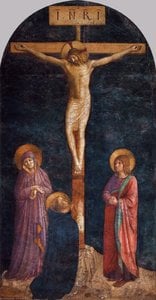
Juicio Final
Reproduction Size
Fra Angelico's “Juicio Final” (The Last Judgment), painted around 1425-1430 for the San Marco convent in Florence, isn’t merely a depiction of divine judgment; it’s a profound meditation on mortality, faith, and the eternal consequences of earthly choices. More than just a religious scene, it's a meticulously crafted allegory, brimming with symbolism that invites contemplation long after the initial visual impact fades. The fresco, now residing in the Museo Nazionale di San Marco, stands as a testament to Fra Angelico’s extraordinary skill and his deeply spiritual vision.
The composition immediately draws the eye to Christ Pantocrator – “Christ Ruler of All” – enthroned at the center, radiating an almost unbearable light. He's not depicted in triumphant glory, but with a serene, sorrowful expression, embodying both judgment and mercy. Surrounding him are figures drawn from the Bible and Christian tradition: Mary, radiant and compassionate; St. John the Evangelist, gesturing towards the heavens; and a host of saints, each representing a different virtue. The sheer number of figures – over 250 in total – creates an overwhelming sense of scale, mirroring the vastness of God’s judgment.
However, it's not just the heavenly realm that dominates the fresco. Below Christ, a dramatic scene unfolds: the damned are dragged into Hell by demonic figures, their faces contorted in agony. The imagery is visceral and unsettling – a depiction of eternal torment rendered with remarkable detail and emotional intensity. Yet, even here, there’s a subtle acknowledgment of humanity; the demons themselves possess a disturbing beauty, reflecting the seductive power of sin. The broken tombs at the foot of Christ symbolize the resurrection and offer a glimmer of hope amidst the despair.
Fra Angelico's mastery is evident in every brushstroke. He employed the tempera technique, known for its luminosity and rich colors – a method favored by artists of his time. The palette is restrained yet vibrant, dominated by deep blues, reds, and golds, creating an atmosphere of both solemnity and grandeur. Notice the meticulous detail in the drapery, the subtle gradations of light and shadow, and the expressive faces of the figures.
Crucially, Fra Angelico was a pioneer in using linear perspective – a revolutionary technique that created the illusion of depth on a flat surface. This is particularly evident in the depiction of the city of Florence below, which appears to recede into the distance with remarkable accuracy. His understanding of anatomy and proportion is also exceptional, lending a sense of realism to even the most fantastical elements of the scene.
“Juicio Final” is saturated with symbolism, inviting layers of interpretation. The flaming sword held by St. Michael represents divine justice, while the scales in the upper left corner symbolize the weighing of souls. The lilies held by Mary represent purity and innocence, while the keys she carries signify her role as the mother of God. Even seemingly minor details – such as the specific saints depicted – carry symbolic weight, reflecting the theological concerns of the time.
The inclusion of figures like Dante Alighieri, a prominent humanist scholar, suggests that Fra Angelico’s work was intended to engage with contemporary intellectual debates about morality and salvation. The fresco wasn't simply a devotional image; it was a complex statement about the human condition and the path to redemption.
Despite being painted over 600 years ago, “Juicio Final” continues to resonate with viewers today. Its powerful imagery and profound themes speak to universal concerns about life, death, and the search for meaning. The fresco’s emotional honesty – its ability to evoke both fear and hope – is a testament to Fra Angelico's genius.
Reproductions of this masterpiece offer an opportunity to bring its spiritual depth into any space. Whether adorning a chapel wall or gracing a private study, “Juicio Final” serves as a constant reminder of the choices we make and the eternal consequences that await us all. It’s more than just a painting; it's a window into the soul of the Renaissance and a timeless meditation on faith and humanity.


1395 - 1455 , Italy

Discover the timeless art of fresco painting. Explore the profound history, technical mastery of buon fresco, and the enduring legacy of Renaissance masters like Michelangelo in this expert guide to painting on wet plaster.

Embark on a profound journey through the ethereal masterpieces of Fra Angelico. Discover the spiritual depth, divine light, and technical brilliance of the 'Angelic Painter' in this expert exploration of Early Renaissance devotion and sacred art history.

Explore the profound mastery of fresco painting, from the technical alchemy of buon fresco to the legendary narratives of Renaissance masters like Ghirlandaio. Discover how this timeless medium shaped art history and continues to inspire architectural grandeur today.

Explore the profound artistry of The Last Supper through an art historian's lens. From Leonardo da Vinci’s genius to diverse Renaissance interpretations, discover the symbolism and technique behind history's most iconic sacred depictions.


Stay updated with the latest art news, exclusive offers, and decoration ideas.
Tell us about your project and our art experts will provide you with 3 personalized art suggestions.
Let Us Curate 3 Options Just for You - Free!

 Preview
 Send
Send Share
Share
 Details

 Download
 Similars
 X-Ray
X-Ray Diaporama
 Read More







 Glass option is only available in size under 110 CM