x


Hand-painted oil on canvas in your size and frame, made to order by our artists. ( Buy Print Buy Image)





























Pick from our preset sizes that match the artwork's original proportions.

You may enter your own dimensions to fit a specific frame or space. If your selected size does not match the original image's proportions, we will either crop the artwork or extend the painting with additional hand-painted elements. A digital mockup will be sent for your approval before production begins.
Please note that the on-screen preview does not reflect the actual cropping or extension. Only the mockup will accurately show the final composition.
While custom sizes are available, we recommend selecting a dimension from the predefined list to preserve the original proportions.
Worldwide Delivery () in 3/4 weeks instead of standard 5 weeks. (29 August). No compromise on quality.


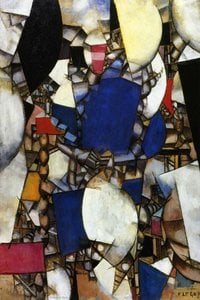
The nude model in the workshop
Reproduction Size
Fernand Léger’s paintings represent more than just visual representations; they embody a profound engagement with the transformative forces reshaping Europe at the dawn of the 20th century. Born in Argentan, Normandy, in 1881, Léger initially pursued architecture but swiftly gravitated towards painting, establishing himself amidst the burgeoning artistic fervor of Paris.
His technique involved applying thick layers of paint—often referred to as “impasto”—to create textured surfaces that mirrored the physicality of industrial machinery. Léger meticulously studied blueprints and photographs of factories, translating these observations into canvases dominated by bold reds, yellows, and blacks. These colors weren’t merely decorative; they served as symbolic representations of heat, fire, and the relentless drive of technological progress.
Notable Works:Beyond its formal innovations, Léger's art possesses a palpable emotional resonance. He aimed to provoke contemplation about humanity’s relationship with technology – questioning whether progress inevitably leads to dehumanization or whether it can inspire awe and wonder. Léger’s paintings continue to resonate today as reminders of a pivotal moment in artistic history—a bold assertion that beauty could be found even amidst the clangorous machinery of the industrial age.
Léger's use of color and form wasn’t arbitrary; it carried symbolic weight. Red, representing heat and passion, contrasted with yellow, symbolizing illumination and optimism. The repetition of geometric shapes—circles, squares, triangles—created a visual rhythm that mirrored the mechanical processes he observed in factories.
Léger’s distinctive technique involved applying paint thickly onto the canvas – “impasto” – creating textured surfaces that resembled industrial components. He meticulously studied blueprints and photographs of factories, translating these observations into simplified geometric forms.
Léger’s artistic vision emerged during a period of unprecedented industrial expansion across Europe. Artists like Léger responded to this transformative era by rejecting traditional representational conventions and embracing abstraction as a means of conveying the anxieties and aspirations associated with technological advancement.
Léger’s paintings invite viewers to confront questions about humanity’s role in shaping its own destiny. They convey both apprehension regarding the potential for dehumanization and exhilaration at the prospect of embracing technological progress—a legacy that continues to inspire artists and collectors alike.


1881 - 1955 , France

Explore the vibrant world of Fernand Léger. Discover how his 'Tubism' and Machine Age aesthetics redefined modern art, offering profound inspiration for discerning collectors seeking geometric beauty and industrial dynamism.

Explore the profound evolution of Cubist still life, from Cézanne's structural foundations to the fragmented brilliance of Braque and Léger. Discover how geometric abstraction redefined reality through a sophisticated lens of form, color, and modern artistic mastery.


Stay updated with the latest art news, exclusive offers, and decoration ideas.
Tell us about your project and our art experts will provide you with 3 personalized art suggestions.
Let Us Curate 3 Options Just for You - Free!

 Preview
 Send
Send Share
Share
 Details

 Download
 Similars
 X-Ray
X-Ray Diaporama
 Read More







 Glass option is only available in size under 110 CM