x


 1862
1862 102.0 x 79.0 cm
Hand-painted oil on canvas in your size and frame, made to order by our artists. ( Buy Print Buy Image)
Pick from our preset sizes that match the artwork's original proportions.

You may enter your own dimensions to fit a specific frame or space. If your selected size does not match the original image's proportions, we will either crop the artwork or extend the painting with additional hand-painted elements. A digital mockup will be sent for your approval before production begins.
Please note that the on-screen preview does not reflect the actual cropping or extension. Only the mockup will accurately show the final composition.
While custom sizes are available, we recommend selecting a dimension from the predefined list to preserve the original proportions.
Worldwide Delivery () in 3/4 weeks instead of standard 5 weeks. (29 August). No compromise on quality.


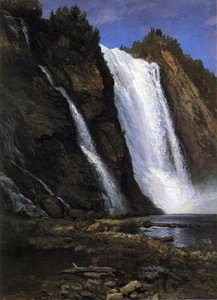
Underneath Niagara Falls
Reproduction Size

Ferdinand Joachim Richardt was born in 1819 in Brede, North of Copenhagen, Denmark. His father, Johan Joachim Richardt, managed the inn and company store at the Brede Factory. The family later relocated to ørholm in 1832 to operate a similar establishment at a paper factory, before moving to Copenhagen in 1839. Initially apprenticed as a carpenter in 1835, Ferdinand soon pursued his artistic inclinations, following in the footsteps of his brother Carl.
Beginning in 1836, he studied at the Royal Danish Academy of Art under prominent figures such as architect and designer Gustav Friedrich Hetsch, historical painter J. L. Lund, and classical sculptor Bertel Thorvaldsen. He demonstrated early promise, receiving the academy’s small and large silver medals in 1839 and 1840 respectively.
Richardt began to establish himself as an artist in Denmark during the 1840s. In 1847, he received a five-year stipend from the crown, contingent upon delivering one architectural and one landscape painting annually to the royal collection. This period saw him focus on detailed lithographs of Danish manor houses, which proved popular and historically significant.
Between 1855 and 1859, Richardt embarked on a pivotal journey to the United States. He established a studio in New York City while dedicating his summers to painting landscapes, particularly focusing on Niagara Falls and locations east of the Mississippi River.
This period marked a shift towards larger-scale landscape paintings and cemented his reputation for capturing the grandeur of American scenery.Upon returning to Denmark, Richardt married Sophia Schneider née Linnemann in 1862. They traveled through Southern Europe before settling in England for a period. In 1864, he was invited by Queen Victoria to exhibit his artwork at Windsor Castle – a testament to his growing international recognition.
However, in 1872 and 1873, Richardt sold much of his accumulated work before making the momentous decision to emigrate with his family back to the United States. They initially settled in Niagara Falls, New York, where he resumed painting the iconic waterfall.
In 1875, the Richardts moved to San Francisco and then Oakland in 1876. For the remaining two decades of his life, Ferdinand Richardt dedicated himself to painting California landscapes, with a particular emphasis on the San Francisco Bay Area.
Richardt passed away in 1895, leaving behind a daughter, Johanna, and a stepson, Joost Schneider. His legacy includes hundreds of oil paintings depicting landscapes, castles, manors, and tourist attractions.
Richardt’s style is characterized by meticulous detail, realistic representation, and a romantic sensibility towards landscape. He skillfully blended Danish artistic traditions with American subject matter. His paintings are held in museums and public institutions in both the United States and Denmark – notably, two of his works reside in the White House.
His 1856 painting, “Niagara Falls,” was famously chosen as the backdrop for a luncheon following Barack Obama’s second inauguration, symbolizing American grandeur and possibility. The rediscovery of over 500 of his original drawings at Denmark's Nationalmuseet in the 1990s further solidified his importance as an artist and documentarian.
Richardt’s work offers a unique perspective on both European and American landscapes, bridging cultural divides through his artistic vision.
1819 - 1895


Stay updated with the latest art news, exclusive offers, and decoration ideas.
Tell us about your project and our art experts will provide you with 3 personalized art suggestions.
Let Us Curate 3 Options Just for You - Free!

 Preview
 Send
Send Share
Share
 Details

 Download
 Similars
 X-Ray
X-Ray Diaporama
 Read More




































 Glass option is only available in size under 110 CM