Museum-quality giclée or canvas print with fast production and flexible finish options. ( Buy Hand Made Painting Switch to Digital Image)





























Pick from our preset sizes that match the artwork's original proportions.

You may enter your own dimensions to fit a specific frame or space. If your selected size does not match the original image's proportions, we will either crop the artwork or extend the image with a mirrored or solid-fill edge. A digital mockup will be sent for your approval before production begins.
Please note that the on-screen preview does not reflect the actual cropping or extension. Only the mockup will accurately show the final composition.
While custom sizes are available, we recommend selecting a dimension from the predefined list to preserve the original proportions.
Worldwide Delivery () in 2 weeks instead of standard 4/5 weeks. (21 September)


The Coal Scuttles
Reproduction Size
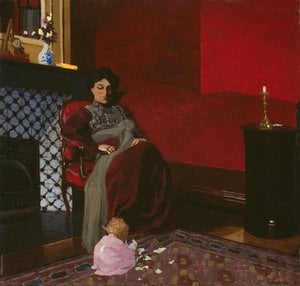
Felix Vallotton's "The Coal Scuttles," painted in 1889, stands as a quintessential embodiment of Post-Impressionist aesthetics—a movement that dared to liberate art from the constraints of strict realism and embraced subjective experience. Currently residing at the Musée cantonal des Beaux-Arts in Lausanne, Switzerland, this oil on canvas masterpiece invites viewers into a serene landscape infused with subtle symbolism and masterful technique.
Vallotton’s artistic vision firmly rooted in Post-Impressionism distinguishes itself from its predecessor through an audacious approach to color and brushstroke. Rejecting the meticulous observation championed by Impressionists like Claude Monet, Vallotton prioritized conveying emotion and atmosphere above photographic accuracy. Thick, impasto brushstrokes dominate the canvas, layering pigment onto the surface with palpable energy—a deliberate departure from the delicate glazes favored by earlier artists.
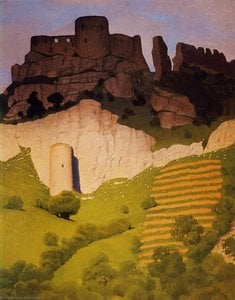
The scene depicted is deceptively simple: a picturesque village nestled on the hillside overlooking a tranquil lake. However, Vallotton’s careful composition speaks volumes about his artistic intentions. The placement of the houses—grouped together near the water's edge—suggests a harmonious relationship between humanity and nature, mirroring the broader philosophical currents of the Fin de Siècle era. Furthermore, the inclusion of coal scuttles – mundane objects juxtaposed against this idyllic backdrop – serves as an intriguing counterpoint, prompting contemplation on themes of labor, industry, and perhaps even the encroaching anxieties of modernity.
Vallotton’s masterful execution is evident in his meticulous attention to detail. The artist skillfully captures the interplay of light and shadow, creating a palpable sense of depth and dimensionality within the landscape. The use of oil paint allows for rich, vibrant hues and textural variations—a crucial element in conveying Vallotton's expressive vision. Like Elizabeth Thompson, Vallotton’s work reflects influences from military paintings, demonstrating an awareness of artistic traditions while forging his own distinctive path.
To delve deeper into the life and oeuvre of Félix Vallotton, explore resources such as Wikipedia (Wikipedia) and WahooArt (WahooArt). You can also find inspiration in similar landscapes at WikiArt.org.


1865 - 1925 , Switzerland

Master the nuances of Impressionism vs. Post-Impressionism with our expert guide. Explore the revolutionary shift from Monet’s fleeting light to Van Gogh’s emotional depth. Discover how these iconic movements continue to inspire fine art collectors and modern interiors today.

Discover the profound emotional depth of Post-Impressionist landscapes. Explore how masters like Van Gogh revolutionized art through vibrant color, textured impasto, and symbolic expression in this expert guide to the movement that redefined modern art history.

 Preview
 Send
Send Share
Share
 Details
 Guide
Guide

 Download
 Similars
 X-Ray
X-Ray Diaporama
 Stats
Stats


 Read More







 Glass option is only available in size under 110 CM