x


 Oil On CanvasWallArtPost-Impressionism
 190319th Century
 65.0 x 75.0 cm
Hand-painted oil on canvas in your size and frame, made to order by our artists. ( Buy Print Buy Image)





























Pick from our preset sizes that match the artwork's original proportions.

You may enter your own dimensions to fit a specific frame or space. If your selected size does not match the original image's proportions, we will either crop the artwork or extend the painting with additional hand-painted elements. A digital mockup will be sent for your approval before production begins.
Please note that the on-screen preview does not reflect the actual cropping or extension. Only the mockup will accurately show the final composition.
While custom sizes are available, we recommend selecting a dimension from the predefined list to preserve the original proportions.
Worldwide Delivery () in 3/4 weeks instead of standard 5 weeks. (29 August). No compromise on quality.


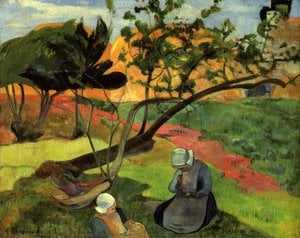
The Invocation
Reproduction Size
Paul Gauguin's “The Invocation,” painted in 1903, is more than just a depiction of a village scene; it’s a profound exploration of spirituality, community, and the human yearning for connection with something larger than oneself. This oil on canvas, measuring 65 x 75 cm, embodies the heart of Gauguin's Synthetist style – a deliberate departure from the fleeting impressions of Impressionism in favor of bold color, simplified forms, and a potent symbolic language. The painting immediately draws the viewer into a world saturated with vibrant hues: deep blues and purples dominate the sky and landscape, punctuated by flashes of crimson, ochre, and turquoise that animate the figures within. It’s a visual feast designed to evoke an emotional response, hinting at rituals, beliefs, and a shared experience deeply rooted in this Polynesian setting.
At the center of the composition stands a woman, nude and raised aloft, her arms outstretched towards the heavens. This figure is not merely depicted; she *becomes* the focal point, radiating an almost otherworldly presence. The other villagers – some clothed, others bare, engaged in various activities like holding a cross or carrying a bowl – orbit around her, suggesting a collective invocation, a shared plea directed at the divine. Gauguin masterfully uses flattened forms and simplified shapes, characteristic of Synthetism, to emphasize the symbolic weight of each element. The figures aren’t rendered with photographic realism; instead, they are stylized representations of humanity participating in a sacred act. This deliberate simplification allows the viewer to focus on the core message: the power of collective faith and the connection between earthly existence and the spiritual realm.
Gauguin’s work is famously rich in symbolism, often drawing upon his experiences in Tahiti and his fascination with indigenous cultures. “The Invocation” is no exception. The woman’s nudity isn’t presented as mere sensuality; it represents a stripping away of the mundane, a connection to primal forces and the natural world. Her raised arms are not simply gestures but active conduits for communication – a deliberate reaching out towards the divine. The cross held by one figure could represent Christian faith, while the bowl might symbolize offerings or sustenance. However, Gauguin intentionally avoids providing explicit interpretations, inviting viewers to project their own beliefs and experiences onto the scene. This ambiguity is central to the painting’s enduring power; it refuses a single, definitive reading, instead encouraging contemplation and personal resonance.
Furthermore, the setting itself – a small village bathed in vibrant colors – suggests a world untouched by Western modernity. Gauguin sought to capture the essence of Polynesian life, prioritizing emotional expression over realistic representation. The flattened perspective and bold color palette create an almost dreamlike atmosphere, transporting the viewer to a realm where spirituality is not confined to temples or churches but permeates every aspect of daily existence. It’s a deliberate rejection of European artistic conventions, reflecting Gauguin's desire to forge his own unique path – one rooted in observation, intuition, and a profound respect for non-Western cultures.
Paul Gauguin’s “The Invocation” stands as a pivotal work in the transition from Impressionism to modern art. His innovative use of color – particularly his bold juxtapositions of complementary hues – paved the way for Fauvism and other movements that prioritized emotional expression over realistic depiction. The Synthetist style, with its emphasis on simplified forms and symbolic content, profoundly influenced subsequent generations of artists seeking new ways to communicate their inner visions. Gauguin’s legacy extends far beyond his individual paintings; he fundamentally altered the course of art history.
Beyond its artistic significance, “The Invocation” offers a poignant reflection on the human condition – our innate desire for connection, meaning, and transcendence. It's a reminder that spirituality isn't necessarily confined to organized religion but can be found in nature, community, and the simple act of reaching out towards something greater than ourselves. For those seeking a piece that embodies both artistic innovation and profound emotional depth, a hand-painted reproduction of “The Invocation” is an exceptional choice. To explore more of Gauguin’s captivating oeuvre, we encourage you to visit the Musée Réattu in Arles, France – a treasure trove dedicated to preserving and showcasing his remarkable body of work. And for exquisite, museum-quality reproductions, discover the artistry at WahooArt.com.

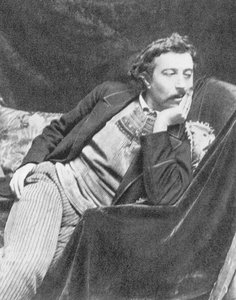
1848 - 1903 , France

Master the nuances of Impressionism vs. Post-Impressionism with our expert guide. Explore the revolutionary shift from Monet’s fleeting light to Van Gogh’s emotional depth. Discover how these iconic movements continue to inspire fine art collectors and modern interiors today.

Unveil the profound revolution of Post-Impressionism. Explore how masters like Van Gogh and Cézanne utilized bold colors and emotional depth to transcend mere representation, laying the foundation for modern art. A sophisticated journey through history's most emotive brushstrokes.

Explore the transformative era of Post-Impressionism. Discover how masters like Cézanne and Matisse revolutionized color and form, moving beyond Impressionism to shape modern art history through structural innovation and expressive emotion.

Explore the vibrant evolution of Post-Impressionism. From Seurat's revolutionary Pointillism to the emotional depth of masters, discover how this movement redefined modern art history through color, structure, and unparalleled creative expression.

Delve into the vibrant world of Paul Gauguin. Explore his revolutionary use of color, Tahitian symbolism, and the profound impact of tropical primitivism on Post-Impressionism through an expert art-historical lens.


Stay updated with the latest art news, exclusive offers, and decoration ideas.
Tell us about your project and our art experts will provide you with 3 personalized art suggestions.
Let Us Curate 3 Options Just for You - Free!

 Preview
 Send
Send Share
Share
 Details

 Download
 Similars
 X-Ray
X-Ray Diaporama
 Read More







 Glass option is only available in size under 110 CM