

Museum-quality giclée or canvas print with fast production and flexible finish options. ( Buy Hand Made Painting Switch to Digital Image)
Pick from our preset sizes that match the artwork's original proportions.

Type the width and the height you need, to fit your frame or your wall. A print can only be cut, never made bigger than the picture, so a size with a different shape loses a part of the image. We send you a digital mockup to approve before we print anything. The picture shown on this page does not show the real cut — only the mockup does.
Worldwide Delivery () in 2 weeks instead of standard 4/5 weeks. (1 November)
Straße
Reproduction Size
Ernst Ludwig Kirchner's "Straße" (Street), created in 1908, stands as a seminal work of the Expressionist movement. Housed within the esteemed Museum of Modern Art in New York City, this oil on canvas masterpiece offers a vibrant and unsettling glimpse into the bustling streets of early 20th-century Germany. The painting depicts a crowded street scene teeming with figures engaged in various activities, capturing the raw energy and psychological complexities of urban life.
The composition of "Straße" is characterized by its dynamism and inherent tension. Kirchner employs bold brushstrokes and intensely saturated colors to convey a sense of unease and emotional intensity. The painting exemplifies the core tenets of Expressionism, utilizing distorted forms and exaggerated features to move beyond mere representation towards an exploration of inner feelings and psychological states. Kirchner's unique style blends elements of Fauvism (evident in his vibrant color palette) and Cubism (seen in the fragmented perspectives), creating a visually arresting and emotionally charged experience for the viewer.
"Straße" is more than just a depiction of a street; it's a commentary on the burgeoning urban landscape and its impact on human connection. Created during a period of rapid industrialization and social change in Germany, the painting reflects the anxieties and alienation that accompanied modernization. The crowded streets symbolize the anonymity of city life, where individuals are surrounded by others yet often feel isolated. The figures depicted—primarily women—represent different social strata and engage in everyday activities, highlighting the diversity and complexity of urban society. This work was created within the context of Die Brücke (The Bridge), an artist collective Kirchner co-founded that sought to break away from traditional artistic conventions and explore new forms of expression reflecting modern experience.
While not overtly symbolic, "Straße" evokes a powerful sense of unease through its visual language. The flattened perspective and distorted figures create a feeling of claustrophobia and disorientation. The intense colors—particularly the jarring combination of reds, greens, and yellows—contribute to the painting's unsettling atmosphere. The vacant expressions on many of the faces suggest a detachment from reality, reflecting the psychological toll of urban life. The overall effect is one of heightened emotional intensity, inviting viewers to contemplate the complexities of human existence in an increasingly impersonal world.
“Straße” is part of a larger body of work by Kirchner that explores themes of urban alienation and social commentary. Other notable paintings include “Street, Dresden” and “Eisenbahnüberführung an der Löbtauer Straße in Dressen-Friedrichstadt,” which further demonstrate his ability to capture the essence of city life. Kirchner’s influence on subsequent generations of artists is undeniable, solidifying his place as a key figure in the Expressionist movement and a significant contributor to modern art.
"Straße" has an augmented reality preview: the artwork's AR Preview page shows it in your own space on a compatible device.
"Straße" by Ernst Ludwig Kirchner is classified as wall art. The category describes the kind of artwork the original is.
The Guide page of "Straße" by Ernst Ludwig Kirchner offers a printable two-sheet factsheet: the artwork with its identity table, a decade band placing it in the artist's lifetime, other works by the artist, the measured color palette, and ready-to-copy citations in four styles.


1880 - 1938 , Germany

Delve into the visceral world of German Expressionism. Explore the history, key artists like Kirchner and Kandinsky, and the movement's profound emotional impact through an expert art-history lens. Discover how bold colors and distortion redefined modern aesthetics.
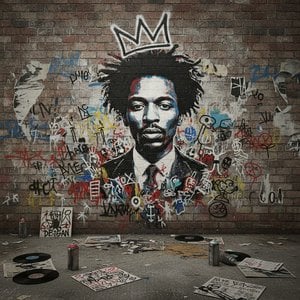
Explore the raw energy of Jean-Michel Basquiat and Neo-Expressionism. Discover how urban rebellion redefined modern art through a lens of luxury, identity, and profound emotional intensity for the discerning collector.

Explore the captivating journey of street art from urban walls to prestigious galleries. Discover how contemporary graffiti has evolved into a high-end collectible movement, redefining modern interior design and global art culture.

Explore the raw emotion of German Expressionism through a definitive guide to Ernst Ludwig Kirchner. Discover how his bold colors and distorted forms redefined modern art history, from Berlin street scenes to iconic masterpieces.
 Preview
 Send
Send Share
Share
 Details
 Guide
Guide

 Download
 Similars
 X-Ray
X-Ray Diaporama
 Q&A
Q&A Stats
Stats


 Read More






































 Glass option is only available in size under 110 CM


