
x


Purchase a high-resolution, enhanced digital image, far superior to the online preview.
Each file is meticulously prepared by our in-house specialists using advanced tools and expert manual retouching. We ensure every image has exceptional clarity, precise color accuracy, and fine detail.
The final file is delivered via email within 72 hours, optimized for immediate use in professional, editorial, and print environments. This is the same quality trusted by top-tier design studios, publishers, and galleries.
Download a high-resolution file for personal display, printing, and creative projects. ( Buy Print Buy Hand Made Painting)
When you choose WahooArt.com, you're not just getting an image - you're receiving a professionally enhanced digital artwork, crafted with precision and backed by a satisfaction guarantee. Here's everything that comes with your order, automatically:

Your high-resolution digital image file will be emailed to you within 72 hours of ordering - ready for immediate use.

Your artwork is professionally optimized using advanced AI tools and manual editing, ensuring maximum detail, clarity, and color accuracy.

Accidentally deleted or lost your file? No worries - we'll resend it to you anytime, free of charge.

Enjoy your artwork instantly with zero customs, duties, or delivery fees - digital downloads are always tax-free.

We ensure your digital image reflects the original colors as closely as possible using professional tools and color management.

If you're not satisfied with your digital image, we'll revise it or refund 100% within 60 days - no questions asked.

Not satisfied? Get a full refund within 60 days of receiving your digital file - no questions asked.

Buy 3 images, save 10% - Buy 5, save 15% - Buy 10+, save 20%. Great for creative projects, galleries, and agencies.
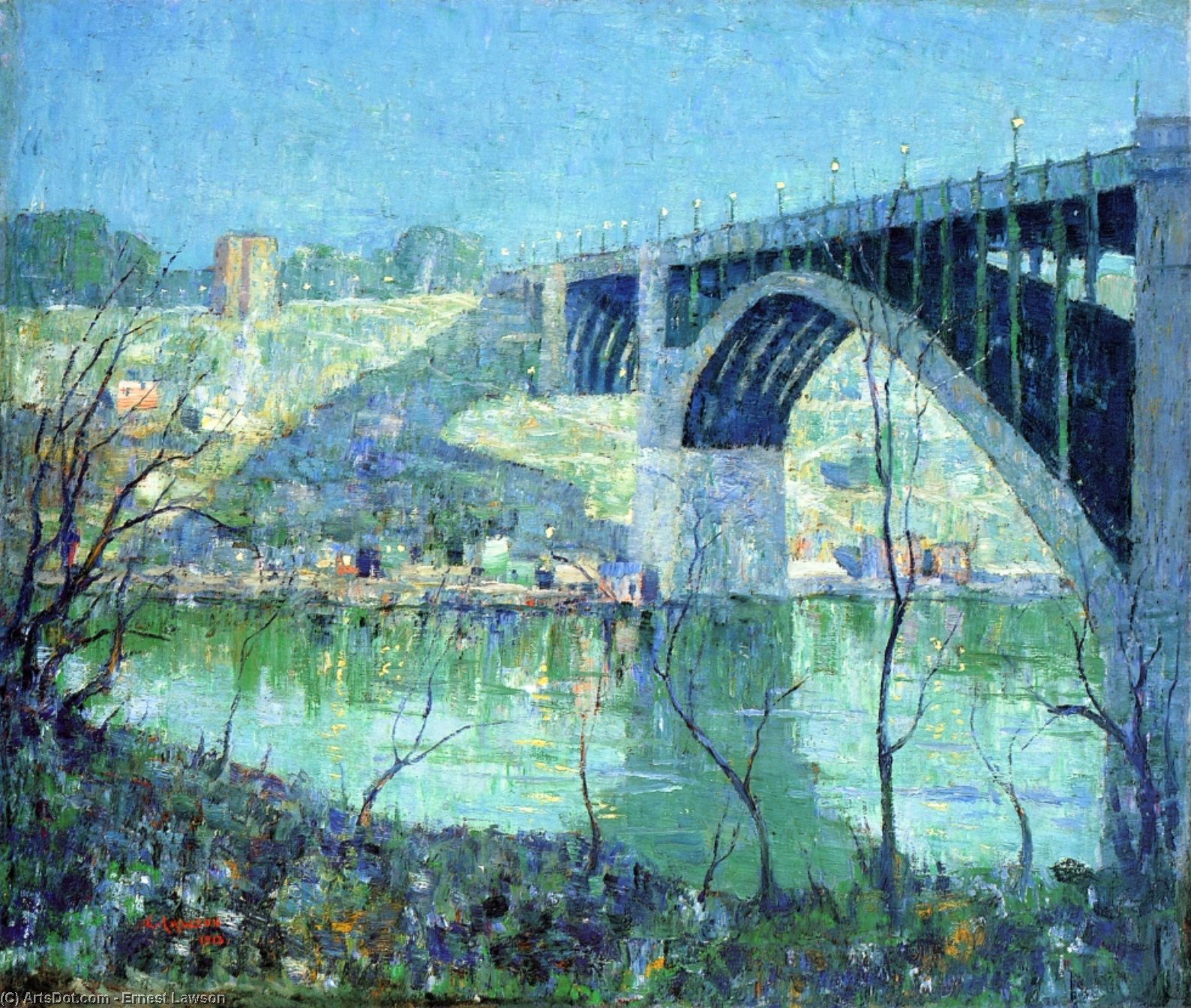
In the quiet, breathing hours of a spring night, the world transforms into a stage of light and shadow, a phenomenon captured with profound sensitivity in Ernest Lawson’s Spring Night, Harlem River. Created in 1913, this masterpiece serves as a luminous window into the American Impressionist movement, inviting the viewer to step onto the arches of the Harlem River Bridge. The painting is not merely a depiction of a structural landmark; it is an atmospheric exploration of how moonlight and artificial glow dance across the urban landscape. As the bridge spans the canvas with architectural grace, Lawson utilizes a palette that balances the deep, tranquil blues of the night sky with the vibrant, flickering energy of life moving below. The presence of figures and a solitary truck provides a rhythmic pulse to the scene, suggesting that even in the stillness of the night, the city remains a living, breathing organism.
The technique employed by Lawson is a testament to his mastery of the plein air tradition. Eschewing the rigid lines of academic realism, he embraces bold, expressive brushstrokes that imbue the canvas with a palpable sense of movement and texture. Each stroke of oil on canvas works in harmony to capture the fleeting effects of light—the way a glow catches the edge of an arch or how shadows pool beneath the bridge's weight. This tactile approach creates a rich, layered surface that adds immense depth and dimension to the work. For the discerning collector or interior designer, this texture offers a sophisticated visual interest that commands attention, making it a centerpiece capable of anchoring a room with its complex interplay of light and dark.
Historically, Lawson’s work sits at a pivotal intersection of European influence and American identity. Having refined his skills in the studios of Paris and under the influence of masters like Alfred Sisley, Lawson brought a sophisticated Impressionist sensibility to the landscapes of New York. In Spring Night, Harlem River, we see this synthesis: the French focus on light and atmosphere applied to the burgeoning energy of an American metropolis. The painting evokes a sense of nostalgic serenity, yet it possesses a modern vitality that remains timeless. It is a work that speaks to the soul, offering a moment of contemplative peace while celebrating the enduring beauty found in our everyday environments.
Integrating a high-quality reproduction of this work into a curated space offers more than just decoration; it provides an emotional anchor. Whether placed in a contemporary gallery-style living room or a classic study, the painting’s cool tones and tranquil composition can evoke feelings of calm and sophistication. It serves as a conversation piece that invites onlookers to linger, much like the figures depicted on the bridge itself, lost in the quiet magic of a spring night. For those seeking to infuse their surroundings with elegance, history, and a touch of nocturnal wonder, Lawson’s vision remains an incomparable choice.


1873 - 1939 , Canada


Stay updated with the latest art news, exclusive offers, and decoration ideas.
Tell us about your project and our art experts will provide you with 3 personalized art suggestions.
Let Us Curate 3 Options Just for You - Free!

 Preview
 Send
Send Share
Share
 Details

 Download
 Similars
 X-Ray
X-Ray Diaporama

 Read More


